Households that cook every day in a small space
If you rarely use four large pans at once, compare the layout and diameter of the cooking zones, as well as how much room the hob will actually take up on your worktop.


In a small kitchen, first choose a hob that fits the worktop cut-out and the space beneath it, then consider how many pans you use at the same time. A three-zone induction hob could be a good fit if your cookware has a ferromagnetic base; a ceramic hob avoids this requirement, while a flexible cooking zone is useful for larger cookware. A mixed induction and gas hob is only worth considering if you need both fuel types and have room for the hob and its connections.
If you rarely use four large pans at once, compare the layout and diameter of the cooking zones, as well as how much room the hob will actually take up on your worktop.
If you’re considering induction, check the bases of your pots and pans before choosing a hob. UFC-Que Choisir points out that induction requires compatible cookware.
For an oval casserole dish, rectangular griddle or plancha, check the dimensions and operation of a flexible or Bridge zone. Combining two zones doesn’t necessarily give you an extra independent cooking zone.
Start with the installation requirements and how many pans you use at once. These two factors will help you choose between induction, ceramic and mixed-fuel hobs.
Worth considering: if three cooking zones are enough for your meals and your main pans are induction-compatible.
The trade-off: you’ll need cookware with a ferromagnetic base, and the connection must be suitable for the model you choose.
Worth considering: if you want to keep cookware that isn’t suitable for induction, as long as the layout of the cooking zones works for you.
The trade-off: according to Bosch Electroménager France, induction heats a more targeted area than a radiant ceramic hob.
Worth considering: if a large pan or plancha is a regular part of your cooking.
The trade-off: linking two zones doesn’t guarantee that you can use more pans at the same time.
Worth considering: if you have a practical reason to use both gas and induction.
The trade-off: check the available width and connection requirements for both fuel types before choosing a model.
| Priority | What to check | What I need |
|---|---|---|
| Installation | Compare the appliance dimensions with the worktop cut-out, available depth and clearances specified in the manual for the exact model. A product described as 60 cm wide isn’t enough to confirm that it will fit. | I want to keep enough worktop space and choose a hob that fits the planned unit. |
| Cooking zones and cookware | Count how many pans you use at once, then compare their diameters with those of the cooking zones and check how they’re arranged. Check the size of any linked zone separately. | Two or three pans are usually enough for me, but I want to be able to position them without them getting in each other’s way. |
| Compatibility | For induction, check that the cookware you want to keep has a ferromagnetic base. UFC-Que Choisir explains that this technology requires compatible pots and pans. | I’d rather check my cookware before deciding whether induction is right for my kitchen. |
| Large cookware | Check the usable surface created by a Bridge or flexible zone, and which cooking zones remain available. Electrolux France describes a Bridge function that links two zones on the Y63IV346CT model. | I need to be able to use a large casserole dish or plancha without compromising the other cooking I need to do at the same time. |
| Everyday use | Compare how easy the controls are to reach and the care instructions for each model. Check the manual for the power rating and connection requirements for your installation. | I want easy-to-use controls and a surface that suits my cleaning routine. |
A hob described as a 60 cm model has its own cut-out dimensions. For example, Electrolux France specifies a 560 × 490 mm cut-out for the IKE6320KC; this measurement doesn’t apply to every hob of the same width.
Measure the cut-out, worktop thickness and space beneath the hob, then compare them with the installation instructions for the model you’re considering.
An unsuitable cut-out may mean you need to modify the worktop or unit.
UFC-Que Choisir says that induction requires cookware suitable for a magnetic field.
Check the bases of the pots and pans you use most often before choosing an induction hob.
If you want to keep incompatible cookware, you’ll need other pans for cooking on the induction hob.
A Bridge function links existing zones to accommodate larger cookware; it doesn’t guarantee that you can cook more dishes independently at the same time.
Compare the combined surface area and the zones that remain available with the number of pans you use at once.
A mixed-fuel hob combines gas and induction. The KDI951723K model featured by Electrolux France has one induction zone and three gas burners. Its layout and connections need to be assessed separately from those of an all-electric hob.
Before choosing one, compare the model’s dimensions and manual with the available space and fuel connections in your home.
Electrolux France’s product information includes induction hobs and mixed induction and gas models.
Bosch Electroménager France offers ceramic and induction hobs. Compare the two technologies based on your cookware and how you plan to use the hob.
Beko France offers a range of built-in induction hobs.
These options include ceramic hobs, a three-zone induction hob and induction models designed for larger cookware. Compare their layout with your cookware before choosing a model for a small kitchen.
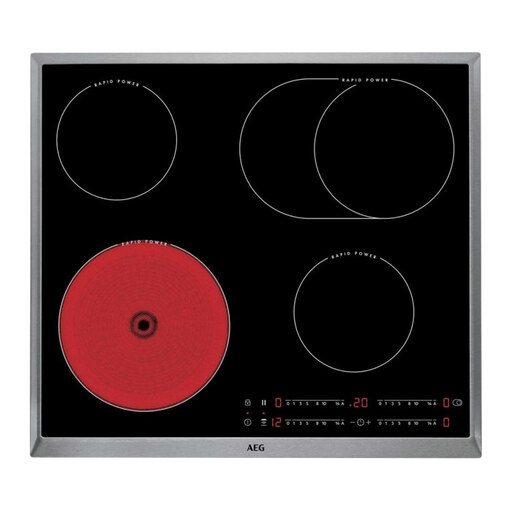 Image unavailable
A ceramic option to consider if you want to keep cookware that isn’t compatible with induction. Before ordering, compare the cut-out, space beneath the worktop and required clearances with the manual.
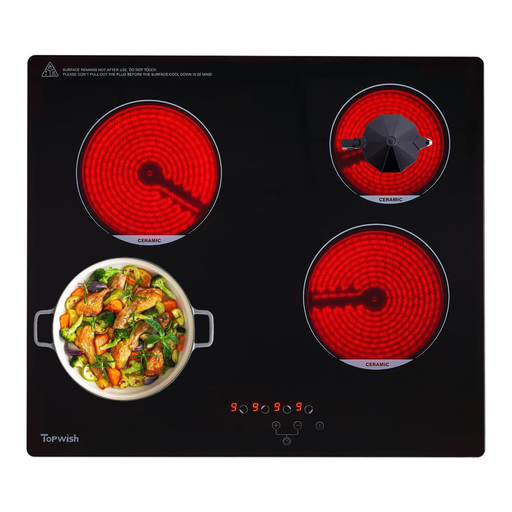 Image unavailable
Worth considering if you use up to four pans and want to avoid the compatibility requirements of induction. Check the cut-out in the manual, along with the power rating and connection requirements for this model.
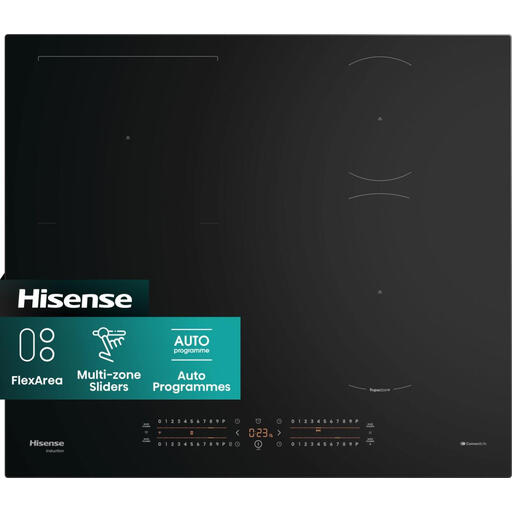 Image unavailable
If you cook with a large pan, check the manual to see how much surface area the Bridge function provides and which zones remain available. Also check your cookware, the cut-out and the installation clearances.
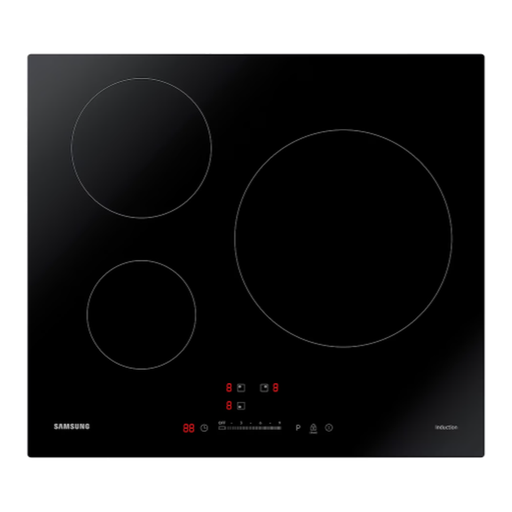 Image unavailable
Compare this model if three cooking zones suit the way you cook. The product title specifies a power rating of 7 200 W. Check the manual for the connection requirements, cut-out and clearances, as well as the compatibility of your cookware.
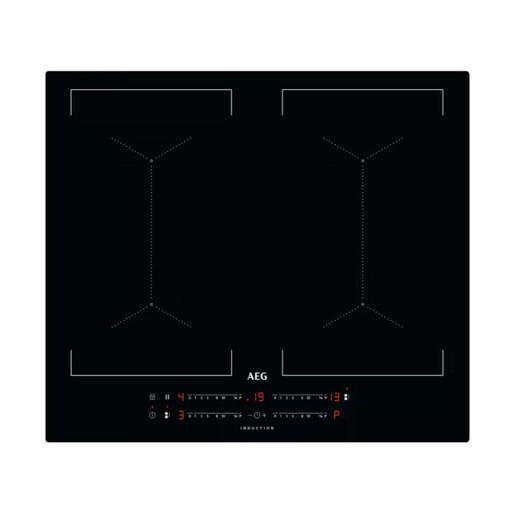 Image unavailable
The Bridge function is worth considering if you use large cookware. Before planning where to fit the hob, confirm the overall dimensions and cut-out in the manual: the dimensions listed for this model are inconsistent. Also check your cookware and the installation requirements.
Check that their bases are ferromagnetic before buying an induction hob. UFC-Que Choisir says induction requires compatible pots and pans, so start with the ones you use every day.
No. Compare the existing cut-out with the installation dimensions for the exact model, then check the space beneath the worktop and the ventilation requirements. Electrolux France specifies a 560 × 490 mm cut-out for the IKE6320KC, but this measurement doesn’t apply to other 60 cm models.
It links cooking zones to accommodate certain larger items of cookware, such as a plancha. Check the dimensions of the combined surface and how many cooking zones remain available when the function is on.
Both have a glass surface, but they heat in different ways. Bosch Electroménager France describes induction as heating a more targeted area. For everyday care, follow the instructions in the manual for your chosen hob.
Consider one if you genuinely plan to use both fuel types and it will fit your kitchen layout. Check the dimensions and connection requirements for the model you choose before finalising your kitchen plans.