What should you check before choosing?
Start with what needs to fit your kitchen and cookware, then compare the heating method and zones that suit the way you cook.
| Priority | What to check | Consider your needs |
|---|
| Cookware |
For induction, check that the base is flat and ferromagnetic, look for the induction symbol or see whether a magnet sticks to it. Also compare the base size with the size of the cooking zones. |
I want to keep my current pans: checking they’re compatible comes before choosing an induction or mixed hob. |
| Fit and power supply |
Compare the actual cut-out with the model’s diagram, then check its ventilation requirements. Have the proposed connection and your home’s installation checked before buying. |
If I’m replacing a hob, I want to know whether it will fit my worktop and whether it’s suitable for my kitchen’s installation. |
| Heating method |
Understand the difference between induction, which heats compatible cookware using a magnetic field, and ceramic hobs with radiant or halogen heating. For a mixed hob, check the installation requirements for the induction and gas sections separately. |
I’m looking for an electric hob without induction, or I have a specific reason for combining induction and gas on the same hob. |
| Cooking zones |
Compare the dimensions of the zones and, for a flexible zone, its surface area and possible configurations. Check the controls and timers for each zone if you cook several dishes at once. |
My griddle or larger pans need to fit on a suitable zone; the number of zones alone doesn’t tell me enough. |
| Energy consumption |
Compare technologies using the same usage assumptions. For 409 cycles per year, ADEME gives indicative figures of 115 kWh/year for induction and 200 kWh/year for ceramic; these aren’t predictions for a specific model or household. |
I want to take energy consumption into account without assuming my cooking habits will match ADEME’s usage scenario. |
Induction hobs available on Joybuy
These options are all induction hobs: three built-in models with separate zones, followed by two models with Bridge or FlexiBridge functions. Compare their size and installation requirements with your kitchen; this selection doesn’t replace the initial choice between induction, ceramic and a mixed hob.
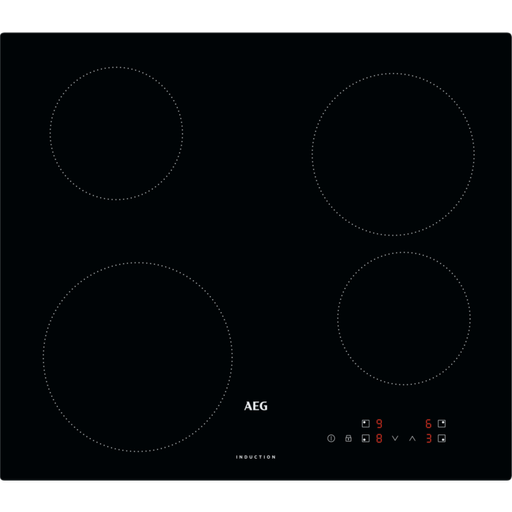 Image unavailable
AEG IBS64200CB, 59 cm induction hob, two-phase Perilex
If you’re replacing a built-in hob, compare its 59 cm format with the cut-out in your worktop. This model is described as semi-flush-mounted and two-phase Perilex; have the proposed connection and the model’s installation requirements checked.
View on Joybuy
 Image unavailable
TOPWISH, 60 cm four-zone induction hob
The four zones, timer and Boost function are worth considering if you cook several dishes at once. If you’re replacing a hob, check the cut-out, ventilation and connection details in the instructions rather than relying on the 60 cm width.
View on Joybuy
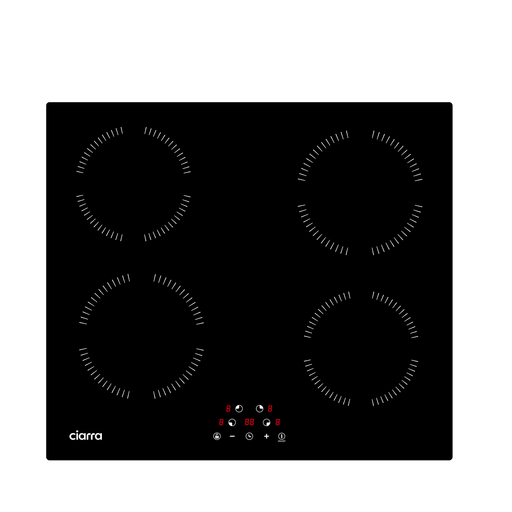 Image unavailable
CIARRA CABBIH4-A, four-zone induction hob
This built-in model has nine power levels. If you’re replacing a hob, compare its installation diagram with the existing cut-out, and have the connection and ventilation requirements checked.
View on Joybuy
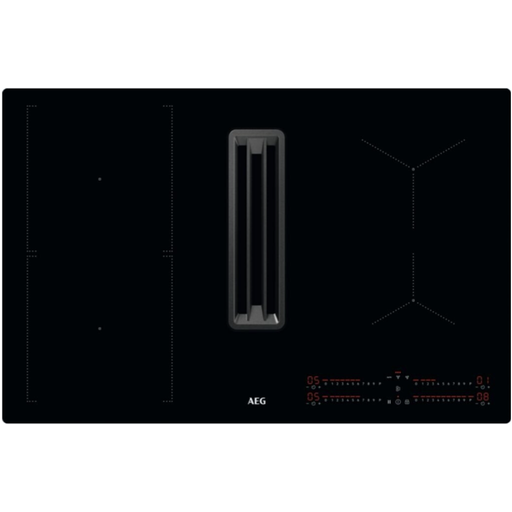 Image unavailable
AEG CCE84543CB, 80 cm induction hob with integrated extractor
Consider this model if your kitchen layout allows for both an 80 cm hob and an integrated extractor. The Bridge function is designed to combine zones for larger cookware; check the cut-out dimensions, ventilation and connection requirements before choosing this model.
View on Joybuy
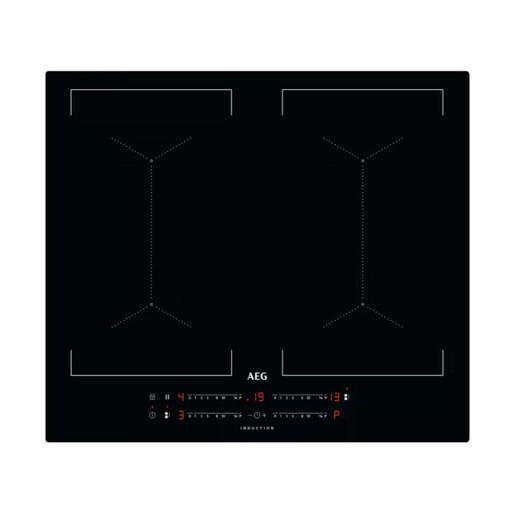 Image unavailable
AEG IKS64453IB, 60 cm four-zone induction hob with Bridge
The Bridge function may appeal if you use larger pans. Before replacing a hob, check the model diagram for its external dimensions and cut-out: the dimensions given for this product don’t clearly match the stated width of 60 cm. Also have the connection checked.
View on Joybuy
Frequently asked questions
How can I check whether my pans are suitable for induction?
Check that their bases are flat and ferromagnetic: the induction symbol or a magnet sticking to the base can help. UFC-Que Choisir lists cast iron, enamelled steel and some stainless steel among compatible materials; check each piece of cookware you want to keep.
Can I replace my hob without altering the worktop?
Yes, provided the existing cut-out, clearances and other installation requirements suit the new model; don’t rely on its visible width alone. UFC-Que Choisir says many induction hobs use a 56 × 49 cm cut-out, but some formats require different dimensions. Measure your opening and check the installation diagram before ordering.
What should be checked before connecting a new hob?
Ask a professional to check your existing circuit, the power rating and the type of connection required in the model’s instructions. This is especially important when replacing a hob: a compatible cut-out doesn’t mean your electrical installation is suitable.
Will a flexible zone be useful?
It can be useful if you use a griddle, oval casserole dish or large pan whose base fits the combined zone. Electrolux and Whirlpool describe models that can combine two zones, but the resulting surface area varies by model: compare its dimensions with those of your cookware.


