Households replacing a built-in hob
If you’re keeping your worktop, measure the cut-out and check the ventilation clearances and connection before choosing the size and cooking zones of your new hob.


Switching to induction is a good option if your cookware is compatible and the hob can be fitted, ventilated and connected in your kitchen. A ceramic hob lets you keep using non-ferromagnetic cookware; consider a mixed hob if you also want to cook with gas and can have the installation checked. Before choosing, compare the actual cut-out, the instructions’ requirements and the number of cooking zones you need.
If you’re keeping your worktop, measure the cut-out and check the ventilation clearances and connection before choosing the size and cooking zones of your new hob.
Whether you can switch to induction depends on the base of your pots and pans: according to UFC-Que Choisir, cookware without a compatible ferromagnetic base won’t activate the hob.
A mixed hob combines gas burners with induction zones. You’ll need to check that your kitchen meets the relevant installation, ventilation and connection requirements.
When replacing a hob, start with the cookware you want to keep and your kitchen’s requirements. Then choose a cooking-zone layout that suits the way you prepare meals.
Consider it if: your cookware is compatible and you want the base of each pan to heat directly.
Bear in mind: incompatible cookware will need to be replaced or kept for use with another type of hob.
Consider it if: you want to stick with an electric hob without needing cookware with a ferromagnetic base.
Bear in mind: radiant or halogen zones heat by conduction, as Gifam explains; the cooking zone heats the surface.
Consider it if: you want to keep gas burners while adding induction zones.
Bear in mind: you’ll need to check that gas can be installed, as well as confirming the electrical connection and that the cookware you use on the induction zones is compatible.
| Criteria | What to check | My needs |
|---|---|---|
| Cookware | Check the base of the cookware you use on induction and identify anything you might need to replace or use on another zone. UFC-Que Choisir explains that a compatible ferromagnetic base is required. | I want to keep using my usual pots and pans without finding out after I buy the hob that they won’t work on its induction zones. |
| Fitting and connections | Compare your measured cut-out with the model’s fitting diagram, then check its ventilation and electrical connection requirements. For a mixed hob, also check the installation and gas equipment requirements described by Cegibat. | My new hob needs to fit in my existing kitchen; the visible width alone doesn’t tell me whether it will fit. |
| Heating and energy use | Compare induction, which heats the cookware directly, with radiant or halogen zones, which heat by conduction. For 409 cycles a year, ADEME gives figures of 115 kWh/year for induction and 200 kWh/year for ceramic hobs among the best new appliances; these figures aren’t a prediction of your individual energy use. | I want to choose a heating method that suits my kitchen without treating a benchmark figure as a prediction of my household’s energy use. |
| Cooking zones and large dishes | Compare the number and size of the cooking zones with the meals you prepare at the same time. If you use a large dish, check the dimensions and usage requirements for any flexible zone on the specific model. | I sometimes cook in a large dish: four separate zones won’t necessarily suit the way I use my hob. |
The opening in your worktop determines whether the hob will fit. UFC-Que Choisir points out that some materials, particularly granite and ceramic, can be difficult to cut.
Measure the width and depth of the opening, then compare them with the fitting diagram and the required clearances for your chosen model.
If the cut-out isn’t compatible, you may need to modify or replace the worktop.
According to UFC-Que Choisir, a pan without a compatible ferromagnetic base won’t activate an induction hob.
Make a list of the cookware you use most often before deciding what to keep or replace.
Incompatible pots and pans may mean extra purchases.
Induction zones don’t address gas-related requirements such as installation, ventilation, the control valve and pipework, which Cegibat explains in detail.
Ask for the gas installation in your kitchen to be assessed, and check the model’s electrical requirements separately.
Depending on your home, changes to the connections or ventilation may be needed.
ADEME’s figures for the best new appliances are based on 409 cycles a year; they won’t necessarily reflect your cooking habits.
Use these figures to compare the two technologies on a like-for-like basis, then check which size and cooking zones suit the way you cook.
These ranges show some of the different configurations available; check the details for the specific model you’re considering.
Bosch’s French range includes induction hobs with FlexInduction zones.
The French range includes electric ceramic and induction hobs, which you can compare based on the cookware you want to keep.
Smeg’s French range includes mixed hobs combining gas and induction.
These built-in hobs let you compare an induction option with two ceramic options for a replacement project. Check the cut-out and fitting instructions for each model before choosing.
 Image unavailable
An option if you’re switching to induction and your cookware has a compatible base. The product name lists four zones, touch controls, a Boost function, a timer, a child lock and a residual heat indicator. Check the cut-out and connection requirements against your kitchen.
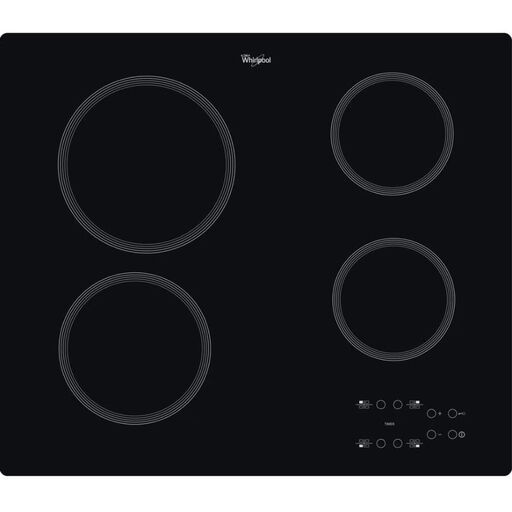 Image unavailable
An electric option if you don’t want to rely on ferromagnetic cookware, as you would with induction. This model is listed with four zones; check its built-in dimensions and connection requirements in the instructions.
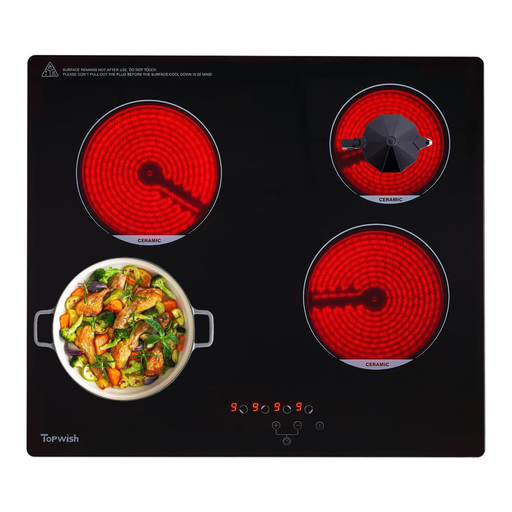 Image unavailable
Another ceramic option if you want to keep cooking electrically without switching to induction. The product name lists touch controls, a child lock and a residual heat indicator; check the power, zone layout, cut-out and connection requirements in the instructions for the model being sold.
Their bases need to be ferromagnetic and compatible: according to UFC-Que Choisir, a pan that doesn’t meet this requirement won’t activate the hob. Check the cookware you use regularly before deciding what to replace.
No. UFC-Que Choisir cites 56 × 49 cm as a common, not universal, built-in dimension. Measure the existing opening, then compare it with the fitting diagram and clearances required for your chosen model.
Yes. Ask a professional to check that your existing circuit and planned connection meet the hob’s requirements. Promotelec lists a dedicated 32 A circuit for an electric hob in its guide to minimum equipment requirements; a professional should check the model’s instructions and your home’s actual setup for your project.
No. Cegibat outlines several points to check for gas cooking appliances, including installation, ventilation, the control valve and pipework. Have these requirements checked in your kitchen, along with the connection for the induction zones.
Benchmark figures can’t guarantee this for every household. In its table dated 7 May 2026, ADEME gives figures of 115 kWh/year for induction and 200 kWh/year for ceramic hobs among the best new appliances, based on 409 cycles a year. Your energy use will depend on the appliance and how you use it.