What to compare
When choosing a replacement hob, first check that it can be installed in your kitchen. Then compare its technology, the cookware it can be used with and the layout of the cooking zones.
Induction
Worth considering: if you have pans with ferromagnetic bases and want responsive heating.
Check: pans without ferromagnetic bases won’t work on induction zones.
Ceramic
Worth considering: if you want to keep using non-ferromagnetic cookware on radiant zones.
Check: a ceramic-glass surface can cover different heating technologies, so check which one the model uses.
Mixed induction and gas
Worth considering: if you have a specific reason to keep gas burners alongside induction zones.
Check: your pans still need to be compatible with the induction zones, and both connections must suit the model and your installation.
| What to consider |
What to check before buying |
Who does this affect? |
| Fitting and installation |
Measure the cut-out and worktop thickness; check the connections and ventilation requirements in the model’s instructions. |
If I’m replacing a built-in hob, I want to know whether the new one will fit the existing cut-out and cabinet. Around 31% of consumers prioritise installation compatibility. |
| Everyday cookware |
Identify any ferromagnetic bases and compare the size of your pans with the cooking zones. |
I want to keep cooking with my usual pans without finding out after installation that they don’t work on some zones. Around 25% of consumers put cookware compatibility first. |
| Changes to plan for |
Consider any changes needed for the installation and your cookware, rather than looking at the hob alone. |
I want to know what replacing the hob involves, including any adjustments to the installation and parts that may need replacing. Around 25% of consumers are most concerned about the extent of the changes required. |
| Cooking-zone layout |
Compare their diameter and position, any zones that can be joined, and the model’s controls. |
When I’m cooking with several pans, their position needs to suit the dishes I’m using at the same time. Around 19% of consumers prioritise the layout of the cooking zones. |
Joybuy products
This selection includes induction hobs and models described as having a ceramic-glass surface. For each model, check the exact heating technology and built-in requirements before comparing it with your installation.
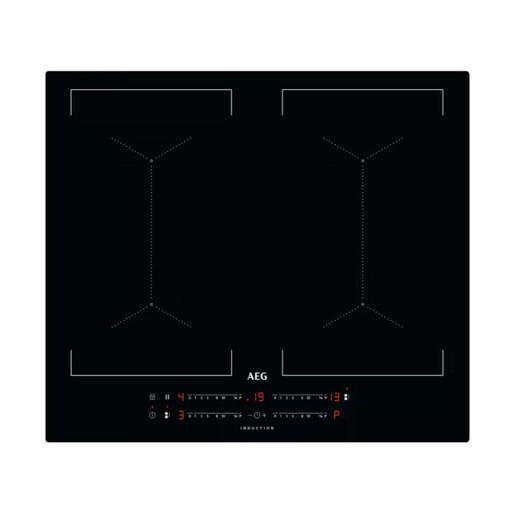 Image unavailable
AEG IKS64453IB — 60 cm induction hob, 4 zones with Bridge
Worth considering if you’re looking for a built-in induction hob for cooking on several zones.
The product name lists four zones, a Bridge function and a width of 60 cm.
View on Joybuy
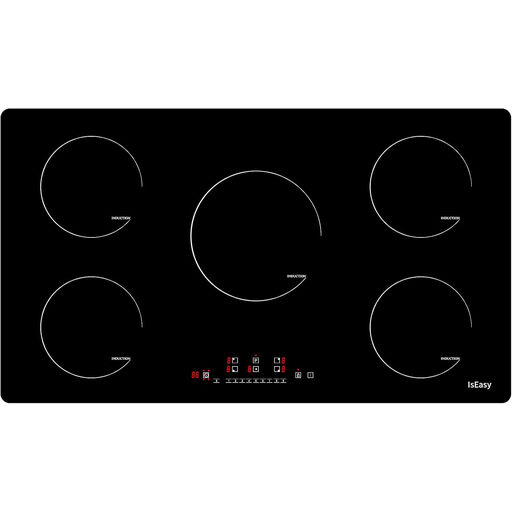 Image unavailable
IsEasy — 90 cm induction hob, 5 zones
Worth considering if you’re looking for a wider induction hob with several cooking zones.
The product name lists a width of 90 cm, five zones, 8600 W of power and a Booster function.
View on Joybuy
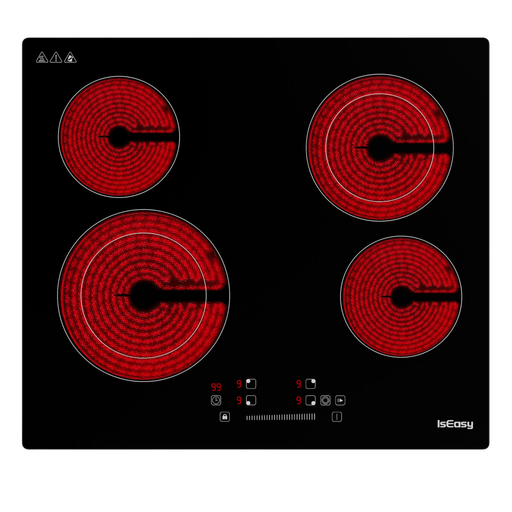 Image unavailable
Ceramic-glass hob, 4 zones, 6 600 W
Worth a look if you’re after a built-in hob with several zones, including zones suited to pans of different shapes.
The product name lists four zones, 6 600 W, touch controls, an oval zone and dual circuits. Check the exact heating technology used by this model.
View on Joybuy
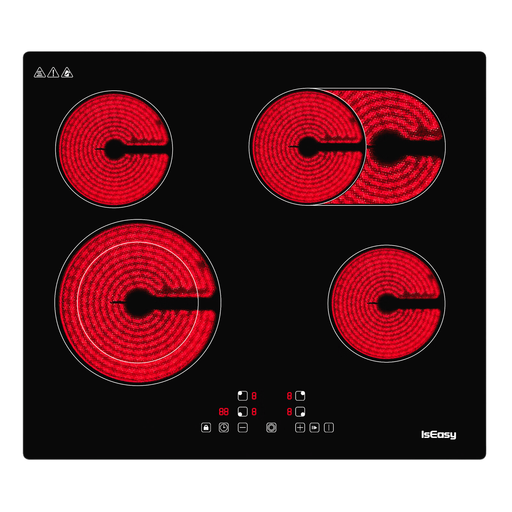 Image unavailable
60 cm ceramic-glass hob, 4 zones, 6 600 W
Worth a look if a 60 cm hob with several zones would fit the space available in your kitchen.
The product name lists four zones, touch controls, an oval zone and a dual-circuit zone. Check the exact heating technology and cut-out dimensions for this model.
View on Joybuy
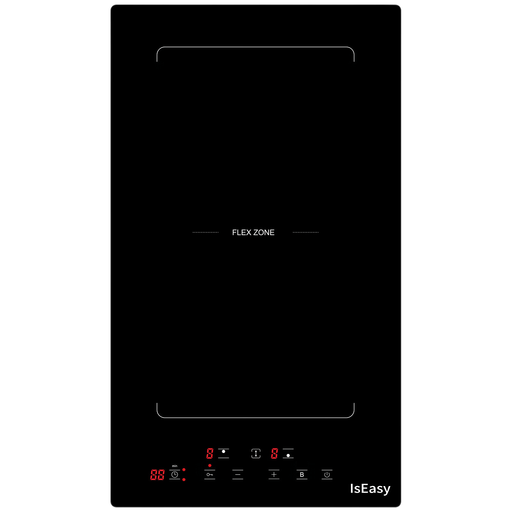 Image unavailable
Induction hob with Flex zones
Worth considering if you’re looking for an induction hob with a flexible zone.
Check the number of cooking zones and the built-in dimensions for this model, then compare them with your cookware and installation.
View on Joybuy
Frequently asked questions
Will a 60 cm hob automatically replace another 60 cm hob?
No. Check the cut-out, available depth, worktop thickness and connections. Bosch Home Appliances France’s product sheets show that the PUJ611BB5E and PKF611BB8E both need a 560 mm-wide cut-out, but have different installation heights and connection ratings. Always follow the instructions for the specific model.
How do I check my pans before switching to induction?
Check the base of each pan you actually use: without a ferromagnetic base, it won’t work on an induction zone. UFC-Que Choisir recommends taking this compatibility into account. You should also compare the diameter of the pan bases with the size of the zones on the hob you’re considering.
Do ADEME’s energy-use figures predict how much my new hob will use?
No. They describe a reference case, not the energy use in your kitchen. In its table based on 409 cycles a year, ADEME gives figures of 200 kWh/year for a ceramic hob and 115 kWh/year for a highly efficient induction hob. These figures don’t measure the energy use of your old or new hob.
What do I need to allow for beneath a built-in induction hob?
The Bosch instructions for the PUJ…BB… family call for sufficient ventilation and an air inlet beneath the appliance. Check the instructions for the exact variant you choose, and have the cabinet layout and connection checked before installation.
Does a mixed hob always require a gas safety certificate?
No. It depends on the work being carried out and the exceptions set out in the regulations. In France, Article 21 of the Order of 23 February 2018, in the version in force since 1 July 2021, requires a certificate when an installer carries out a new installation or modifies an existing gas installation, with exceptions for certain minor modifications. Légifrance publishes the provision; ask a professional to assess the work planned.


