Cook switching to induction
You’d like to switch to induction without automatically replacing all your cookware. UFC-Que Choisir and Electrolux say you should check that each item’s base is compatible, flat and the right diameter.


Start by checking which pans and pots you want to keep. Induction is suitable if their bases are compatible, or if you’re happy to replace only the essential items; ceramic hobs don’t require magnetic cookware. A mixed hob is worth considering mainly if you genuinely use a gas flame and can have the supplies and installation checked. UFC-Que Choisir and Electrolux recommend checking each item of cookware rather than relying on the name of its material.
You’d like to switch to induction without automatically replacing all your cookware. UFC-Que Choisir and Electrolux say you should check that each item’s base is compatible, flat and the right diameter.
You use cookware that isn’t compatible with induction and are weighing up a ceramic hob against replacing only the items you need.
You’d like to keep a gas flame for certain types of cooking while also considering induction. Think about how many cooking zones of each type you need, and make sure the installations are checked.
Consider it: if the bases of your most-used pans and pots are compatible, or if you can replace some of them.
Check: which base types and diameters are accepted by the cooking zones on your chosen model.
Consider it: if keeping cookware without a ferromagnetic base is a priority.
Check: the heating technology and the instructions for the model you choose, not just its glass surface.
Consider it: if you genuinely use a gas flame and would also like induction cooking zones.
Check: both supplies, the layout of the cooking zones and the requirements for the gas installation.
Start by listing the cookware you want to keep, then check the hob’s dimensions against the space available. Choose the heating method to suit the way you cook.
| Priority | What to check | Who is it for? |
|---|---|---|
| Cookware compatibility | Test each base with a magnet, then check its flatness and diameter against the hob’s instructions. | If I want to switch to induction without replacing cookware that’s still useful, I check each item. Around 38% of consumers make compatibility their priority. |
| Space and supplies | Measure the cut-out and check the installation instructions for the required dimensions and connections. | If I’m replacing my existing hob, I want to know whether the model will fit the cut-out and supplies in my kitchen. Around 31% of consumers prioritise a good fit in the available space. |
| Heating method and cooking zones | Compare the number, layout and size of the cooking zones with the cookware and dishes you use. | If I cook several dishes at once or like using a flame for certain types of cooking, I check the cooking zone layout. Around 31% of consumers prioritise their cooking habits. |
Compatibility needs to be checked for each item of cookware; its base and diameter matter too.
Make a list of the items you use, test their bases with a magnet and replace only those that are essential and incompatible with your chosen hob.
A glass surface alone doesn’t tell you how a hob heats. Induction and ceramic hobs work in different ways.
Check the technology listed in the product details and the model’s instructions.
Non-magnetic cookware still won’t work on induction zones. The gas zones also need to suit the way you cook.
Work out how many zones of each type you need, and have the electrical and gas installations assessed before choosing this option.
A mixed hob means checking two supplies. The relevant checks and work will depend on your existing installation and plans.
A hob’s external dimensions aren’t necessarily the same as the cut-out required in your worktop.
Before buying, compare the measurements of the space with the installation instructions for the exact model.
Worth looking at if you’re considering an induction hob with standard cooking zones or, depending on the model, combinable zones.
Consider it if you’re looking at a mixed gas and induction hob and will genuinely use both heating methods.
Worth looking at if you want a ceramic hob and need to keep cookware that isn’t compatible with induction.
Consider it if you choose induction and want to replace only the incompatible cookware you need.
This selection includes ceramic hobs, induction hobs and pans compatible with induction.
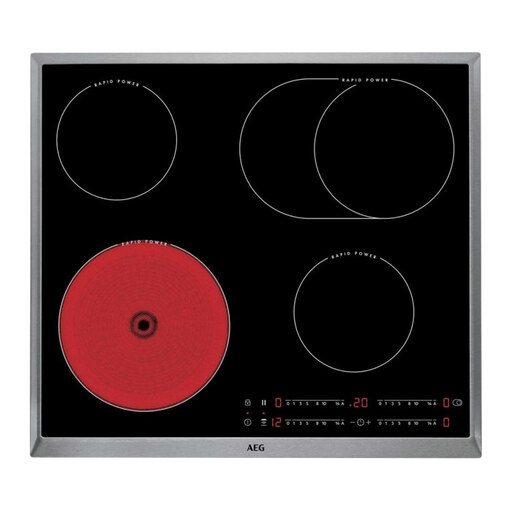 No image available
A ceramic hob to compare if you want to keep cookware that isn’t suitable for induction.
The product details require installation and wiring by a qualified electrician.
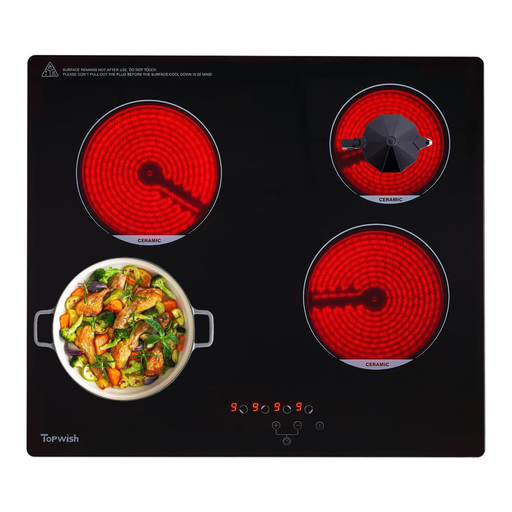 No image available
A ceramic hob to compare if keeping cookware that isn’t compatible with induction is a priority.
The title lists four zones, 60 cm and 6600 W. The product details require a hard-wired connection by a qualified electrician.
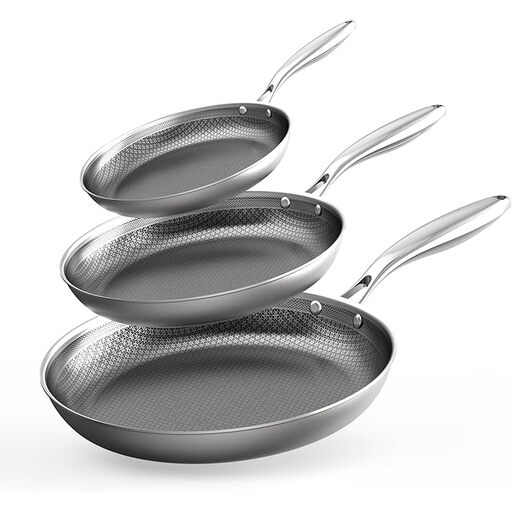 No image available
Worth considering if you choose induction and need to replace some incompatible pans.
The title lists three sizes: 8+10+12 Inch, as well as a non-stick coating and induction compatibility.
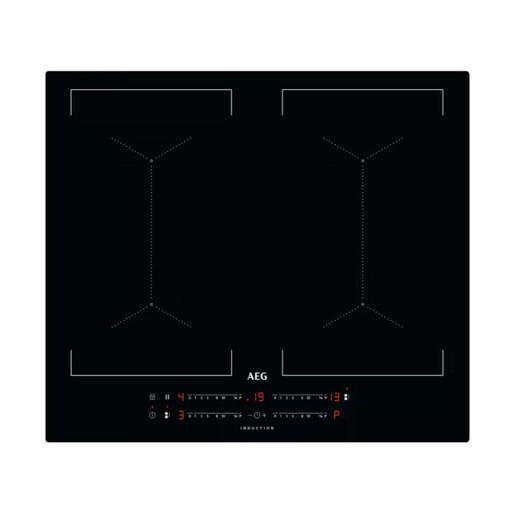 No image available
Worth comparing if you use large induction-compatible cookware and want zones that can be combined.
The title lists four zones and a Bridge function. Use only cookware that’s compatible with induction.
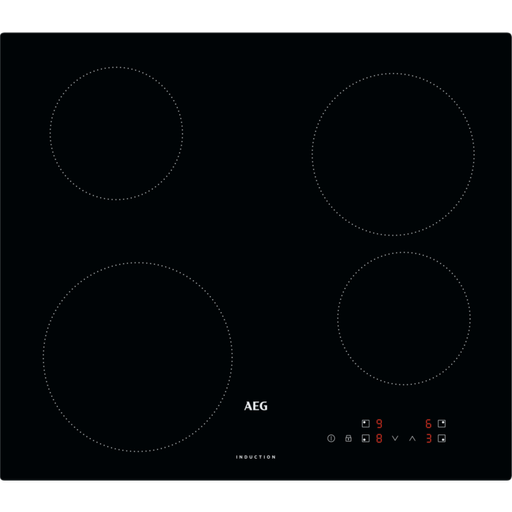 No image available
Worth comparing if you’re looking for an induction hob with four standard cooking zones.
The title lists a width of 59 cm and a two-phase power supply (Perilex). The product details state that this model isn’t suitable for flush installation or installation above a dishwasher. Cookware must be compatible with induction.
Check that a magnet sticks to the base of each item, then compare its diameter and flatness with the guidance in your chosen hob’s instructions. UFC-Que Choisir and Electrolux point out that the material name, including “stainless steel”, isn’t enough to confirm compatibility for every item.
Not necessarily. Measure the cut-out and check the instructions for the exact model for the built-in dimensions, clearances and connections. The external width alone doesn’t confirm that it will fit.
Ask a qualified professional to check the requirements in the instructions against your existing installation. For a dedicated cooking circuit, Promotelec specifies a 32 A cable outlet for single-phase or 20 A for three-phase. These figures aren’t enough to confirm that your circuit is suitable without an inspection, and they aren’t instructions for carrying out modifications yourself.
No, not in every case. Article 21 of the order of 23 February 2018 requires a certificate for a new installation or a modification to an existing installation, and lists some exceptions, including certain minor changes. Légifrance sets out the conditions; the type of work needs to be established to determine what applies to your project. Have the gas installation and its ventilation assessed too.
Follow the model’s instructions and let hot areas cool before cleaning. On an induction hob, removing the pan stops the cooking zone from heating it, but the pan may have heated the glass. So, even when the heating stops, the surface may not be cool.