If you cook often, start with the appliance you use most and compare established figures for similar usage. For 409 cycles a year, ADEME gives a benchmark of 115 kWh/year for an induction hob and 200 kWh/year for a ceramic hob. These averages won’t predict your own consumption. The size of the dishes you cook, your cookware and whether your kitchen is compatible may matter more when choosing an oven, hob or supplementary appliance.
Who is this guide for?
Anyone replacing a hob they use every day
If you use your hob almost daily, compare induction and ceramic models based on how you cook, then check whether your existing cookware and installation are compatible. ADEME’s consumption benchmarks aren’t a prediction for your home.
Households that cook large quantities in the oven
For family meals or several dishes at once, match the oven’s usable capacity to your needs and compare the kWh per cycle of models with similar capacities.
Anyone preparing smaller portions
If you mainly reheat, defrost or cook small quantities, look at the settings on a microwave or compact appliance before deciding whether it would complement your other appliances.
What should you consider?
Start with the way you cook most often, then check that the appliance will fit the available space and work with your existing installation. ADEME’s annual benchmarks describe typical usage, not the results you can expect from a specific appliance in your home.
| What matters | What to check | Who is it for? |
|---|
| Everyday hob use |
Compare hob technologies for the same usage scenario, then check which cookware you want to keep using. |
When I use my hob almost every day, I want to take electricity consumption into account without changing the way I cook. Around 33% of consumers prioritise everyday use. |
| Kitchen compatibility |
Measure the housing or cut-out and check the model’s instructions against your existing installation. Have any necessary electrical work assessed. |
When replacing a built-in appliance, I need to know it will fit before comparing its features. This comes first for around 27% of consumers. |
| Cooking large quantities in the oven |
Compare usable capacity and kWh per cycle, in conventional and fan-assisted modes, between ovens of similar capacity. |
If I prepare several dishes or large portions, I need an oven cavity that can handle them. Around 20% of consumers put this need for capacity first. |
| Smaller meals and snacks |
Decide which settings you need — reheating, defrosting, grilling or convection — and check the capacity and overall size. |
For small portions or leftovers, I’d rather consider an extra appliance than rely on the full-size oven every time. This is a priority for around 20% of consumers. |
Mistakes to avoid before buying
-
Choosing based on a single annual consumption figure
The figures published by ADEME are based on reference appliances and usage frequencies. They can’t be used to calculate the energy consumption of your recipes.
Work out which appliance you use most, then compare these figures with your habits before deciding what to replace.
-
Looking for the same energy label on a hob and an oven
The European Commission says that energy labelling applies to ovens, but there’s no equivalent requirement for hobs. An oven’s energy class is therefore not a useful way to compare it with a hob.
For an oven, check the capacity and kWh per cycle on the energy label; for a hob, look at the model’s specifications and instructions.
-
Ordering a built-in appliance before measuring the space
The appliance category alone won’t tell you whether it will fit a housing, cut-out or existing electrical installation.
Check the measurements and requirements in the instructions before ordering. If electrical work is needed, have your installation assessed.
-
Assuming advertised savings will apply in your home
An energy comparison published by a brand for a combination microwave depends on the appliances, recipes and conditions used in its tests. It doesn’t prove that every use of an oven can be replaced.
Check that it has the settings you need, as well as the right capacity and accessories, and look at the conditions behind the advertised comparison.
Brands to consider by appliance
Bosch
Worth a look if you’re after an induction hob with zones designed for different pan sizes, depending on the model.
- Bosch lists a FlexInduction zone and PowerBoost function on the PXX375FB1E.
- These features aren’t available on every Bosch hob. Check the features and dimensions of the model you’re considering.
Brandt
Consider Brandt for a radiant ceramic hob if this technology suits the way you cook.
- Brandt lists a Quicklight zone and residual heat indicators on the BPV6420B.
- Check the installation and connection requirements in the documentation for the model you choose.
Whirlpool
Worth considering for a built-in oven if you need room for larger dishes.
- Whirlpool lists a 71 L cavity and fan-assisted cooking for the OMR55CR1X oven.
- A large capacity isn’t right for everyone. Compare the kWh per cycle with ovens of similar capacity, too.
Panasonic
Worth a look if you want several cooking modes in one combination microwave.
- Panasonic says the NN-CT57RM combines microwave, convection, grill and air fryer functions.
- Any energy comparison made by the brand depends on its test conditions and won’t predict your household’s consumption.
Appliances to explore on Joybuy
These models let you compare two types of hob for everyday cooking, as well as microwaves for supplementary uses. If a built-in oven is your priority, compare its capacity and the kWh per cycle shown on its energy label separately.
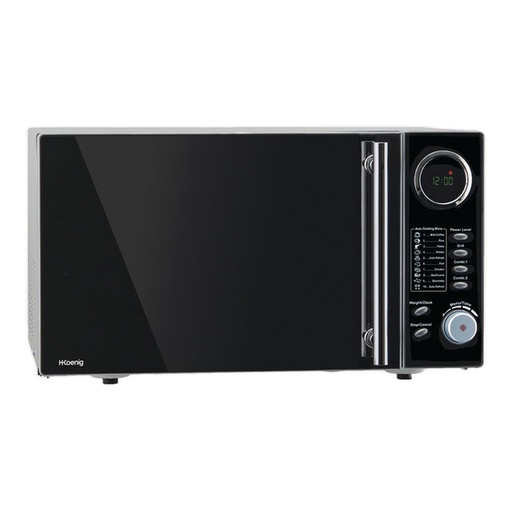 Image unavailable
Hkoenig VIO9, 25 L freestanding microwave
Worth considering for reheating or defrosting, if you have enough space on your worktop.
The model name indicates a capacity of 25 L and a power rating of 1000 W. Check the instructions for its dimensions, required clearances and which setting this power rating refers to: it doesn’t tell you how much energy a cooking task will use.
View on Joybuy
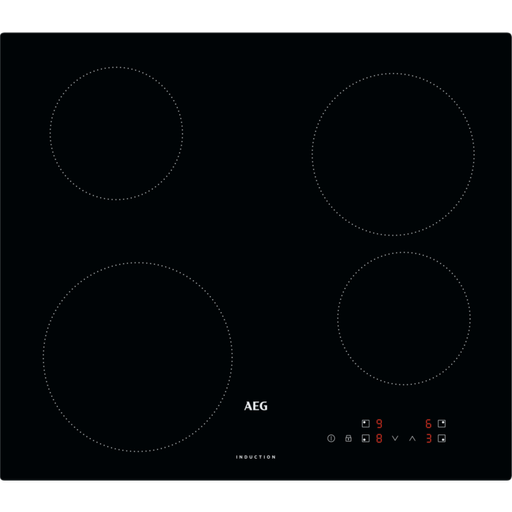 Image unavailable
AEG IBS64200CB, 59 cm induction hob
One option for replacing a hob you use regularly, as long as you confirm that it’s compatible with your kitchen and the cookware you’re keeping.
The model name indicates a semi-flush installation and a two-phase Perilex connection. Check the cut-out and electrical requirements in the instructions; ADEME’s induction benchmark isn’t a measurement of this hob’s consumption.
View on Joybuy
 Image unavailable
TOPWISH, 60 cm 4-zone induction hob
Worth comparing if you cook on several zones at once and are thinking of replacing a built-in hob.
This model is listed with four zones, a Boost function and a timer. Check the cut-out dimensions and connection requirements before choosing it; these features don’t tell you how much energy it will use for your needs.
View on Joybuy
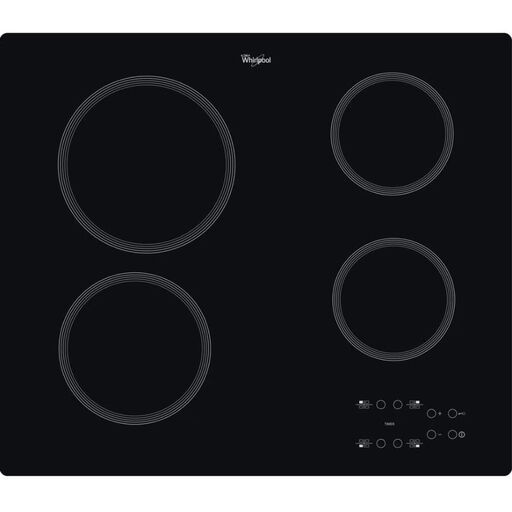 Image unavailable
Whirlpool AKT 801-NE, 4-zone ceramic hob
Worth considering if you’re replacing a hob and want to stick with ceramic cooking.
The model name indicates four zones. Check the cut-out and connection requirements before buying. ADEME’s figure of 200 kWh/year for ceramic hobs, based on 409 cycles, doesn’t describe this hob’s individual consumption.
View on Joybuy
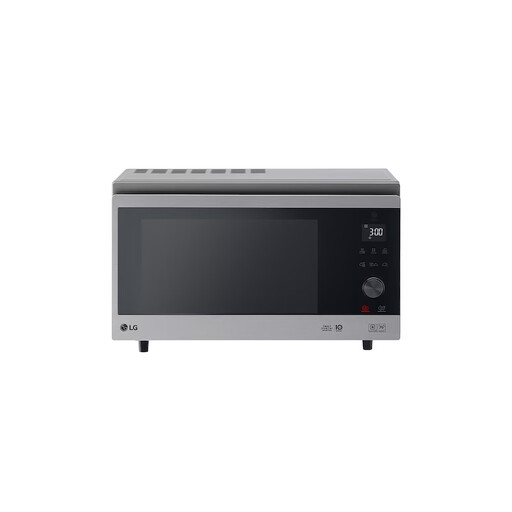 Image unavailable
LG MJ3965ACS, 39 L combination microwave
Consider this if you’re looking for a larger-capacity supplementary appliance rather than a model mainly for quick reheating.
Its stated capacity is 39 L. Check the overall size and whether it has the settings you need for your recipes before comparing it with an oven or a more compact microwave; capacity alone doesn’t indicate its energy consumption.
View on Joybuy
Frequently asked questions
Can you compare an oven’s energy label with a hob’s?
No. The European Commission says energy labelling applies to ovens, but not to hobs. Compare oven capacities and kWh per cycle with other ovens; for a hob, check the model’s specifications and instructions instead.
Do annual figures show how much energy I’ll use at home?
No. ADEME’s benchmarks are based, among other things, on 409 cycles a year for hobs and 187 cycles for a 63 L electric oven. Your usage frequency and the food you cook may be different.
What should you check before replacing a hob or built-in oven?
Measure the space and check the model’s instructions for installation, power and connection requirements. The French order of 3 August 2016 sets technical objectives for electrical installations in the relevant residential buildings, but it doesn’t by itself confirm that your individual installation is suitable. Have it assessed if work is needed.
Does a commercial warranty replace your statutory rights?
No. According to the French Ministry of the Economy, a commercial warranty is separate and doesn’t remove consumers’ rights under the legal guarantee of conformity or the guarantee against hidden defects. Read its terms, including what’s covered and any exclusions, before taking it out.


