What should you check before buying?
Think about hob cooking, oven dishes and reheating separately: you may need more than one appliance for these tasks. Once you’ve worked out what you need, check the space, your cookware and the specifications of the exact model, rather than assuming it will be suitable based on its category alone.
| Criteria |
What to check |
Who is it for? |
| Hob cooking |
Number and layout of the cooking zones; if you choose induction, check that your pans have magnetic bases. |
If I cook most meals in a saucepan or frying pan, I want to use my usual cookware and manage several pans at once; around 31% of consumers would make this a priority. |
| Oven dishes |
Capacity in litres and the cooking modes actually available; for a built-in model, check the dimensions of the housing unit. |
When I make bakes, roasts or several portions, I need an oven with enough capacity for the dishes I plan to cook; this would be the top priority for around 25% of consumers. |
| Small spaces and reheating |
Dimensions, freestanding or built-in installation, and the features of the microwave or combination appliance. |
In a compact kitchen, I’m mainly looking for a suitable spot to reheat food or prepare small portions; around 19% of consumers would prioritise this use. |
| Energy consumption and useful life |
For an oven, capacity and energy consumption per cycle for comparable modes; for any appliance, check the repairability information available and the conditions specific to the model. |
If I’ll be using the appliance regularly, I want to be able to check its energy consumption data and information relevant to its useful life before choosing; around 25% of consumers would put this concern first. |
When comparing ovens, the European Commission describes the energy label for applicable models as a guide that shows, among other things, their capacity and energy consumption per cycle. Hobs don’t carry the same label, so don’t compare an oven’s energy class with a hob as if they were measured in the same way. An appliance’s rated power alone won’t tell you how much energy it will use for your meals.
Appliances for different needs
These Joybuy models include induction hobs, a ceramic hob and a built-in oven. To choose between them, start with the cooking you do, then check your cookware, available space and the installation requirements of the model you’re considering.
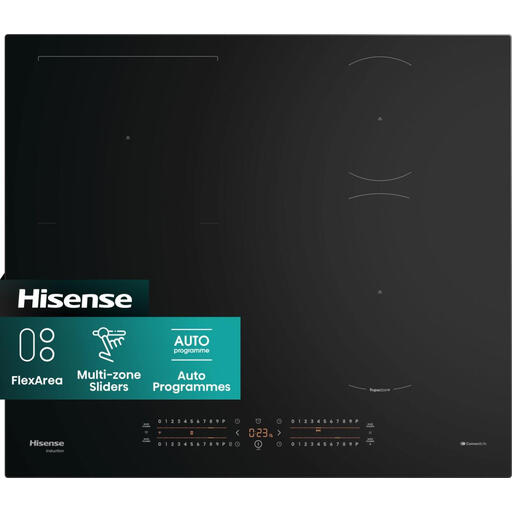 Image unavailable
Hisense HI6432BSCWF Hi6, 60 cm induction hob
Worth considering if you need an induction hob for everyday meals. It’s listed as 60 cm wide. Check that your pans have magnetic bases, and compare the model’s manual with the space and power supply available in your kitchen.
View on Joybuy
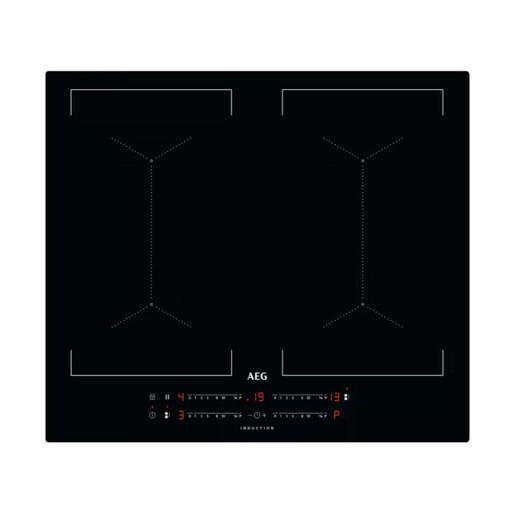 Image unavailable
AEG IKS64453IB, 60 cm induction hob, 4 zones with Bridge function
Worth considering if you use several pans and want to explore a function that combines cooking zones. The title lists it as 60 cm wide, but another width appears in the model information. Check the exact dimensions on the installation diagram. Also check that your cookware and installation are compatible.
View on Joybuy
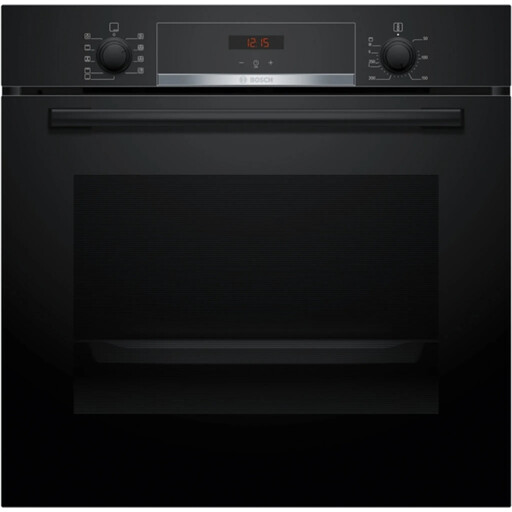 Image unavailable
Bosch HBA514BB3, 71 L built-in oven, 3D hot air
Worth considering for oven dishes and portions that need the listed capacity of 71 L. Check the number of oven cavities before buying: the model title and description don’t agree on this point. Also check the built-in dimensions and compare energy consumption per cycle only for equivalent modes.
View on Joybuy
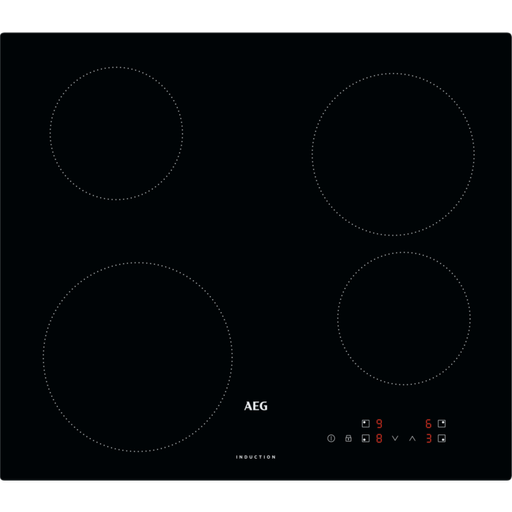 Image unavailable
AEG IBS64200CB, two-phase Perilex semi-flush-fit induction hob, 59 cm
Worth considering for frying-pan or saucepan cooking if this semi-flush-fit design suits your plans. It’s listed as 59 cm wide. Before choosing this hob, check that your pans have magnetic bases and consult the model’s manual for the installation type and power supply requirements.
View on Joybuy
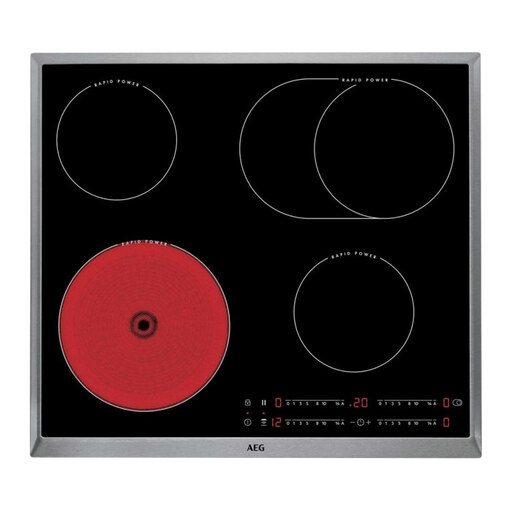 Image unavailable
HK654850XB Series 3000, 60 cm ceramic hob
Compare it with an induction hob if you want to cook on a hob without relying on pans with magnetic bases. It’s listed as 60 cm wide. Before buying, check the built-in dimensions and electrical specifications against your kitchen.
View on Joybuy
Frequently asked questions
Do you need to replace your pans to switch to induction?
Not if their bases are induction-compatible. Whirlpool recommends looking for the relevant symbol or testing the base with a magnet. Also check which pan sizes the hob you choose can accommodate.
Why don’t hobs and ovens have the same energy label?
In the European Union, the energy labelling requirements described by the European Commission apply to domestic ovens, but not to hobs. For a hob, check the model information; for an oven covered by the label, also look at its capacity and energy consumption per cycle.
What should you compare on an electric oven’s energy label?
Compare the energy efficiency class, capacity in litres and energy consumption per cycle for the relevant cooking modes. According to the European Commission, these details appear on the label of applicable domestic ovens. Match them to the modes and capacity you actually need.


