Start by choosing an appliance to suit the meals you prepare: a hob for cooking in saucepans and frying pans, an oven for dishes that need to cook in a cavity, and a microwave mainly for reheating or defrosting. To keep an eye on energy use, compare consumption figures with how often you use the appliance, then check the space available and, for a built-in appliance, whether it is compatible with your existing circuit. The averages published by ADEME are useful benchmarks, not a forecast of your energy bill.
Who is this guide for?
Households that cook regularly and keep an eye on energy use
If you prepare several meals a week, start by identifying the cooking methods you use most often. ADEME publishes separate benchmarks for hobs, ovens and microwaves. These can help you put your usage into context, but they cannot predict your household’s consumption.
Households with a small kitchen or a space-restricted housing unit
A compact oven, a microwave combination oven or separate appliances will each take up space differently. Siemens Électroménager France, for example, offers compact ovens in a 60 × 45 cm format, but you should always check the appliance dimensions against those of the housing unit and the installation instructions.
People replacing an appliance without electrical work
If you’re replacing a hob or built-in oven without modifying the installation, compare the model’s requirements with the existing circuit and protection. Promotelec highlights the importance of dedicated circuits for these appliances; the connection required will depend on the appliance you choose.
Which criteria should you prioritise?
First choose the cooking method that suits your meals, then check the connection, the space available and the energy data that apply to the appliance.
Induction or ceramic hob
Choose this if: you cook in saucepans or frying pans. Induction requires compatible cookware, while a ceramic hob does not.
Bear in mind: your choice still depends on the existing circuit. For 409 cycles a year, ADEME gives benchmarks of 115 kWh for induction and 200 kWh for ceramic hobs. This difference does not predict your household’s consumption.
Standard electric oven
Choose this if: your meals regularly include gratins, pastries, roasts or several dishes that need to be cooked in the oven.
Bear in mind: consumption depends in part on the cooking mode and how often you use it. Compare capacity and kWh per cycle, as well as the connection requirements in the installation instructions.
Compact microwave combination oven
Choose this if: you need a single built-in appliance that combines oven cooking and microwave functions in a kitchen where space is at a premium.
Bear in mind: capacity and functions vary by model. Check the housing unit and installation instructions rather than relying on the front dimensions alone.
Microwave oven
Choose this if: you mainly want to reheat or defrost food, alongside the appliance you use to cook your meals.
Bear in mind: a microwave does not automatically replace cooking on a hob or in an oven. Check the model’s functions, capacity and placement instructions.
| Criterion |
What to check |
Who it matters to |
| Energy use in everyday use |
For an oven, compare kWh per cycle for a relevant capacity and cooking mode. For a hob, consider the technology and your cookware. |
If I cook almost every day, I want to understand energy use in the context of my habits, rather than estimate my bill from the stated power alone. Around 33% of consumers rank running costs as their top concern. |
| Existing connection |
Compare the requirements in the model’s instructions with the existing circuit, its protection and the connection point. |
I’m replacing an appliance without modifying the installation, so electrical compatibility determines which models I can consider. This is a priority for around 17% of consumers. |
| Cooking capacity |
Depending on the meals you prepare, check the number and size of cooking zones, or the oven capacity and cooking modes. |
When a meal includes several dishes, I don’t want to lose the capacity I need for my usual cooking. For around 25% of consumers, capacity comes before other criteria. |
| Space and combined functions |
Measure the housing unit and required clearances, then compare the model’s usable capacity and functions. |
In a kitchen where space is limited, I want to combine the functions I need without choosing an appliance that won’t fit in the unit. Around 25% of consumers prioritise this balance between size and functions. |
Mistakes to avoid
-
Assuming an annual average guarantees savings
ADEME’s benchmarks are based on defined usage patterns and appliances, including 409 cycles a year for hobs and 187 for a 63-litre electric oven. The dishes you cook, your cooking methods and how often you use the appliance may differ.
Use these figures to compare appliance categories, then look at per-cycle data where available and estimate how often you’ll use the appliance yourself.
-
Looking for the same energy label on every appliance
The European Commission distinguishes between the energy labelling for ovens and that for hobs. It also states that appliances with a microwave heating function are not covered by the requirements presented for ovens.
For an oven covered by the label, also check the capacity and kWh per cycle. For a hob or microwave appliance, compare the features that matter for the way you cook.
-
Ordering before checking the electrical circuit
A hob or built-in oven may require a connection that is incompatible with your existing installation. For an electric hob, Promotelec describes a dedicated circuit with a 32 A cable outlet, 6 mm² conductors and a 32 A circuit breaker. You should still check the appliance’s own instructions for its requirements.
If the connection required does not match your existing circuit, rule out that model if you’re replacing an appliance without electrical work.
-
Choosing a compact oven based on its front dimensions alone
A compact format does not guarantee that the oven will fit the housing unit or provide the cooking capacity you need. Combination oven functions also vary from model to model.
Measure the available space and check the dimensions, clearances, capacity and installation requirements given in the instructions.
Brands to consider
Electrolux
A brand to consider if you’re looking for an induction hob with zones or assistance functions to suit your cookware.
- Depending on the range, Electrolux France offers Bridge or FlexiBridge zones and SenseBoil or SenseFry functions.
- These functions are not available on every model. Also check the total power, cut-out dimensions and connection requirements for the hob you choose.
Siemens
A brand to explore for compact built-in ovens, including microwave combination models and models with a steam function.
- Siemens Électroménager France offers compact ovens in a 60 × 45 cm format, among other options.
- These front dimensions alone do not confirm that the oven will fit your housing unit; capacity and functions depend on the model.
Whirlpool
A brand to consider if you want to combine several cooking methods in a compact built-in oven.
- Whirlpool France offers a combination model with microwave, fan-assisted cooking and steam, a 52 L cavity and a stated microwave power of 950 W.
- These figures apply to this specific model. Before choosing a combination oven, compare the housing unit, capacity and functions you need.
Portable hobs available on Joybuy
These two portable single-zone hobs are suited to cooking in a saucepan or frying pan when space is limited. They are not the ovens and microwaves covered above: choose between ceramic and induction depending on your cookware, then check the connection requirements for the model.
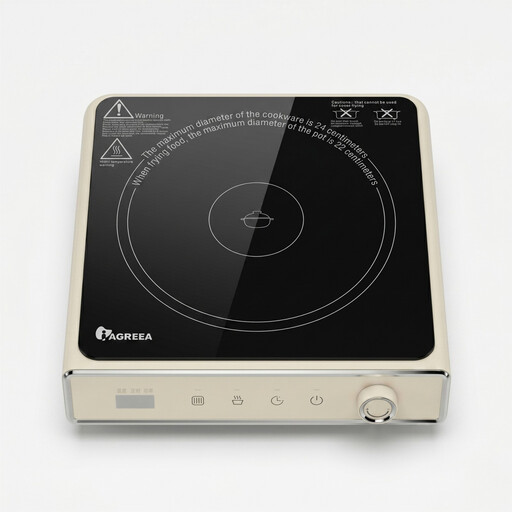 Image unavailable
IAGREEA DF200-DTL2520, 2,000 W portable ceramic hob
Worth considering if you need a portable cooking zone rather than a hob with several zones.
The product name lists eight power levels, eight temperature settings, a 180-minute timer and automatic shut-off after one hour.
Check the plug type and connection requirements before buying. The rated power of 2,000 W alone cannot predict how much energy you’ll use to cook your meals.
View on Joybuy
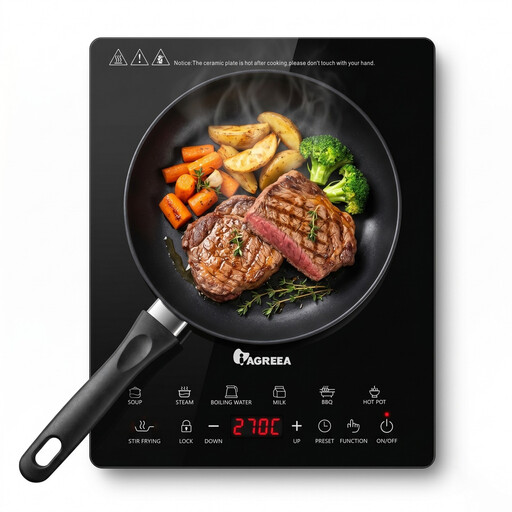 Image unavailable
IAGREEA DF200-14V10, 2,000 W portable induction hob
Worth considering for portable single-zone cooking if you have cookware that is compatible with induction.
The product name lists eight power levels, a three-hour timer and compatible cookware with a diameter of 12 to 26 cm.
Check that your cookware is compatible, as well as the plug type and connection requirements. The rated power of 2,000 W is not enough to determine energy use in everyday cooking.
View on Joybuy
Frequently asked questions
Can the energy label be used to compare all cooking appliances?
No. The European Commission states that the relevant energy labelling applies to ovens and cooker hoods, not hobs, and that appliances with a microwave heating function are excluded from the requirements presented for ovens. For an oven covered by the label, also compare capacity and kWh per cycle. For other appliances, consider their functions and how you’ll use them.
Can you replace a hob with an induction hob without redoing the electrics?
Yes, if your existing circuit meets the requirements of the model you choose and your cookware is suitable for induction. For an electric hob, Promotelec describes a dedicated circuit with a 32 A cable outlet, 6 mm² conductors and a 32 A circuit breaker. However, check the installation against the instructions for the specific hob before choosing it as a replacement without electrical work.
Why check your pans before choosing induction?
Induction requires cookware with bases suitable for a magnetic field, as UFC-Que Choisir points out. Check your frying pans and saucepans before choosing this technology based on ADEME’s consumption benchmarks.
What should you measure before buying a compact oven?
Measure the housing unit’s width, height and depth, then check the appliance dimensions and required clearances in the model’s instructions. The 60 × 45 cm format offered in some Siemens ranges does not, on its own, guarantee that an oven will fit your kitchen unit or provide the capacity you need for your meals.


