People who cook every day
If you mainly prepare meals in a saucepan or frying pan, first check which hob burners are already available before adding an oven. Que Choisir points out that induction requires compatible saucepans and frying pans.


After moving in, start by choosing the function you’re missing: a hob for cooking in a saucepan or frying pan, an oven for gratins and roasts, or a compact appliance if space is limited. Before buying a fixed appliance, check the facilities listed in your tenancy agreement, the available space and whether the power supply is suitable, following Promotelec’s recommendations. Induction hobs also require compatible cookware, and a combination oven does not replace hob burners.
If you mainly prepare meals in a saucepan or frying pan, first check which hob burners are already available before adding an oven. Que Choisir points out that induction requires compatible saucepans and frying pans.
If you need to add to a kitchenette or keep your worktop clear, identify the missing function before choosing a compact or combination appliance. Que Choisir explains the functions available in a microwave combination oven.
If you regularly make gratins, cakes or roasts, first check whether your home already has an oven and whether there’s room for another appliance. Que Choisir outlines the oven’s baking, grilling and roasting functions.
Once you’ve taken stock of the kitchen, choose an appliance based on the cooking functions you’re missing. Then check the space available and the conditions for using the model you have in mind.
| Priority | What to check before buying | Who is this relevant to? |
|---|---|---|
| Cooking on hob burners | Check which burners are already available, measure the space and make sure your cookware is compatible with induction. | If I mainly cook in a saucepan or frying pan, I want hob burners that suit the meals I make. Around 31% of consumers prioritise cooking on hob burners. |
| Cooking in the oven | Check whether an oven is already provided, which cooking modes you need and the dimensions of the space available. | If I regularly make gratins, cakes or roasts, I check whether there’s an oven and which functions will be useful. Oven cooking is the priority for around 25% of consumers. |
| Saving space | Measure the available space and distinguish between the functions of a standard microwave, a combination appliance and a compact hob. | In a small kitchen, I’d rather add only the missing function without cluttering the worktop. Saving space comes first for around 25% of consumers. |
| Managing running costs | Compare energy use on a like-for-like basis, as well as the purchase price and the cookware you already own. | If I’m comparing induction with ceramic for regular use, I consider the purchase price, cookware and energy use. Around 19% of consumers put running costs first. |
According to Que Choisir, induction hobs generally cost more to buy than ceramic hobs, but use less energy. They also require suitable cookware. The indicative energy-use figures published by ADEME are based on standard usage and cannot predict a household’s energy bill.
A hob is suitable for cooking on burners, but not for oven cooking. A microwave combination oven can handle reheating and some types of oven cooking, but it does not provide burners for cooking in saucepans or frying pans.
In a rental property, appliances may already be listed in the tenancy agreement or inventory. Buying them again could mean doubling up.
A duplicate appliance adds unnecessary clutter to the kitchen.
Check your tenancy agreement and inventory, then confirm which functions are actually available before choosing what you need.
A microwave combination oven can combine microwave and oven functions, but it does not provide burners for cooking in a saucepan or frying pan.
If there are no burners, you’ll need to consider an additional appliance for this type of cooking.
List the dishes you cook on hob burners and those you bake in the oven before choosing a combination appliance. Que Choisir describes the grill and fan-assisted functions available on some combination ovens.
Induction requires compatible cookware and, according to Que Choisir, generally costs more to buy than a ceramic hob.
Check your saucepans and frying pans, then compare the purchase price and energy-use figures for similar usage. ADEME’s indicative figures cannot predict your personal energy use.
Physical space alone doesn’t mean a fixed hob or oven is suitable for the property. Promotelec specifies separate power supplies for hobs and ovens.
Check the model’s dimensions and specifications and, if needed, ask a professional to confirm that it’s suitable for your kitchen. In a rental property, a project that alters the premises or appliances may also require the landlord’s written consent, according to ANIL.
The products below include a built-in oven, induction hobs and freestanding appliances. Choose according to the function you’re missing, the space available and the conditions for using the model.
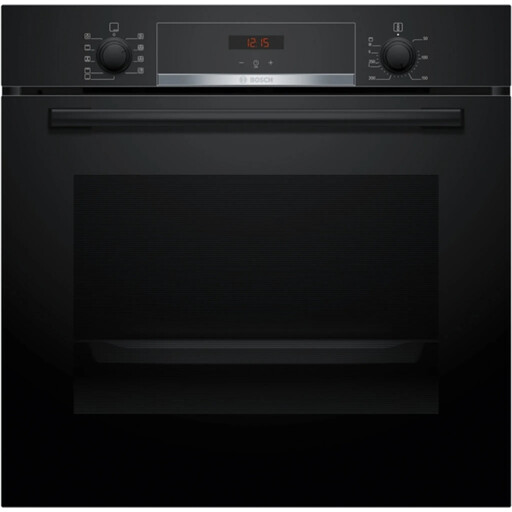 Image unavailable
Worth considering if you’re missing an oven and have a suitable built-in space.
Stated capacity: 71 L; 3D hot air; stainless steel finish. Check the dimensions of the housing unit and the power supply requirements before buying.
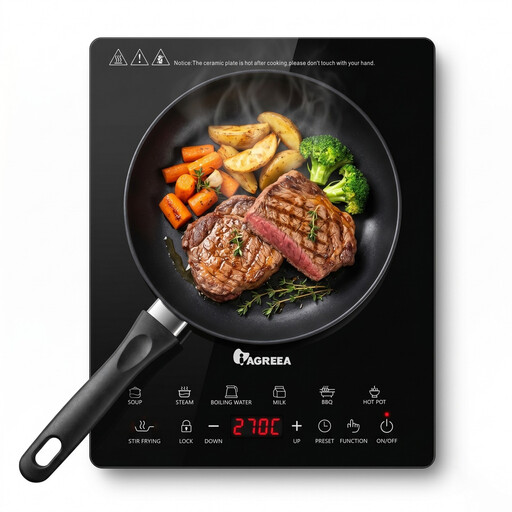 Image unavailable
Worth considering if you need a freestanding cooking zone and have a suitable surface for it.
8 power levels; temperature control from 60 to 270 °C; 7 programmes; 3-hour timer. Designed for compatible cookware measuring 12 to 26 cm.
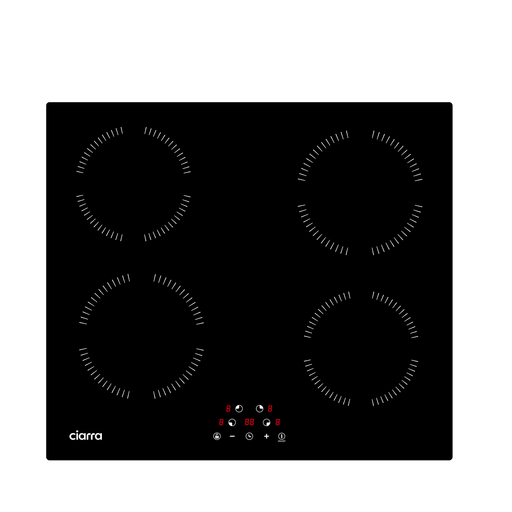 Image unavailable
Worth considering if you cook on several burners and your kitchen has a suitable space for a built-in model.
4 cooking zones; 9 power levels. Check the cut-out dimensions and that your cookware is compatible with induction. The product description recommends installation by a qualified electrician.
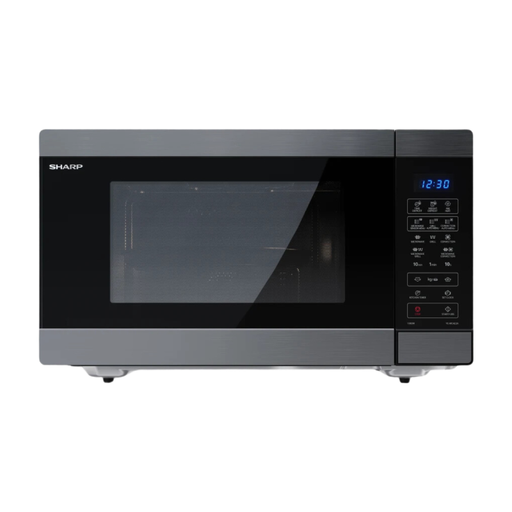 Image unavailable
Worth considering if you want to reheat food and cook some dishes in the oven using a freestanding appliance.
Stated capacity: 42 L; microwave, grill and convection functions. It does not replace hob burners for cooking in a saucepan or frying pan.
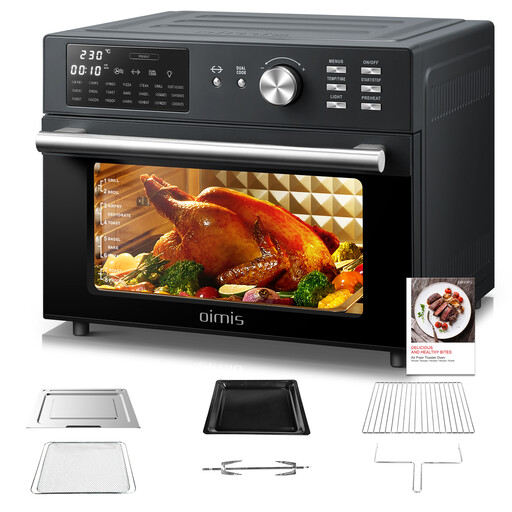 Image unavailable
Worth considering if you want to cook in an oven using a freestanding appliance and have enough worktop space.
21 preset programmes; rotisserie and dehydrating functions; stated capacity: 30 L. The title states that it can fit a 13-inch pizza.
Not necessarily: the statutory list of furnishings for a furnished rental includes a hob and an oven or microwave oven. Check the tenancy agreement and inventory before buying anything. This rule applies to furnished rentals. Decree No. 2015-981 of 31 July 2015 sets out this list.
No. The property must have a kitchen or kitchenette set up to accommodate a cooking appliance and include a connected sink, but this requirement does not mean that appliances have to be provided. This is set out in Article 3 of Decree No. 2002-120 of 30 January 2002. Check your tenancy agreement too, to see which appliances are included.
No. Check that both the model and the property are suitable before buying. Promotelec specifies dedicated circuits for hobs and ovens, so the presence of a socket alone doesn’t prove it’s suitable for the appliance you have in mind. Ask a professional to assess your specific situation, and don’t automatically apply rules for new installations or complete renovations to an existing setup.
If the project alters the rented premises or appliances, the landlord’s written consent is required under Article 7 of the Act of 6 July 1989, as ANIL points out. Buying an appliance without making alterations does not, by itself, determine whether consent is needed: that depends on the changes planned.
Check what ventilation is available and follow the guidance that applies to your property. ADEME recommends ventilating the kitchen after boiling water there and notes that some single-flow mechanical ventilation systems have a boost setting for cooking fumes. This advice does not mean that every electric appliance needs an extractor hood.