Cooking regularly on several rings
If you often prepare several parts of a meal at the same time, start by working out how many rings you need. Bosch and Beko product pages show some of the different hob configurations available.


For everyday cooking, start by choosing appliances to suit the way you cook: a hob for cooking on rings, a dedicated oven for oven-baked dishes, or a combination appliance if its settings and capacity also meet your reheating needs. Then check the available space, compatible cookware, and the model’s connection and installation requirements. ADEME’s energy-use figures are based on reference usage, so they won’t predict your future bills.
If you often prepare several parts of a meal at the same time, start by working out how many rings you need. Bosch and Beko product pages show some of the different hob configurations available.
If you’re replacing an appliance in an existing space or cooking with limited worktop room, check the dimensions, connection and clearances specified for each model. Beko and Electrolux product pages show examples of different configurations.
If you regularly use an oven or reheat dishes, compare the cooking settings and usable capacity with the food you prepare. The specifications published by Electrolux and Samsung illustrate appliances with different capacities.
When planning your set-up, start with the dishes you cook most often, then check that the appliances suit the available space and connection. Compare energy use only on a like-for-like basis.
| What matters | What to check | Who it matters most to |
|---|---|---|
| Preparing your usual dishes | Number of rings and simultaneous cooking zones; oven or combination appliance cooking settings and usable capacity. | When I prepare several parts of a meal, I want enough rings and settings to suit the dishes I cook in the oven. Around 31% of consumers prioritise the dishes they prepare. |
| Compatibility with your installation | Connection and circuit; dimensions of the space or cut-out and the clearances specified in the instructions. | If I’m replacing an appliance in an existing home, I want to know whether the model suits the available connection and space. Around 25% of consumers prioritise this compatibility. |
| Available space | External dimensions and installation space; usable capacity and the size of dishes that will fit inside. | In a small kitchen, I want to keep the footprint down without choosing an appliance that’s too small for my dishes. This is a priority for around 25% of consumers. |
| Energy use in practice | Energy use in kWh and number of cycles on a comparable basis; energy label for the oven in question. | To manage the electricity used for my cooking habits, I want to compare figures based on similar usage. Around 19% of consumers put energy use first. |
External dimensions and the measurements needed for a built-in installation are not the same. An appliance may fit the width but still not suit the cabinet or the required clearances.
Compare the dimensions of your space with the installation diagram for the exact model, and check the ventilation instructions.
The product name alone doesn’t tell you whether it has the settings you need for your dishes. Features can also vary from one model number to another.
Check the settings, capacity and cavity size. If the combination appliance you’re considering won’t accommodate the dishes you prepare, consider a dedicated oven.
The annual figures published by ADEME are based on appliance categories and assumed usage cycles. How often you cook and which settings you use may be different.
Compare energy use in kWh on a like-for-like basis and take your own usage habits into account.
In 2025, the French ministry responsible for the ecological transition said that the durability index was gradually replacing the repairability index for televisions and washing machines, not every appliance category.
For a hob or oven, check the model-specific information on spare parts, maintenance and after-sales service. Don’t assume that a particular index applies.
The PUE611BB5E is an example of a built-in induction hob. Check the dimensions and connection requirements for the specific model before installation.
The HIC64100 and HDCE32200X are examples of a four-zone ceramic hob and a two-zone electric domino hob respectively.
The EOF3H40TH built-in oven is an example of an appliance dedicated to oven cooking.
The MC28H5015AW/EF is an example of the features to consider in a combination microwave.
The DK 1014 is an example of a freestanding double electric hob, which is different from a built-in domino hob.
This selection brings together induction and ceramic hobs, a built-in oven and a combination microwave oven for a range of everyday cooking needs.
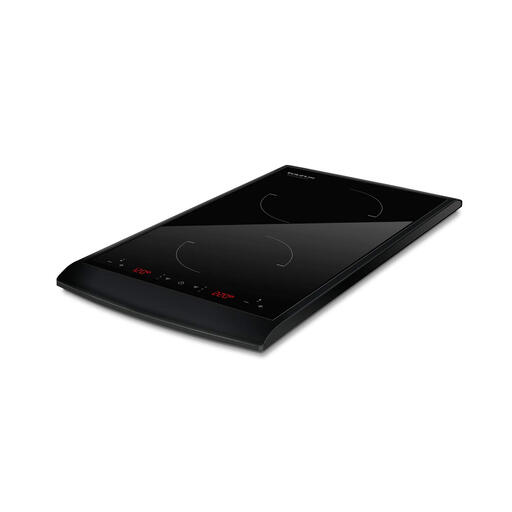 Image unavailable
For cooking two dishes at once on a worktop, this portable hob has two induction zones.
Stated total power: 2 900 W; stated dimensions: 600 × 310 mm. It requires induction-compatible cookware measuring 12 to 24 cm in diameter.
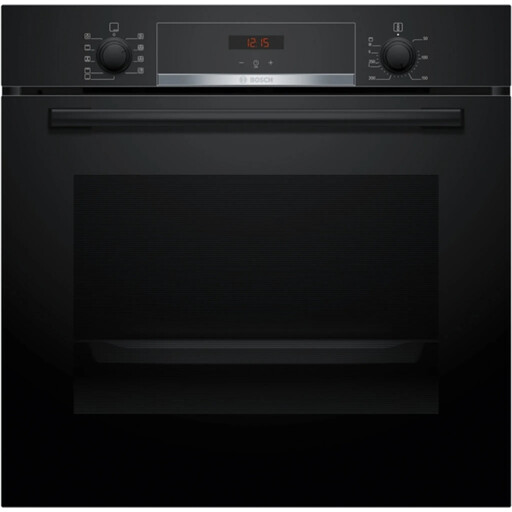 Image unavailable
For oven cooking in a built-in space, the product description lists a capacity of 71 L and seven cooking settings.
Features listed include fan-assisted cooking and a grill, as well as hydrolytic cleaning. Check that the space and connection are suitable using the product specifications.
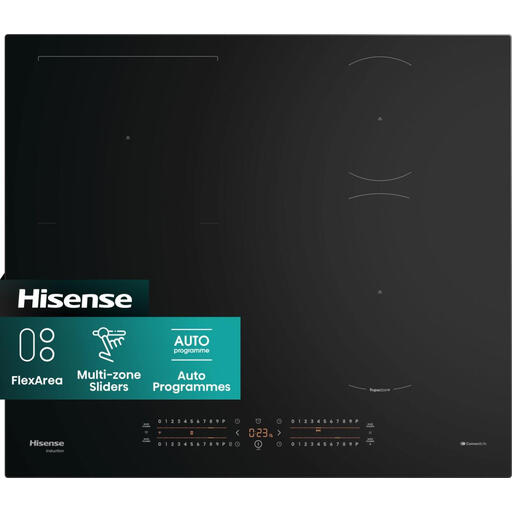 Image unavailable
For cooking on several zones and using larger cookware, the product description lists four zones, including a Bridge Zone.
The stated connection power is 7,36 kW. Before buying this built-in hob, check the recess and the required connection.
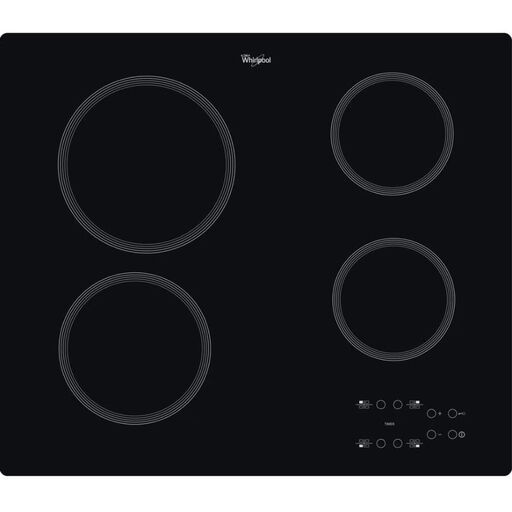 Image unavailable
For cooking on several zones without needing induction-compatible cookware, the product description lists four radiant ceramic cooking zones.
The specifications include nine power levels per zone, a timer and a residual heat indicator. According to the product description, installation requires a compatible cut-out and a fixed electrical connection by a professional.
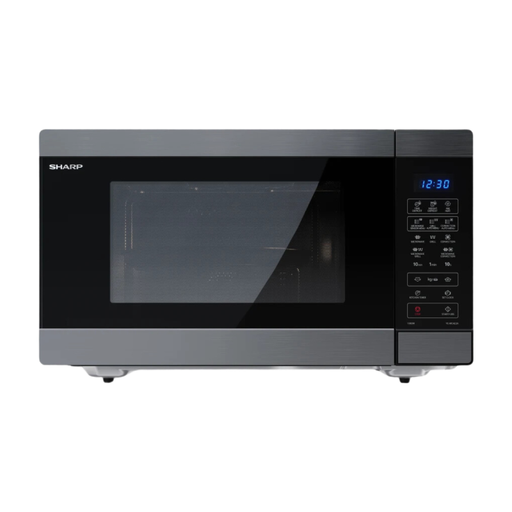 Image unavailable
For reheating, grilling and convection cooking in one freestanding appliance, the product description lists all three functions and a capacity of 42 L.
Place the appliance on a stable surface and make sure its ventilation openings are not blocked.
No. Before choosing a built-in hob, make sure the circuit and connection meet the requirements in the model’s instructions. Promotelec describes a dedicated circuit for a hob, with different arrangements for single-phase and three-phase supplies. This doesn’t confirm that your home’s installation is suitable.
Measure the recess or cut-out and check the diagram and instructions for the exact model to find out the required dimensions and clearances. Don’t assume you know the installation requirements from the advertised width alone. For example, Electrolux specifies a 590 × 560 × 550 mm recess for the EOF3H40TH oven.
No. It depends on the settings you need and the size of the dishes you cook. Samsung’s MC28H5015AW/EF is listed with a 28 L capacity, convection, grill and microwave settings, while Electrolux’s EOF3H40TH oven is listed at 72 L. These are examples of two models, not the full range of capacities in their respective categories.
Subject to its conditions, the statutory legal guarantee of conformity applies to new, second-hand and refurbished goods sold by a trader to a private individual. The French Ministry of the Economy states that you have two years to make a claim under it. This statutory guarantee is separate from an optional commercial guarantee.
No. European Regulation 65/2014 covers, among other things, domestic electric and gas ovens, but excludes ovens that offer a microwave heating function. So don’t apply the labelling rules for an oven covered by this regulation to a combination microwave, or assume that an oven’s energy class applies to a hob.