If you need to keep the hob free and want to deep-fry in oil, an electric deep fryer is the most straightforward solution, but you’ll need to clean the bowl and dispose of the used oil. An air fryer or oven also leaves the hob free if cooking with hot air suits you; don’t assume the result will be the same as deep-frying. A traditional stovetop fryer is still an option when a hob ring is available.
Who are these options for?
People who need to free up the hob
If you already have several dishes cooking on the hob, an electric deep fryer lets you deep-fry without using an extra ring. Que Choisir draws this distinction between an electric deep fryer and a traditional fryer that sits on the hob.
People who would rather avoid a bowl of oil
An air fryer leaves the hob free and means you don’t have to deal with a bowl of oil. However, you’ll need to be happy with hot-air cooking and choose a model based on the amount of food you’ll prepare, the space available, cleaning and noise.
People who only cook this way occasionally
If you don’t want to store a dedicated appliance, an oven may suit you if it’s free when you’re preparing your meal. A traditional stovetop fryer can also be used now and again, but only if you can spare a hob ring.
How do the different methods compare?
Electric deep fryer
Choose this if: you need to keep the hob free and deep-fried food is important for your meal.
Bear in mind: you’ll need space to use and clean the appliance, and to dispose of the used oil.
Traditional stovetop fryer
Consider this if: you rarely cook this way and have a free hob ring.
Limitation: it takes up a hob ring; if you have an induction hob, check that the cookware is compatible.
Air fryer
Choose this if: you’re happy to cook with hot air to keep the hob free and avoid a bowl of oil.
Limitation: according to Que Choisir, results vary between air fryer models and depending on how full they are.
Oven
Consider this if: your oven is free when you’re preparing the meal and you’d rather not add another appliance.
Limitation: oven cooking won’t automatically reproduce the results of deep-frying.
| Criterion | What to check | Who is this for? |
|---|
| Free up the hob for frying |
Check that the appliance heats its oil independently of the hob, and compare the amount you need to cook with its capacity. |
When the other dishes are already using the hob rings, I still want to deep-fry; around 36% of consumers would make this their priority. |
| Reduce the cleaning involved with oil |
Compare how the parts are cleaned and, if you’re using oil, find out where you can dispose of the used oil locally. |
I’d rather not empty a bowl of oil after a meal, even if that means choosing hot-air cooking; this would be the priority for around 29% of consumers. |
| Choose an appliance for occasional use |
Measure the space available for using and storing it; compare the stated capacity with the amount you actually cook. |
If I rarely prepare this kind of food, I don’t want an appliance that’s difficult to store; around 21% of consumers would prioritise this compromise. |
| Use your existing oven |
Check that it’ll be free at the right time and that its capacity suits the meal you’re planning. |
I’m happy to cook with hot air and would rather not store another appliance; this would be the main consideration for around 14% of consumers. |
Mistakes to avoid
-
Choosing a traditional fryer to free up the hob
A traditional fryer sits on a hob ring, so it won’t solve the problem of cooking several things at once described by Que Choisir.
Keep this option for meals when a hob ring is free. Otherwise, compare an electric deep fryer, an air fryer and the oven based on the result you’re looking for.
-
Expecting an air fryer to give the same results as deep-frying
An air fryer cooks using circulating hot air. Que Choisir notes that results for chips vary depending on the model and how full it is.
Decide whether deep-frying is essential, then check the recommended load and any test results for the model you’re considering.
-
Forgetting about the oil after cooking
According to ADEME, used cooking oil must not be poured down the sink or toilet, into the natural environment or onto compost.
Before choosing an oil fryer, find out where you can dispose of used oil locally and have a sealed container ready for the cooled oil.
Disposing of it may take extra time and require an additional trip.
-
Relying on the stated capacity alone
The capacity in litres doesn’t tell you on its own how much food you can cook, how much space the appliance takes up or how easy it is to clean. Que Choisir’s test protocols also assess ease of use and, for air fryers, noise.
Compare the exact model’s external dimensions, the quantities you plan to cook and its cleaning instructions. Check independent test results too, where available.
Brands to consider for each method
Tefal
Its electric deep fryers are worth considering if you need to keep the hob free but still want to deep-fry.
- According to Tefal, the Easy Pro FR331070 has a removable bowl, an adjustable thermostat from 150 °C to 190 °C and non-electrical parts that are dishwasher-safe.
- These features apply to this specific model; deep-frying in oil still involves cleaning and finding a way to dispose of the used oil.
Moulinex
The Easy Fry range cooks with hot air, leaving the hob free without using a bowl of oil.
- According to Moulinex, the Easy Fry Essential EZ130810 has a 3.5 L capacity and a dishwasher-safe basket; the brand lists a 7.5 L capacity for the Easy Fry Compact EZ866HF1.
- Capacity alone doesn’t tell you about the appliance’s dimensions, noise level or cooking results.
Philips
Some Philips air fryers with two baskets may suit people who need to time several dishes while the hob is in use.
- Philips describes the Série 3000 NA352/24 as having two drawers of different sizes and a synchronisation function.
- This model-specific feature doesn’t guarantee the same results for every food or make it equivalent to deep-frying.
de Buyer
Its stovetop cookware is worth looking at if you have a free hob ring and don’t want a dedicated electric appliance.
- de Buyer says its Milady Ø28 cm frying pan is induction-compatible and has a 7 mm sandwich base.
- Induction compatibility doesn’t mean cookware is suitable for deep-frying: check the instructions for use. In any case, it will take up a hob ring.
Appliances that free up your hob
These electric appliances let you cook without taking up a hob ring: the first four fryers use oil, while the Cuisinart model cooks with hot air. First, choose the cooking method that suits you, then pick a capacity and size that work for your meal.
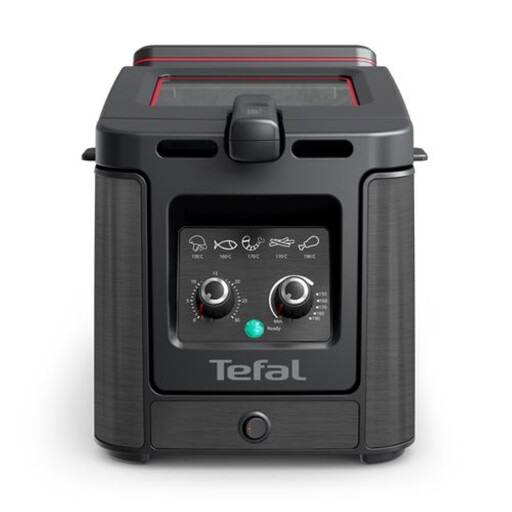 Image unavailable
Tefal Clear Duo, 3.5 L with XL viewing window
For deep-frying without using the hob. The XL viewing window helps you identify this variant; remember to allow for cleaning and disposing of the used oil.
View on Joybuy
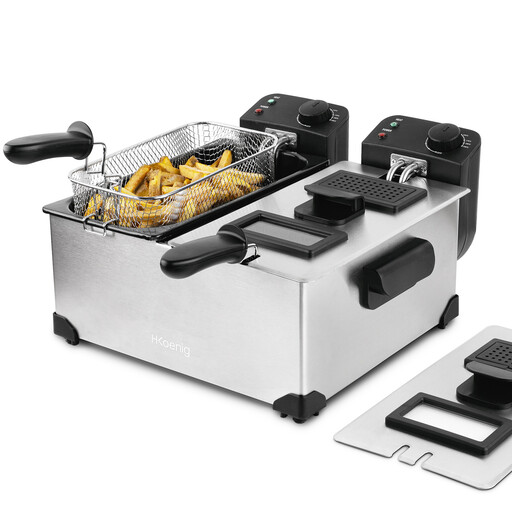 Image unavailable
Hkoenig DFX600, two 3 L baskets, 3 600 W
Worth considering if you want to fry two dishes while using the hob for other food. Its two independent thermostats let you adjust each basket separately; check the appliance’s dimensions before deciding where to put it.
View on Joybuy
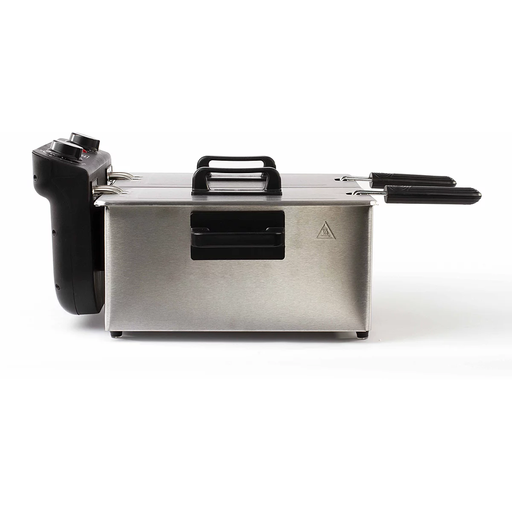 Image unavailable
Livoo DOC217, double deep fryer, 2 × 3 L, 3 300 W
Its two oil-filled bowls are suited to meals with two fried dishes, without taking up space on the hob. Check how much room it needs and how to clean the removable parts.
View on Joybuy
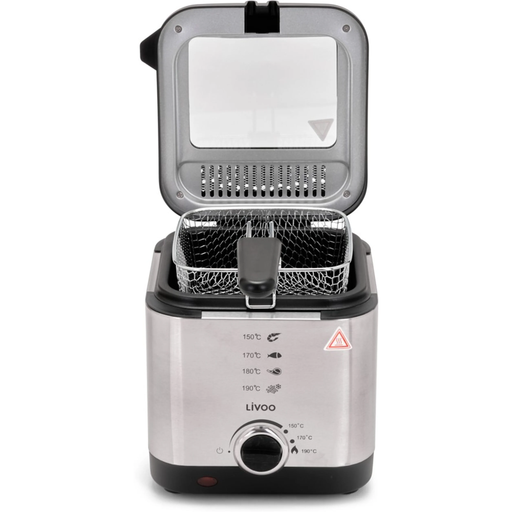 Image unavailable
Grey Livoo DOC240, 1.5 L, 900 W
This electric deep fryer is worth considering for smaller quantities when you don’t want to use the hob. Before buying, check that its capacity meets your needs and read the cleaning instructions for its fixed bowl.
View on Joybuy
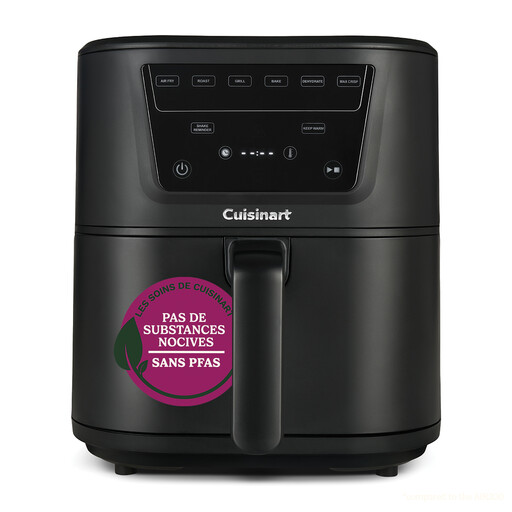 Image unavailable
Cuisinart Compact Max AFS8OBLE, 7.6 L
Consider this if you want to keep the hob free without deep-frying. Its stated capacity is 7.6 L; compare this with the quantities you usually cook, and check the dimensions and noise level before choosing this hot-air appliance.
View on Joybuy
Frequently asked questions
Can an air fryer replace a deep fryer when the hob is in use?
Yes, if you want to keep the hob free and hot-air cooking gives you the result you’re looking for; no, if deep-frying is essential. Que Choisir describes an air fryer as an appliance that cooks with circulating hot air, and notes that results for chips can vary depending on the model and how full it is.
What should I do with used cooking oil?
According to ADEME, let it cool, pour it into a sealed bottle or container, then check your local collection options, which are usually at a waste and recycling centre. Don’t pour it down the sink or toilet, into the natural environment or onto compost.
Can I use a traditional fryer on an induction hob?
Only if the manufacturer says the bowl is compatible with induction and the instructions allow you to use it as intended. Que Choisir points out that a traditional aluminium-cast fryer isn’t suitable for induction; even if it is compatible, it will take up a hob ring while you’re cooking.


