Switching to an induction hob is a good option if your electrical circuit, worktop cut-out and ventilation meet the model’s requirements, and your cookware is compatible — or you’re happy to replace some items. A ceramic hob doesn’t require cookware with a ferromagnetic base, while a combination hob lets you keep a gas burner, provided your kitchen can accommodate both systems. Before choosing, have the installation checked and test the cookware you actually use.
Who is this choice for?
Households considering induction
You’re looking to replace your hob and comparing factors such as responsiveness and energy use. UFC-Que Choisir reports that induction uses less energy than ceramic, although this advantage may not be as pronounced during long cooking sessions. Your choice will still depend on your installation and cookware.
Households keen to keep their cookware
You use a range of pans and would like to know which ones will work on induction before replacing them. Checking the base of each item will help you work out what you can keep and what may need an alternative solution.
Kitchens with an existing worktop cut-out
You’re replacing a built-in hob in a worktop you don’t want to alter. Before comparing cooking features, check the cut-out dimensions and ventilation requirements of the new model.
How do the different hobs compare?
Induction
Consider it: if your installation is suitable and the cookware you use has a compatible base.
Bear in mind: incompatible items will need to be replaced or used on another type of hob.
Ceramic
Consider it: if keeping cookware with non-ferromagnetic bases is your priority.
Bear in mind: UFC-Que Choisir reports higher energy use than induction in its comparison, although the difference depends on how you cook.
Induction and gas
Consider it: if you’d like to keep a gas burner for certain cookware or cooking methods.
Bear in mind: the induction zones still require compatible cookware, and the installation must meet the requirements for both energy sources.
| Factor |
What to check |
Who is this for? |
| Installation and fitting |
Ask a professional to compare the available connection and protection with the requirements in the instructions. Measure the cut-out and check ventilation. |
If the hob needs to fit into an existing kitchen, I want to know whether installation is possible before choosing its features. Around 36% of consumers put this practical consideration first. |
| Existing cookware |
Check the base of each item with a magnet, then check its size and the specifications of the hob you’re considering. |
I want to keep the pans I use regularly without replacing any that already work on induction. Keeping existing cookware is the top priority for around 29% of consumers. |
| Cooking and energy use |
Compare the zone sizes and controls with the way you cook. When considering energy use, factor in how long you use the hob for. |
When I cook frequently, heat-up time and settings matter most to me. Around 21% of consumers prioritise these cooking features. |
| Cookware size and gas burner |
Measure your larger pans and check which zones they can be used on. For a combination hob, ask a professional to confirm the gas and electrical requirements. |
A large pan or the option of keeping a flame can guide my choice of zones. This versatility comes first for around 14% of consumers. |
Mistakes to avoid before buying
-
Buying an induction hob before checking the connection
You can’t tell whether a hob can be installed by looking at its dimensions alone. For a single-phase electric hob, Legrand specifies a dedicated 32 A circuit with 6 mm² conductors. The model’s connection requirements and your home’s electrical installation need to be considered together.
Before ordering, ask a qualified professional to check the circuit, its protection and the requirements in the hob’s instructions.
Electrical alterations or a professional installation may be required.
-
Replacing all your pans without testing them first
Induction requires a ferromagnetic base, but some of the cookware you already own may be suitable.
Test each base with a magnet, look for the induction symbol and identify only the essential items that aren’t compatible.
-
Confusing the hob’s width with the worktop cut-out
Two hobs with a similar overall width may not need the same-sized cut-out. The space available for ventilation matters too.
Measure the existing cut-out and compare it with the fitting diagram and ventilation instructions for the model you choose.
An unsuitable cut-out may mean the worktop needs to be altered.
-
Assuming a combination hob solves every compatibility issue
The gas burner can handle some of the cooking you want to keep doing, but the other zones are still induction zones and need compatible cookware.
Work out exactly when you’ll use gas, then ask a professional to confirm the installation requirements for both systems for your chosen model.
Brands to consider
Electrolux
Worth considering if you’re looking for an induction hob with a flexible zone.
- Electrolux features Bridge on its EIS62356IZ model, allowing you to combine cooking zones.
- Check the dimensions and instructions for the exact model: this feature isn’t available across the entire range.
Whirlpool
Worth considering if power management is one of your priorities.
- Whirlpool describes a power management feature on the WSB2360BF.
- This setting doesn’t replace checking the connection and the maximum load your home can support.
Bosch
A brand to consider if installation support is an important part of your decision.
- Bosch recommends having an induction hob installed by a professional.
- You’ll still need to compare the dimensions, cooking zones and power requirements of each model.
Siemens
Worth considering if you use cookware in a range of sizes.
- Siemens features a flexInduction zone on the EX675HXC1E, designed for cookware of different sizes.
- Check the usable dimensions and, if you’d like to use the connected features, what you need to access them.
Hobs for these needs on Joybuy
This selection includes built-in induction hobs for replacing an existing hob, as well as a ceramic option if you’d like to keep cookware that isn’t suitable for induction. Whichever you choose, check that it can be installed in your kitchen first.
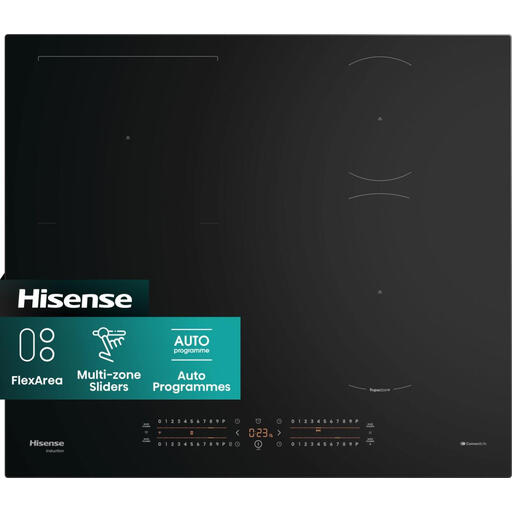 Image unavailable
Hisense HI6432BSCWF Hi6, 60 cm induction
Worth considering if you’re replacing a built-in hob with a 60 cm induction model. Compare the cut-out and connection requirements with your installation, then test the pans you’d like to keep.
View on Joybuy
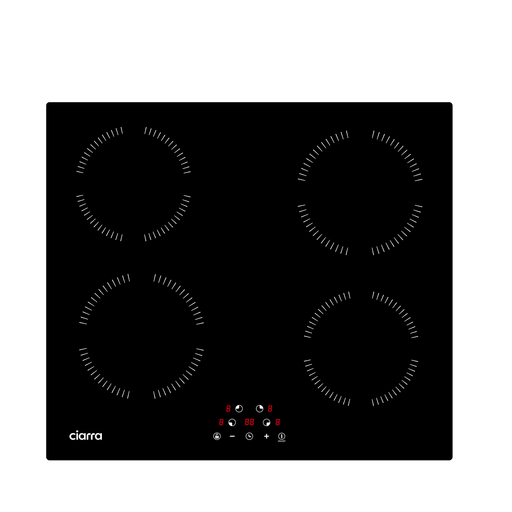 Image unavailable
CIARRA CABBIH4-A, 4-zone induction
Consider this if you use several pans at once. The model name indicates four zones and nine power levels; check the instructions against your cut-out, electrical circuit and cookware bases.
View on Joybuy
 Image unavailable
TOPWISH, 60 cm 4-zone induction
An option if you’re looking for four zones in a 60 cm built-in hob. The model name lists a booster, timer and child lock. Also check the connection and ventilation space required for installation.
View on Joybuy
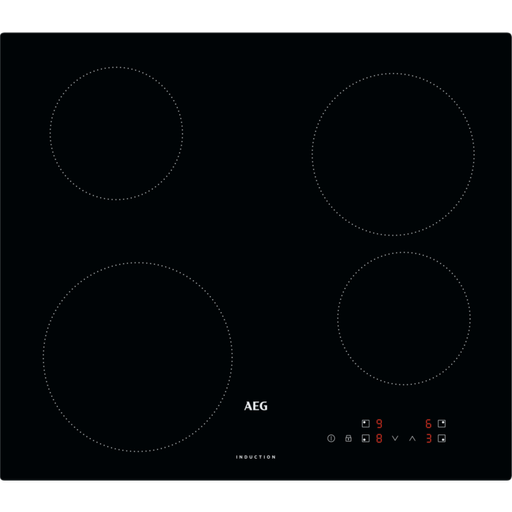 Image unavailable
AEG IBS64200CB, 59 cm induction, two-phase Perilex
Worth considering when replacing a built-in hob, provided you can check the connection requirements carefully. The model description specifies a semi-flush installation and a two-phase Perilex connection: don’t assume these are compatible with your kitchen.
View on Joybuy
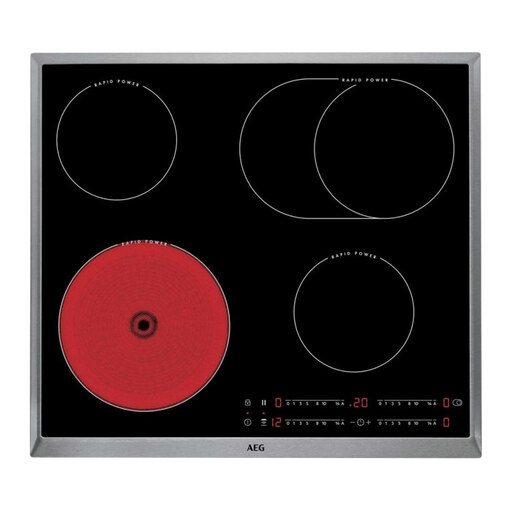 Image unavailable
HK654850XB Series 3000, 60 cm ceramic
Consider this if you’d like to keep cookware with bases that aren’t suitable for induction. This is a 60 cm ceramic hob; check the fitting dimensions and connection requirements for this model.
View on Joybuy
Frequently asked questions
Can I plug an induction hob into a standard socket?
Don’t assume you can. For a single-phase electric hob in France, Legrand specifies a dedicated 32 A circuit with 6 mm² conductors. Ask a qualified professional to check the available circuit and the instructions for your chosen model.
How can I check my pans before switching to induction?
Hold a magnet against the base of each pan and look for the induction symbol. UFC-Que Choisir notes that induction requires a flat, ferromagnetic base. Also check the minimum and maximum cookware sizes for the hob you’re considering.
Will the new hob fit the existing cut-out?
Not necessarily. Measure the opening and compare it with the model’s fitting dimensions, rather than relying on the hob’s overall width. Also check the ventilation clearances specified by the manufacturer.
Does an induction hob need ventilation underneath?
Yes. UFC-Que Choisir says an induction hob needs adequate ventilation underneath or behind it. The required clearances depend on the model’s instructions and what’s beneath the worktop.
Does induction always use less energy than ceramic?
The difference depends on how you cook. UFC-Que Choisir cites an Ademe figure showing that induction uses 22% less energy than ceramic, while noting that the advantage may not be the same for longer cooking sessions.


