
Livraison le jour même ou le lendemain

Qualité garantie

Débloquez vos offres de bienvenue: Livraison GRATUITE | Jusqu'à -80 % | 30 jours d'essai gratuits à JoyPlus
Téléchargez l'application
Choosing HiPP organic baby food can quickly become a puzzle, with age indications, "no added sugars" claims, on-the-go formats, and recipes that may or may not suit your baby's dietary diversification. A colorful package alone isn't enough to determine if a product truly matches your child's pace and needs.
To buy exactly what you need without waste, focus on three key factors: the indicated age, the detailed ingredient list, and the storage instructions. Below are the common pitfalls to avoid, along with a selection of HiPP products available on Joybuy.
The organic farming logo tells you about the origin of certain ingredients, but it doesn't replace reading the label. An organic product may contain milk, gluten, fish, or certain fruits that should be introduced gradually, according to your child's eating habits.
An organic baby meal intended for babies from 8 months does not meet the same needs as a recipe with chunks designed for 15 or 18 months. Always check the recommended age on the packaging and follow your healthcare professional's advice if in doubt.
An organic baby fruit purée with no added sugars still contains the naturally occurring sugars found in fruit. The HiPP pouches featured here are made from 100% organic fruit with no added sugar, but their nutritional panel clearly lists the naturally present sugars.
This distinction matters, especially to avoid serving multiple fruit portions throughout the day or mistaking a pouch for a complete meal.
Ingredients listed in capital letters help you quickly identify allergens, but also check for "may contain" statements. Biscuits may contain gluten and milk, and possibly traces of soy or mustard. Lasagnas, for example, contain wheat, egg, milk, and celery.
Texture also deserves your attention: a smooth purée corresponds to a different stage of diversification than a dish with small chunks. For biscuits and snacks, ensure your child is seated and supervised while eating.
For baby food from 4 months, fruit purées can be offered according to the manufacturer's instructions and your established diversification schedule. Baby meals from 8 months can introduce thicker textures, while recipes for 15 or 18 months gradually support the discovery of family meals.
HiPP Combiotic 3 organic growing-up milk is suitable from 10 months to 3 years. It should not be used as a replacement for breast milk during the first six months. Preparation must strictly follow the dosages indicated on the can.
Rely on concrete information rather than marketing slogans:
HiPP vegetable risotto, for example, contains carrots, tomatoes, potatoes, rice, and skimmed milk. It therefore contains milk, even though the recipe is stated to be gluten-free and without added salt according to the information provided.
Fruit pouches are convenient for outings, but once opened, they must be resealed, stored in the refrigerator, and consumed within 24 hours. Jars can be served cold or warmed in a bain-marie or microwave. Never reheat them a second time.
For powdered milk, the can must be kept tightly closed in a cool, dry place. HiPP recommends using it within three weeks of opening. A bottle should be prepared just before feeding, and any leftovers must be discarded.
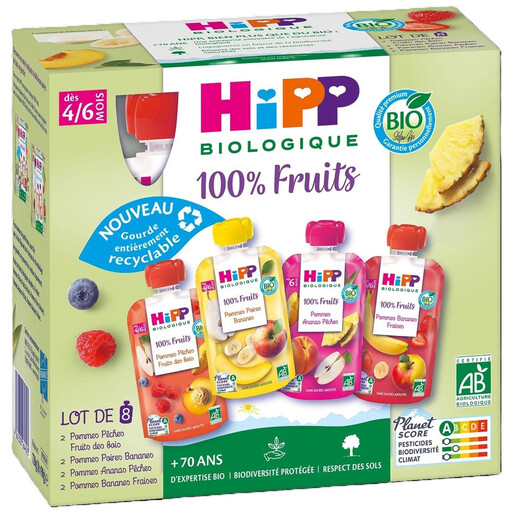
Why this product fits: four fruit combinations and an individual format make it a practical solution for outings, daycare, or an occasional snack from 4 or 6 months, depending on the label.
The ingredients list shows 100% organic fruit and no added sugar. However, this is not a complete meal.
A pack of 8 pouches of 90 g, with no declared allergens on the sheet and a recyclable mono-material packaging according to the information provided.
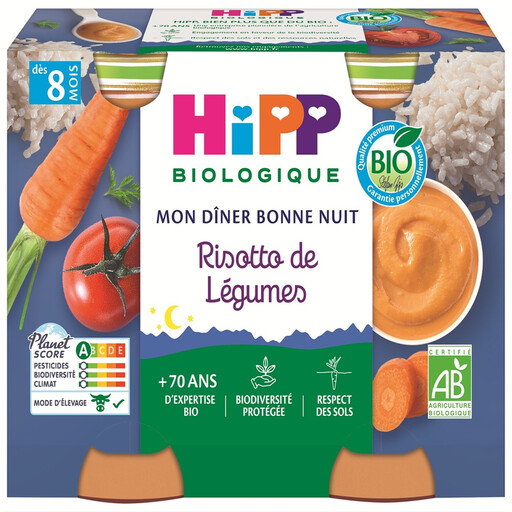
Why this product fits: this ready-to-serve organic baby meal is ideal for families looking for a simple lunch or dinner solution from 8 months.
The label specifies the presence of skimmed milk, cream, and butter. Check this before purchasing.
Two 190 g servings, a smooth texture, a gluten-free recipe with no added salt according to the product sheet, and contains rapeseed oil.
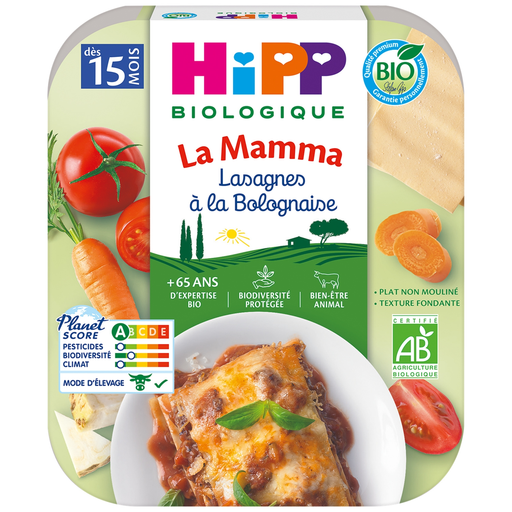
Why this product fits: its texture with tender chunks accompanies meals for babies from 15 months and the discovery of dishes inspired by family cooking.
The organic label does not mean the product is free from allergens: this recipe contains wheat, egg, celery, and milk.
The sheet mentions 5% beef, 31% tomatoes, and a preparation that can be reheated in a bain-marie or microwave.
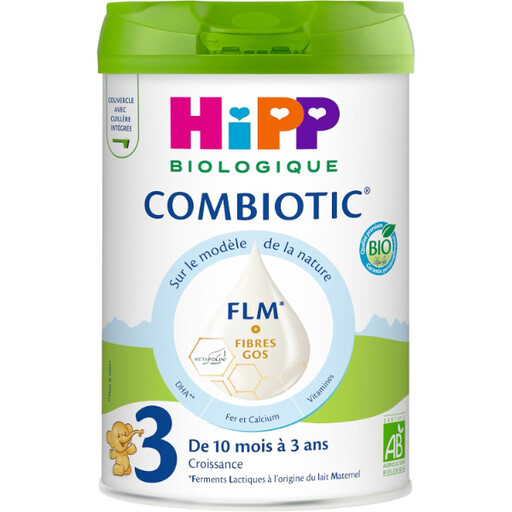
Why this product fits: this organic growing-up milk is suitable from 10 months to 3 years and can be integrated into a diversified diet if this format meets your needs.
Follow the dosage with the provided scoop: 1 level scoop per 30 ml of water. Do not prepare the bottle in advance.
The sheet mentions DHA, iron, calcium, GOS fibers, and the allergens milk and fish.
Organic baby biscuits and snacks can occasionally supplement the day, but they do not replace a meal. HiPP "My First Biscuit" biscuits are suitable from 6 months and contain wheat, milk, and organic sugar. HiPP Fruit Stars are recommended from 12 months, with millet, wheat, spelt, and barley flours, as well as concentrated fruit juices.
In both cases, check for gluten and supervise your child while they eat. Serve an age-appropriate amount and store the packets according to the instructions on the packaging.
Find a complete and regularly updated selection of HiPP products to support the different stages of dietary diversification.
HiPP fruit pouches indicated from 4 months or from 4/6 months offer recipes with no added sugars, made from organic fruit. They can be used as a complement within the framework of diversification, respecting the indicated age and the advice tailored to your child.
Reseal the product and place it in the refrigerator. The product sheets for the items featured recommend consuming them within 24 hours of opening. For powdered milk, keep the can tightly closed in a cool, dry place and respect the usage period indicated on the packaging.
HiPP lasagnas from 15 months and the vegetable lasagna recipe from 18 months offer a thicker texture than smooth purées. They can support the learning of chunks, under supervision, respecting the indicated age and the child's eating habits.