Hikers looking for a strictly sugar-free spread
If this claim is essential, distinguish it from “no added sugar” and check the “of which sugars” figure per 100 g on the exact product.


For a hiking snack, choose a strictly “sugar-free” spread only if that limit is essential to your purchase: “no added sugar” does not mean the same thing. The cocoa and hazelnut products reviewed here with stated sugar content still contain between 8.1 and 8.5 g of sugars per 100 g. To compare no-added-sugar recipes, next check the sweeteners, allergens and storage instructions for the jar after opening.
If this claim is essential, distinguish it from “no added sugar” and check the “of which sugars” figure per 100 g on the exact product.
A no-added-sugar recipe with no sweeteners may suit this preference, while still containing naturally occurring sugars. Check the ingredients rather than relying on the product name alone.
Polyols, allergen information and storage instructions after opening are particularly important when you plan to take the snack on several outings.
Start with the sugar claim, then compare the ingredients and storage instructions with the conditions of your hike.
| What matters | What to check | Who it matters to |
|---|---|---|
| Sugar content | The exact claim and the “of which sugars” figure per 100 g. Under European Regulation (EC) No 1924/2006, “sugar-free” means a maximum of 0.5 g of sugars per 100 g. | If I’m looking for a strictly sugar-free spread, the “no added sugar” claim isn’t enough to make a decision. Around 42% of consumers put this sugar-content requirement first. |
| Sweeteners | The ingredients list, particularly whether it contains maltitol or another sweetener. | For my snack, I’d rather avoid sweeteners, even if I’m happy to have naturally occurring sugars. This is the priority for around 33% of consumers. |
| Comfort and storage | Polyols and any related warning; storage instructions after opening. | If I’m taking an opened jar and considering a recipe containing polyols, I want to factor in both how it should be stored and my digestive tolerance. Around 25% of consumers prioritise these hiking-related considerations. |
The product listings for Lucien Georgelin, Gerblé and Karéléa state that they contain 8.5 g, 8.2 g and 8.1 g of sugars per 100 g respectively. These figures are above the 0.5 g per 100 g threshold for the “sugar-free” claim set by European Regulation (EC) No 1924/2006.
Look for the exact claim, then check the “of which sugars” figure in the nutritional information for the jar you’ve chosen.
Auchan’s product listings state that Gerblé contains 36 g of polyols per 100 g and Karéléa contains 44 g. The Karéléa listing carries a warning about the laxative effects of excessive consumption.
Check the amount of polyols and the warning before taking a recipe you haven’t tried on a hike.
The cocoa and hazelnut recipes in question contain hazelnuts. Depending on the product, the information provided also mentions milk, whey or possible traces of other allergens.
Check the ingredients and precautionary allergen information on the exact pack you’re buying.
In France, the DGCCRF describes Nutri-Score as a voluntary label. Its absence doesn’t remove the need to read the nutritional information.
If it appears on the packaging, use it as an additional guide. To distinguish “sugar-free” from “no added sugar”, check the claim and sugar content per 100 g.
Its no-added-sugar hazelnut and cocoa spread is worth considering if you want to avoid sweeteners.
Its 200 g no-added-sugar hazelnut and cocoa spread is made with maltitol.
Its 400 g no-added-sugar hazelnut and cocoa spread contains maltitol.
The brand describes its Pure Pâte à Tartiner Bio as a recipe with no added sugar and no sweeteners.
The selection below is a blueberry preparation to spread, not a cocoa and hazelnut spread. If you’re specifically looking for the latter, don’t treat these two categories as interchangeable.
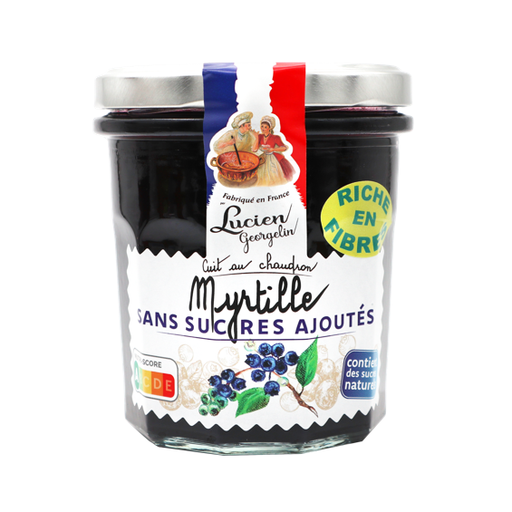 Image unavailable
Worth considering if you’d like a fruity spread for an outing rather than a cocoa and hazelnut spread. The jar contains 320 g. Before taking it with you once opened, check the label for its sugar content and storage instructions after opening.
No. Under European Regulation (EC) No 1924/2006, the “sugar-free” claim means a maximum of 0.5 g of sugars per 100 g of food. A “no added sugar” spread may contain naturally occurring sugars, so check the “of which sugars” figure per 100 g.
No. The DGCCRF says that displaying Nutri-Score is voluntary, while nutritional information is generally required on pre-packed foods. The absence of the logo alone is therefore no reason to rule out a product.
Check the instructions for the product you’ve chosen before doing so. Lucien Georgelin says to consume its no-added-sugar spread within a month of opening; Nutripure says to refrigerate its spread and consume it within 7 to 10 days. These instructions don’t automatically apply to other jars.
The maltitol recipes reviewed can contain different amounts: Auchan’s product listings state that Gerblé contains 36 g and Karéléa 44 g per 100 g of product. Read the warning about the laxative effects of excessive consumption, and consider your experience with the recipe before taking it with you.
Check for hazelnuts first, then look at the other ingredients and precautionary allergen information for the specific product. Information provided for some recipes mentions milk, whey or other tree nuts, among other things. Only the label on the jar you’ve chosen can confirm its ingredients.