
Livraison le jour même ou le lendemain

Qualité garantie

Débloquez vos offres de bienvenue: Livraison GRATUITE | Jusqu'à -80 % | 30 jours d'essai gratuits à JoyPlus
Téléchargez l'application
A good hiking pole can literally transform a mountain outing, easing the strain on your knees during descents and ensuring better balance on unstable terrain. The problem? The market is saturated with marketing promises that too often lead to a poor purchase. Before you decide, it's crucial to know how to sidestep the classic pitfalls that can render your gear useless after just a few trips.
Who hasn't cursed at poles that vibrate with every step, a locking system that fails mid-hike, or a grip that causes blisters? To avoid these frustrations and make an informed purchase, here are the features that truly matter.
To ensure you make the right choice, there are three technical points to scrutinize. They determine the reliability, comfort, and lifespan of your future trail companions.
The choice of material has a direct impact on weight and durability. While carbon fiber is often praised for its lightness, it can snap cleanly under a sharp impact. For most hikers, an aluminum hiking pole—specifically one made from 7075 aluminum alloy—represents the best trade-off. This aerospace-grade alloy offers excellent resistance to bending. Crucially, under extreme stress, it will bend before it breaks, a decisive advantage in the backcountry. It's a guarantee of reliability for regular use on varied terrain.
The mechanism that adjusts the length of your telescopic walking pole is a notoriously common point of failure. There are two main systems:
For peace of mind on your hikes, even when the weather turns, the external lever-lock system is by far the safer option.
The packed size of a pole is an essential practical criterion. Telescopic poles consist of 2 or 3 sections that slide into one another. They remain relatively long even when collapsed (often over 60 cm). The foldable hiking pole (or "Z-pole") breaks down into several segments connected by an internal cord, similar to tent poles. Once folded, they are much more compact (often under 40 cm) and slide easily inside a backpack. This is a game-changing advantage for mountaineering, trail running, or for anyone who wants a minimal footprint.
Every hiker has specific needs. To help you clarify your options, here are our recommended models, categorized by use case.
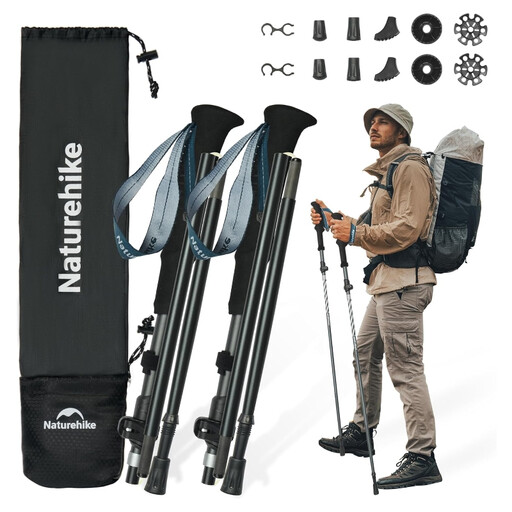
Why we chose it: Perfect for weekend hikers or day-trippers who prioritize easy transport. Its foldable design allows it to disappear into a small backpack.
Its 7075 aluminum construction eliminates the risk of fragile materials. The simple, proven folding system is less prone to failure than some overly complex locking mechanisms.
Unmatched compactness when folded, making it extremely practical to carry and store.
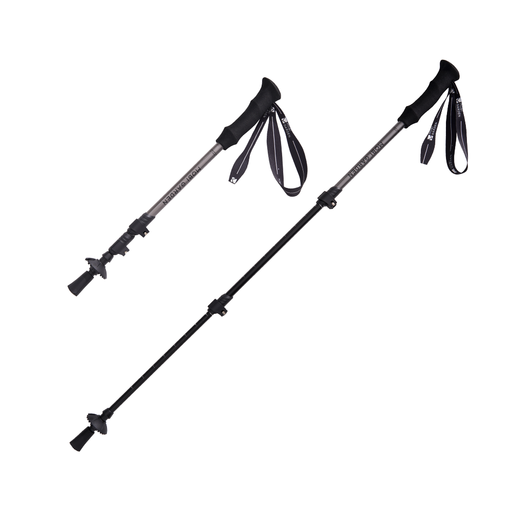
Why we chose it: Built for fans of trekking poles who head out for several days at a time. Its robustness and the reliability of its adjustment system are decisive assets on demanding and varied terrain.
The external lever-lock system is the perfect counter to the pitfall of twist-locks, which can jam in the cold or with dust. The EVA foam grip wicks away sweat effectively and helps prevent blisters.
A lightweight hiking pole (around 210 g per pole) that is still very durable thanks to its 7075 aluminum, with a quick and reliable adjustment system.
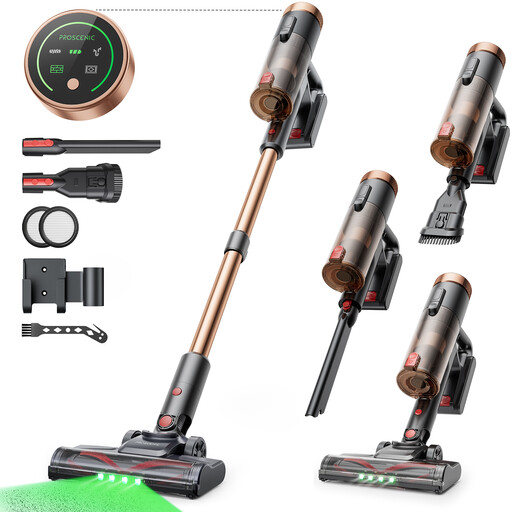
Why we chose it: This profile is all about gram-counting, often for trail running or fast hiking. Carbon fiber poles are an option, but choosing one requires a careful comparison of technical specifications.
Rather than recommending a single "premium" model and risk getting it wrong, we're directing you to a selection where you can compare specifications (weight, number of sections, material) to find THE pole that matches your demanding needs.
Access to a wider range, including specialized models, allowing you to make a precise choice based on objective data.
We have curated a complete selection of hiking poles that meet our criteria for reliability and safety.
On flat ground, stand up straight and grip the pole. Your elbow should form a 90-degree angle. When going uphill, shorten them by 5 to 10?cm for better leverage. Conversely, when going downhill, lengthen them by 5 to 10?cm for more stability and to ease the strain on your joints.
With regular maintenance (cleaning and drying after each outing), a good aluminum hiking pole can last for many years. Wear-and-tear parts like tungsten carbide tips or baskets are easily replaceable, further extending the life of your gear.
Using two poles (a pair) is highly recommended. It allows for better distribution of effort between your arms and legs, improves balance, reduces fatigue, and symmetrically lessens the impact on your knees and ankles. A single hiking staff can work in a pinch for light support, but the benefits are multiplied tenfold when using a pair.