
Livraison le jour même ou le lendemain

Qualité garantie

Débloquez vos offres de bienvenue: Livraison GRATUITE | Jusqu'à -80 % | 30 jours d'essai gratuits à JoyPlus
Téléchargez l'application
Choosing a hiking jacket can quickly become a daunting task. Between marketing promises and opaque technical jargon, it's easy to end up with an unsuitable product that leaks at the first sign of rain or turns into a personal sauna after ten minutes of walking. The goal isn't to find a "perfect" jacket, but the one that truly meets your needs, without paying for superfluous features.
Before you start, watch out for these common pitfalls that can ruin your investment:
To avoid these disappointments, focus on a few key technical parameters. These are the real benchmarks for evaluating the performance of a men's outdoor jacket or a women's waterproof jacket.
A fabric's waterproofness is measured in Schmerber (or mm). This rating quantifies a material's resistance to water pressure.
Also, check for taped seams (or heat-sealed seams). Without them, even the highest-performance fabric will let water seep through the stitch lines.
Breathability measures a fabric's ability to evacuate water vapour (sweat). It is often expressed as an MVTR (Moisture Vapour Transmission Rate), measured in g/m?/24h.
A good technical windbreaker must offer the right balance between these two parameters to protect you from the elements without causing you to overheat.
The jacket's design is just as important as its materials. A 3-in-1 jacket is a compelling option: it consists of a waterproof outer shell and an insulating liner (often fleece) that can be worn together or separately. It's a cost-effective and adaptable solution for year-round use.
Also, consider the details that make a difference in the field:
Rather than searching for a single do-it-all model, it's wiser to choose based on your activity. Here's a closer look at a few models that excel for specific uses.
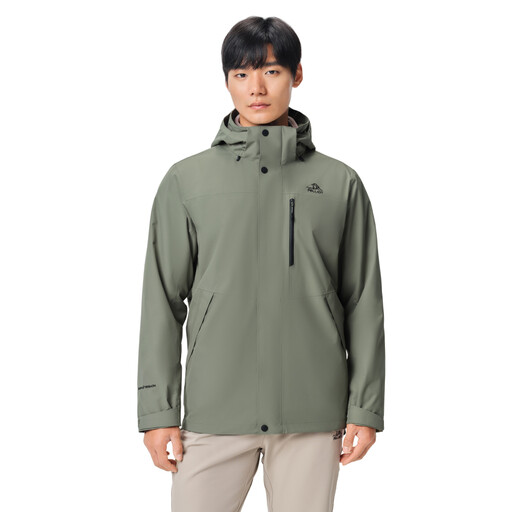
Why it's a match: Designed for trekking and harsh conditions, this trekking coat offers high-end technical performance for those who make no compromises on protection.
It sidesteps the "false waterproof" and "poor breathability" traps with verifiable data. According to the manufacturer, it boasts a waterproof rating of 35,900 mm and a breathability rating of 16,000 g/m?/24h, far exceeding typical standards.
Its 3-in-1 design and abrasion resistance (over 40,000 cycles according to product information) make it a durable investment for multi-season adventures.
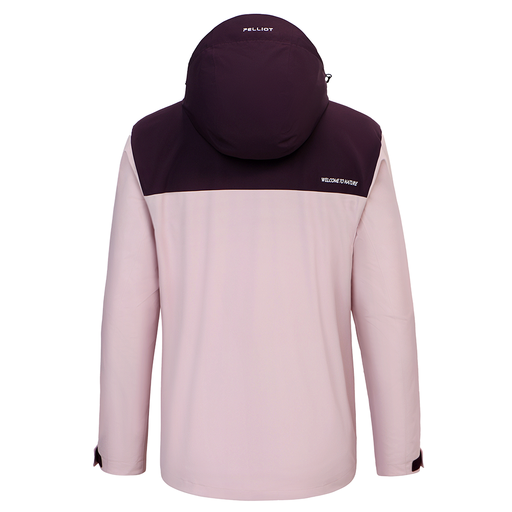
Why it's a match: Ideal for those seeking a single solution for hiking, camping, or daily commutes, regardless of the weather conditions.
This model directly tackles the "false versatility" trap. Its 3-in-1 system allows it to adapt to temperatures ranging from -15°C to 25°C by using the outer shell, the liner, or both.
The STORMS BREATH technology ensures complete protection against wind and rain, while the removable thermal liner provides lasting warmth and an anti-static treatment.
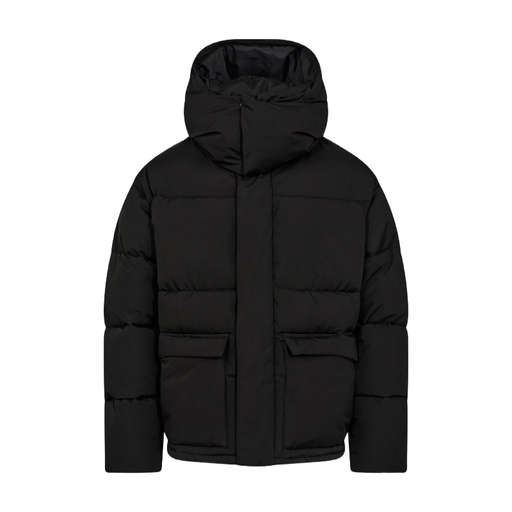
Why it's a match: Perfect as a mid-season jacket for daily commutes, park strolls, or cool summer evenings. It combines understated style with functional protection.
This model doesn't over-promise. It is clearly positioned as a lightweight, water-resistant (repellent) jacket, not a barrier against storms. Ideal for those who don't need extreme technical features.
Its lightness and 100% polyester composition make it easy to carry and maintain. A practical and durable choice for everyday use.
We've compiled a complete, up-to-date selection of jackets that meet these demanding criteria.
Wash your jacket carefully, following the instructions on the label. Use a special detergent for technical apparel and avoid fabric softeners, which can clog the membrane's pores. To reactivate the durable water repellent (DWR) treatment, you can tumble dry the jacket on low heat (if the label permits) or apply a re-waterproofing spray after several washes.
Absolutely, for the vast majority of users. It offers remarkable flexibility. You can use just the outer shell as a waterproof windbreaker in mild, rainy weather; wear only the fleece liner in cool, dry conditions; or combine both for maximum protection against cold and moisture. It's a cost-effective solution that covers a wide range of climates.
A water-repellent jacket has a surface treatment (DWR) that causes water to bead up and roll off, preventing it from soaking in immediately. This is effective against light or brief rain. A waterproof jacket has a membrane or coating that physically blocks water from passing through, even in a prolonged, heavy downpour. Its effectiveness is measured in Schmerber (mm), and to ensure complete protection, it must have taped seams.