Which criteria should you prioritise?
First decide whether you want to stick with a milk chocolate recipe or try dark chocolate. Then compare specific products: two bars in the same category can have different ingredients, formats and nutritional values.
Milk chocolate with more cocoa
Worth considering: if you’re looking for milk chocolate with a stated cocoa percentage that’s higher than in your usual bars.
Bear in mind: a higher cocoa content alone doesn’t tell you how much sugar or saturated fat a bar contains.
Dark chocolate
Worth considering: if you’d rather look for a cocoa-forward taste in this category than stick with a milk chocolate recipe.
Bear in mind: a bar labelled “dark” may contain a dairy ingredient. Check the ingredients if you need to avoid milk.
Classic milk chocolate or chocolate with inclusions
Worth considering: if you value milky sweetness or ingredients such as caramel more than a pronounced cocoa taste.
Bear in mind: inclusions change the recipe, so check the ingredients and nutritional information for the bar you choose.
| What matters to you |
What to check |
Who is it for? |
| Cocoa and milk flavour |
The product description, stated cocoa percentage and ingredients list. |
I want to taste more cocoa without giving up the milky flavour. Around 40% of consumers are said to put this preference first. |
| Carrying and sharing |
The bar’s weight, whether it can be broken into portions and its storage instructions. |
For a break on the trail, I mainly need a bar that’s easy to carry and share. This practicality is said to be the priority for around 30% of consumers. |
| Nutritional values |
Sugars and saturated fat per 100 g; the Nutri-Score, where shown on the products being compared. |
When comparing two recipes, I want to be able to read their values on the same basis rather than judge them by colour or cocoa content. Around 20% of consumers are said to make their choice first by comparing nutritional information. |
| Ingredients and allergens |
The ingredients list and allergen information on the exact product packaging. |
If I need to avoid an ingredient, the words “dark chocolate” aren’t enough to help me choose. Checking the ingredients is said to come before other criteria for around 10% of consumers. |
Brands and retailers to explore
These names can point you towards specific products to compare. A brand appearing in a retailer’s range doesn’t describe all its recipes or mean it’s available in every store.
Lindt
Auchan lists a Lindt Excellence Milk bar with 45% cocoa. It could be a useful comparison if you’re looking for a more cocoa-forward milk chocolate recipe.
- The cocoa percentage is clearly stated for this product.
- A recipe with caramel or other inclusions should be checked separately, particularly for its ingredients and nutritional values.
Milka
Carrefour and E.Leclerc both include Milka in their chocolate ranges.
- The brand gives you a reference point when looking for a milk chocolate bar in these ranges.
- Its presence alone doesn’t identify a Milka bar with a high cocoa content, so check the specific product.
Côte d'Or
Carrefour lists Côte d'Or milk chocolate squares in its range, while E.Leclerc also includes the brand in its selection.
- The squares could be worth considering if you want to share your chocolate.
- The format doesn’t tell you the cocoa percentage or ingredients of the brand’s other products.
Carrefour
The retailer lists its own-brand bars alongside products from other brands, making it possible to compare several specific recipes.
- The information for each bar can help you compare formats, ingredients and nutritional information.
- The range depends on the store and delivery area.
E.Leclerc
E.Leclerc includes Côte d'Or, Milka and Lindt among the brands in its chocolate range.
- The retailer is another place to look locally for the brands you’re interested in.
- A brand being listed doesn’t guarantee that the specific bar or cocoa content you’re after will be available through your local Drive service.
Dark chocolate bars to explore on Joybuy
These four Joybuy products are dark chocolate options to consider for hiking. If you’d rather stick with a milk chocolate recipe, compare the milk chocolate bars mentioned above instead. This selection isn’t a substitute for comparing the two categories.
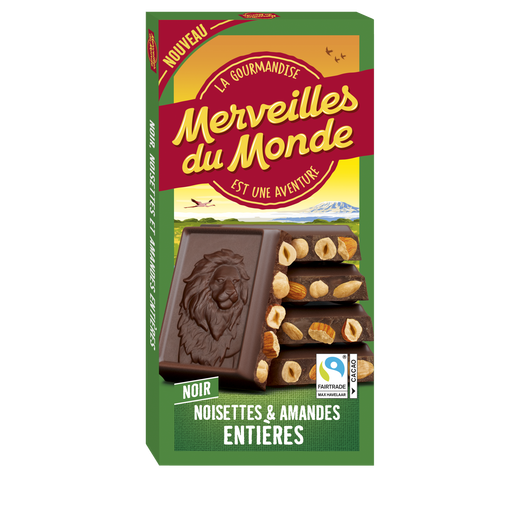 Image unavailable
Merveilles du Monde Black Block with hazelnuts and whole almonds, 170 g
Worth considering if you’re looking for dark chocolate with hazelnuts and whole almonds rather than a plain milk chocolate bar.
The recipe also lists a dairy ingredient, so it isn’t suitable if you need to avoid milk, hazelnuts or almonds. Its storage instructions state 14 to 18 °C, which is worth bearing in mind before putting it in a bag that may be exposed to heat.
View on Joybuy
 Image unavailable
Poulain Extra Dark, 3 × 100 g
The pack of three bars lets you choose how many to take on your trip, without having to carry the whole pack.
Each bar weighs 100 g. If you’re comparing this recipe with another, check the sugar and saturated fat figures on the same 100 g basis. Also check the allergen information on the packaging.
View on Joybuy
 Image unavailable
Poulain Extra Dark, 200 g
This single 200 g bar is worth considering if its size suits the number of people and breaks you have planned.
The recipe lists skimmed milk powder and soya. So don’t assume that “dark chocolate” means it’s dairy-free. Check the ingredients and allergen information on the product before choosing.
View on Joybuy
 Image unavailable
Poulain Fine Dark, 70% cocoa, 100 g
The cocoa content in the name gives you a clear reference point if this is your main consideration when trying dark chocolate.
This recipe is sweetened with maltitol and carries a warning about excessive consumption. Don’t judge its overall nutritional values by its sugar content alone: also check the saturated fat per 100 g and the ingredients list.
View on Joybuy
Frequently asked questions
Does France’s “soda tax” apply to chocolate bars?
No. The French Ministry of the Economy describes this levy as applying to sugary drinks, not chocolate bars. To compare two bars, check the sugar figures per 100 g instead.
Does a bar sold in France have to display the Nutri-Score?
No. Santé publique France explains that producers display it voluntarily. If it appears on the bars you’re comparing, it can complement the information in their ingredients lists and nutritional details. Its absence alone isn’t enough to judge a product.
Will a milk chocolate bar with 50% cocoa necessarily suit my needs better?
No. The percentage is a guide if you’re looking for a more cocoa-forward taste, not a complete assessment of the bar. Carrefour lists a Terra Etica milk chocolate bar with 50% cocoa. Compare its ingredients, format and nutritional values per 100 g with the other recipes you’re considering.
How should I choose a chocolate bar for hiking?
Choose an amount you’ll actually want to carry, then check whether the bar can be broken into portions and what its storage instructions are. A “store in a cool, dry place” instruction, such as the one Auchan lists for a Lindt milk chocolate bar with caramel and fleur de sel, is worth paying particular attention to if your bag might get warm.
Is dark chocolate suitable if I need to avoid milk?
Not just because it says “dark”. Some dark chocolate recipes, including products featured in this selection, list a dairy ingredient. Check the ingredients list and allergen information on the specific product packaging before choosing.


