Who are these options for?

Walkers looking to keep portions small

For a short walk and an occasional break, check the kcal in the portion you’ll eat, while remembering that figures per 100 g make it easier to compare different sizes. The DGCCRF uses this as a common basis for comparison in its guidance on nutrition labelling.

Day hikers

If your walk is long or takes more effort, simply choosing the bar with the fewest kcal isn’t enough to plan the snacks and water you’ll need. The French Hiking Federation recommends adapting what you eat to suit your outing.

Shoppers who pay attention to ingredients

Depending on the recipe, bars from Snickers, KitKat and Carrefour list ingredients including peanuts, nuts, milk, wheat or soya. Check the ingredients, allergens and ‘may contain’ statements on the specific pack you’re buying.

What should you check before setting off?

Start with the portion you plan to eat and the length of your walk, then check the recipe and how you’ll carry it.

What matters What to check Who it matters to
Calories in your snack Compare kcal per portion and per 100 g, as well as the weight of the bar. For a short walk, I want to know what’s in the portion I’ll eat, without assuming that a smaller size means fewer calories for the same weight. Around 29% of consumers prioritise keeping portions in check.
A snack to suit your walk Consider the length and intensity of your route when deciding how many snacks to take. If my outing is long or strenuous, one small bar may not be enough for the break I’ve planned. Around 29% of consumers put matching their snacks to the effort involved first.
Ingredients and allergens Read the ingredients list and allergen information on the specific pack. I need to be able to rule out a recipe containing an ingredient that doesn’t suit my needs before putting it in my bag. This check is a priority for around 24% of consumers.
Carrying snacks in hot weather Check the weather and protect your snack from the heat, or take something else. If my bag will be left in the sun, I’d rather avoid a melted bar that’s difficult to eat. Around 18% of consumers put ease of carrying first.

Mistakes to avoid

  • Comparing only the kcal per bar

    Portions don’t always weigh the same: Snickers lists 241 kcal for its 50 g bar, while Carrefour lists 185 kcal for a 32 g Sensation bar. These figures per bar don’t tell you which is lower in calories for the same weight.

    Compare the kcal per 100 g first, then check the figure for the portion you plan to eat.

  • Choosing the fewest calories for a long outing

    The French Hiking Federation points out that your nutritional needs vary with the effort involved. A small snack chosen for a short break won’t, on its own, take care of your food needs on a more demanding route.

    Plan your snacks and water around the length and conditions of your walk.

  • Assuming all chocolate recipes are alike

    Snickers, KitKat and Carrefour product information lists different ingredients and allergens, depending on the product.

    Read the information on the pack you buy, including any ‘may contain’ statements.

  • Forgetting about exposure to the sun

    The French Hiking Federation advises avoiding chocolate when the sun is strong.

    If it’s going to be hot, choose another snack or protect your bar from the heat.

    A melted bar can get messy and be harder to eat while you’re walking.

Brands and ranges to know

Snickers

This 50 g chocolate, caramel and peanut bar is a single portion, but that doesn’t make it a specifically low-calorie option.

  • Snickers France lists 241 kcal for this 50 g bar.
  • The recipe includes peanuts, milk and soya, among other ingredients. Check the allergen warnings on the pack too.

KitKat

The milk chocolate bar featured by KitKat France combines a wafer with a chocolate coating.

  • The product information lists 213 kcal per portion for this product.
  • This figure won’t necessarily apply to other KitKat sizes. The recipe includes wheat and milk, among other ingredients.

Carrefour Sensation

The product with seeds, almonds and dark chocolate offers a different mix of ingredients from a classic chocolate bar.

  • Carrefour lists 185 kcal for a 32 g bar.
  • The figure per bar isn’t enough to show that it has a lower calorie density. Check the values per 100 g and the allergens for this product.

Marque Repère / E.Leclerc

E.Leclerc offers several ranges of bars, including chocolate-coated cereal bars and filled mini bars.

  • These products come in different sizes and recipes, so compare the information on their individual labels.
  • E.Leclerc lists 552 kcal per 100 g for one P’TIT DELI mini bar. This figure doesn’t represent all Marque Repère bars.

A Joybuy option for a quick break

This selection features a Kit Kat Mini Matcha to consider for a break on a short walk. Check the pack’s nutritional information to work out which portion is right for you.
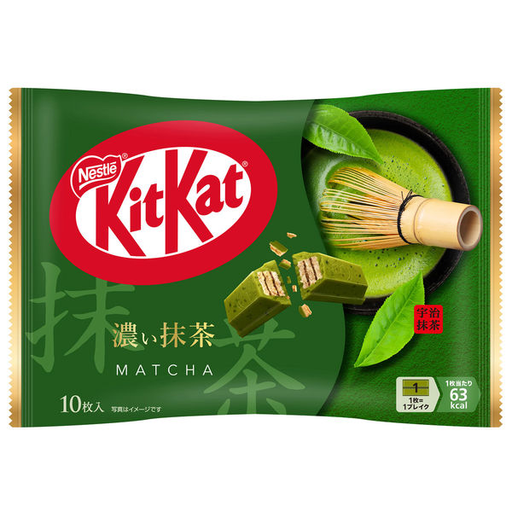
NETSLE Mini Rich Matcha Otona Amasa Kit Kat, 113 g pack

NETSLE Mini Rich Matcha Otona Amasa Kit Kat, 113 g

Worth considering for a break on a short walk if you’re looking for this matcha flavour. The pack is listed as 113 g. Check the portion size, nutritional values and allergens on the packaging, and bear the heat in mind when carrying it.

View on Joybuy

Frequently asked questions

How do you compare two bars that weigh different amounts?

Compare their values per 100 g, then check the kcal in the portion you’ll eat. The DGCCRF explains that figures per 100 g provide a common basis for comparison. A smaller bar may contain fewer kcal per item without being lower in calories for the same weight.

Is a low-calorie bar enough for a long hike?

Not necessarily: how many snacks you need depends on the length of your walk and the effort involved. The French Hiking Federation advises adapting what you eat to suit your outing and bringing water, rather than relying on just one small bar.

What should you do if you’ll be hiking in the sun?

Consider taking another snack or protecting your bar from the heat. The French Hiking Federation advises avoiding chocolate when the sun is strong.

Is Nutri-Score compulsory on chocolate bars in France?

No. The French Ministry of Health describes Nutri-Score as a recommended label, while the DGCCRF explains that nutrition labelling is generally compulsory for prepacked foods. To compare bars, check their nutritional values per 100 g and per portion, where provided.

Does France’s contribution on sugary drinks apply to chocolate bars?

No, it doesn’t apply to solid chocolate bars. Under Article 1613 ter of the General Tax Code, published on Légifrance, it covers drinks and liquid preparations for drinks. The sugar content of a bar is still nutritional information to check on its label.