For splitting up your breaks
If you prefer to open a small portion at a time, check how many bars there are and how they’re packed. The French Hiking Federation recommends having small, regular snacks while walking.


If you’re planning several short breaks, choose individually wrapped small bars. If you expect to eat two bars during the same break, a twin pack may be more convenient. Compare the weight of the portion you’ll actually open and check the allergens in each recipe, especially if you’re sharing a multipack. The French Hiking Federation also recommends varying your snacks and drinking regularly while walking.
If you prefer to open a small portion at a time, check how many bars there are and how they’re packed. The French Hiking Federation recommends having small, regular snacks while walking.
A pack of two bars may suit you if you plan to eat both during the same break. A larger bar is another option: check its individual weight rather than relying on the number of bars in the box.
Compare the ingredients and allergens in each recipe before handing out the bars. In France, the Directorate-General for Competition Policy, Consumer Affairs and Fraud Control (DGCCRF) says that allergens in prepacked food must be highlighted on the label.
Start with the portion you want to open at each break, then check the ingredients if you’ll be sharing the bars.
| What to consider | What to check | Who is this for? |
|---|---|---|
| Small portions to split up | Weight of each bar and number of packs; a multipack doesn’t necessarily mean each bar is individually wrapped. | If I’m sharing the pack or taking several short breaks, I want to open only what I plan to eat. Around 45% of consumers would make this ability to split portions their priority. |
| A larger portion | Weight per pack or bar, and nutritional values for that same portion. | On a longer walk, one small bar might not be enough for the break I have in mind. A more substantial portion would be the top priority for around 33% of consumers. |
| Ingredients and allergens | Ingredients, highlighted allergens and any ‘may contain’ warnings; compare sugars, fibre and other nutritional values on the same basis. | Before handing out the bars, I need to choose a recipe that’s suitable for everyone concerned. Around 22% of consumers would check this before considering the format. |
A pack might contain one bar or a pair of bars, so the number of wrappers alone won’t tell you what portion you’ll open at your break.
Compare the weight per bar and per pack before splitting the multipack between bags.
Auchan’s listing for Kellogg’s Extra Roasted Almond and Chocolate mentions peanuts, almonds, hazelnuts, cashews, milk and soya, among other ingredients.
Check the ingredients, highlighted allergens and any ‘may contain’ warnings on every recipe you plan to share with the group.
Auchan presents this range in comparison with the market average for plain biscuits. This comparison alone doesn’t tell you the portion size or the full ingredients of a bar.
Check the sugar content in the nutritional information, as well as the portion size, ingredients and allergens.
The French Hiking Federation recommends varying sweet and savoury snacks and drinking regularly while hiking.
Take water and other food too, depending on how long you’ll be out and how you plan to arrange your breaks.
Auchan’s range includes oat and honey bars in four twin packs, as well as multipacks of four Extra Roasted Almond and Chocolate bars.
The Carrefour range includes multipacks of Classic’ dark chocolate bars, 6 × 21 g, and other cereal bars in 8 × 25 g multipacks.
The Auchan range includes Crousti and Less Sugar bars in boxes of six, with a choice of recipes.
These products let you compare a multipack sold as twin packs, a nut bar in small portions and multipacks of larger energy bars. For hiking, first choose the format that suits your breaks, then check the packaging and allergens for each recipe.
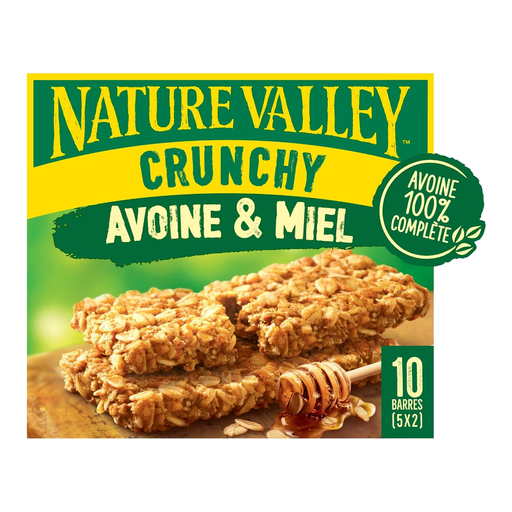 Image unavailable
Worth considering if you’d like to have two bars during the same break: the product is described as five packs of two bars. Check that one pack is the portion you want, and look at the ingredients and any information about oats, soya, wheat, peanuts and tree nuts on the packaging of the product sold.
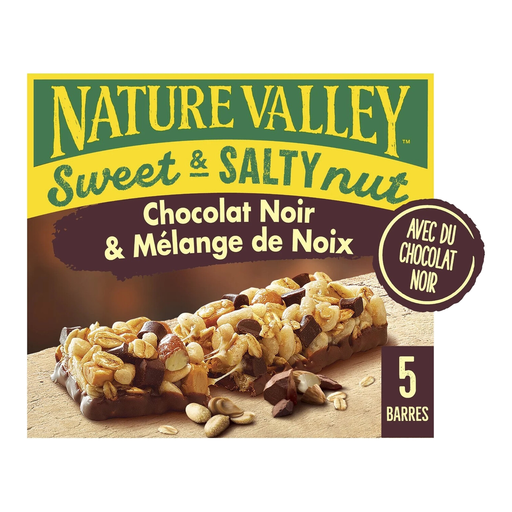 Image unavailable
For separate snacks, the product description says these five nut bars are individually wrapped. Before sharing them, check the recipe and allergens listed on the packet, including peanuts, oats, wheat, soya, milk and almonds mentioned in the description.
 Image unavailable
This multipack of energy bars is worth considering if a 68 g bar is the portion you have in mind. If you plan to hand them out individually, confirm that they’re individually wrapped before buying. Also check the ingredients and allergens, including almonds, soya and barley mentioned in the description.
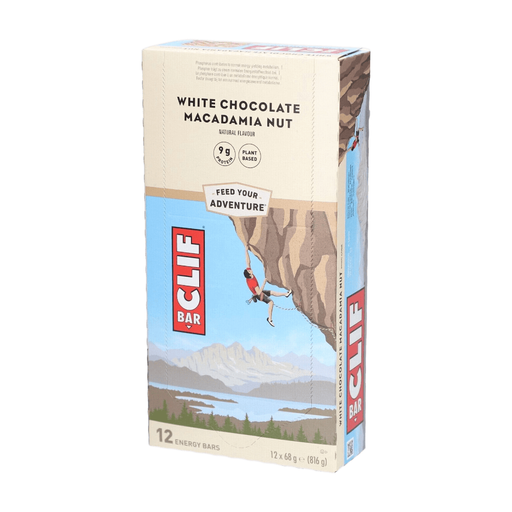 Image unavailable
Consider this option if you’re planning on one 68 g bar per snack. Confirm that each bar is individually wrapped if you want to split the multipack between bags. The description lists oats, soya, barley and macadamia nuts, and warns that pieces of nut shell may be present. Check the packaging for any additional ‘may contain’ warnings.
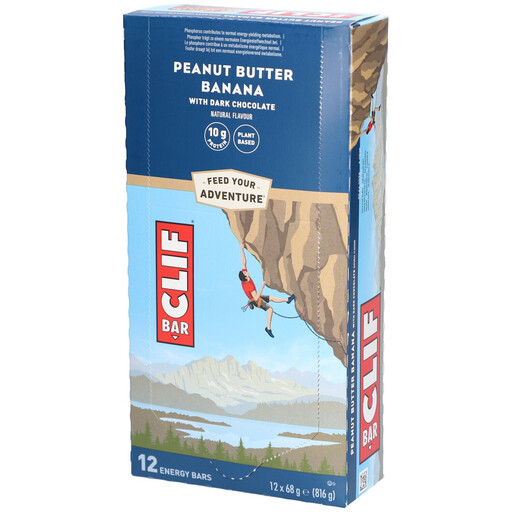 Image unavailable
If a 68 g bar is the portion you want for a break, this pack gives you twelve. Check whether the bars are individually wrapped if you plan to split them between several bags. The description lists peanuts and soya; check the packaging of the product sold for any other allergens or possible traces.
Plan your portions around the length of your walk, your breaks and the other food you’re taking, rather than sticking to a set number of bars. The French Hiking Federation recommends small, regular snacks while walking, varying sweet and savoury foods and drinking regularly.
Choose a twin pack if you plan to eat both bars during the same break. Individually wrapped bars are more convenient if you want to open just one or split the portions between several people. Check the exact packaging of the multipack you choose.
Read the ingredients and allergen information for each recipe, as well as any ‘may contain’ warnings on the packaging. The DGCCRF says that allergens in prepacked food must be highlighted, so a similar appearance or format is no substitute for checking the label.