
Livraison le jour même ou le lendemain

Qualité garantie

Débloquez vos offres de bienvenue: Livraison GRATUITE | Jusqu'à -80 % | 30 jours d'essai gratuits à JoyPlus
Téléchargez l'application
Between lessons, meetings, bullet journalling and creative activities, highlighters and multicoloured pens make information easier to read and notebooks more personal. But a highly colourful set is not necessarily pleasant to use every day. A nib that catches, ink that bleeds through the paper or a fragile mechanism can quickly turn an appealing purchase into an impractical stationery item.
Here are the criteria to consider before choosing your next office or school stationery supplies.
Fluorescent highlighters immediately catch the eye, but some very intense shades can obscure text on thin paper. By contrast, pastel highlighters offer a subtler finish, often better suited to planners, lessons and journalling. It all depends on how you plan to use them: quickly spotting information or annotating documents more subtly.
Ink described as smudge-free or ‘bleed-resistant’ may behave differently depending on the paper. Notebook sheets, textbook pages, recycled paper and heavier-weight notebooks do not absorb ink in the same way. It is best to test the pen on a less visible page, particularly with gel pens and highly pigmented felt-tip pens.
A misplaced cap, a pen that rolls across your desk or a nib that dries out after being left uncapped can quickly affect ease of use. Retractable pens eliminate the risk of losing caps, while upright storage or a compartmentalised pencil case makes it easier to find each colour. For children, also check the warnings about small parts and the recommended age.
The chisel tip is particularly versatile for highlighters: its narrow edge can be used for underlining, while its broad side covers more text. Depending on how the marker is held, common line widths generally range from 1 to 5 mm.
For detail work, assorted fineliners in 0.3 or 0.4 mm are suitable for outlines, diagrams and bullet journalling. A 0.5 or 0.7 mm nib is better suited to everyday writing, headings and note-taking.
Markers and colouring pens often use water-based ink. This can produce bold or transparent colours, but the finish varies depending on the surface. To minimise smudging, look for precise information about drying time, smudge resistance and compatibility with different types of paper.
Multicoloured gel pens generally provide a smooth, richly coloured line. However, their ink may take longer to dry than ballpoint ink, especially on smooth paper notebooks. Left-handed users should consider choosing ink described as quick-drying, while also checking the result on the paper they normally use.
A push-button mechanism allows you to select a colour quickly in a 4-colour ballpoint pen. A non-slip grip can also make long note-taking sessions more comfortable. For markers, a ventilated cap and secure closure help keep them in better condition.
Also remember to check:
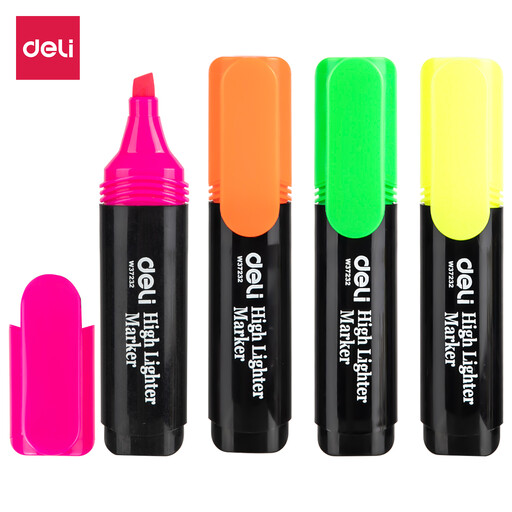
Why this choice suits this user: A set of four colours is enough to start organising lessons, documents and lists visually, without buying multiple products.
The stated 1 to 5 mm chisel tip offers two uses in one product, rather than requiring you to buy several widths.
A set of 4 colours, water-based ink and a nib designed for both highlighting and underlining.
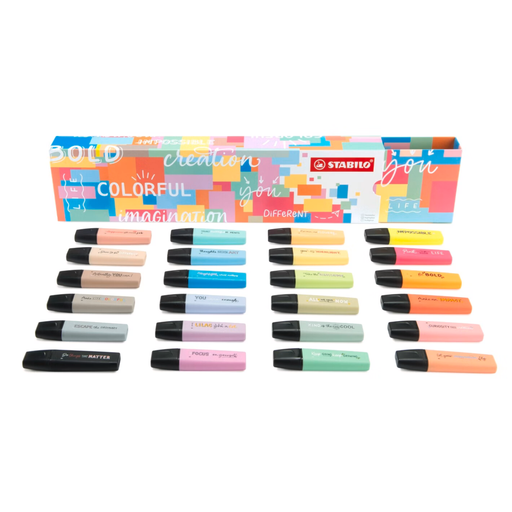
Why this choice suits this user: The variety of shades is ideal for switching between professional annotations, planner organisation and journalling.
The display stand keeps the pens tidy and lets you check the available colours at a glance.
24 markers in fluorescent, pastel and natural shades, with a 2 to 5 mm chisel tip and technology designed to prevent drying for up to 4 hours without the cap.
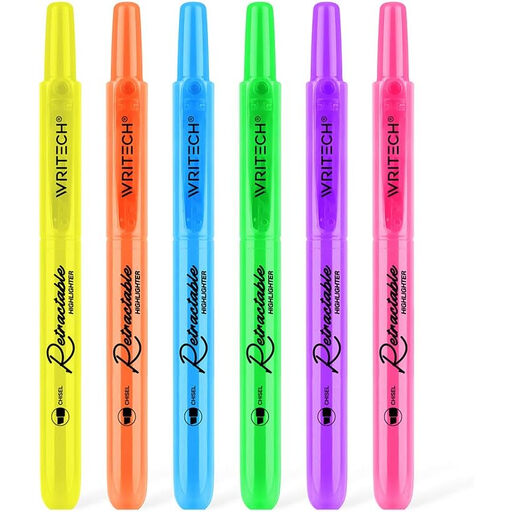
Why this choice suits this user: The click mechanism is ideal for students, teachers and professionals who often highlight with one hand.
The nib retracts at the press of a button, while the product is designed to help prevent drying and accidental transfer.
6 fluorescent colours, a chisel tip and a stated width of 1 to 4 mm, with no cap to lose.
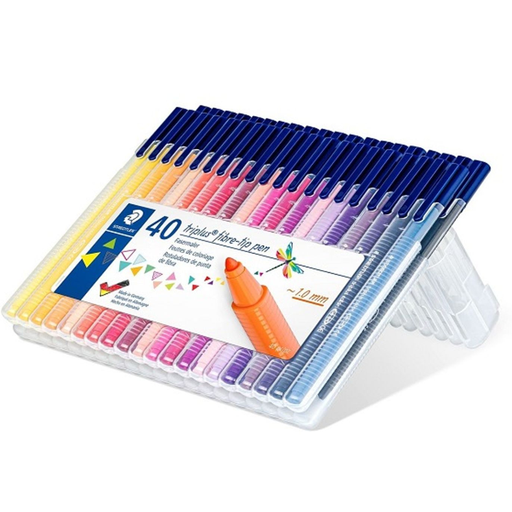
Why this choice suits this user: Its extensive colour palette is ideal for colouring, creative drawing, school projects and detailed journalling pages.
The pressure-resistant tips and washable ink are suitable for regular creative activities, while the display stand makes storage easier.
40 shades, a 1 mm fibre tip, a triangular barrel and water-based ink described as washable.
We have brought together a complete, real-time selection of products that meet these demanding criteria, as well as European safety regulations.
Choose thicker paper where possible and always test the colour on a comparable page. Use the highlighter without pressing too hard, then allow the ink to dry before closing the notebook. Formulas described as limiting transfer do not eliminate differences in how different papers absorb ink.
Its lifespan depends on how often it is used, storage conditions and whether it is closed after each use. Replace caps carefully, retract the tips whenever the mechanism allows it, and keep the pens away from heat and sunlight. Well-organised storage also makes it easier to spot a dry nib or an exhausted colour quickly.
It depends on how many colours you use and whether you replace refills or pens. A model that combines several inks in one barrel can reduce clutter and avoid the need to buy several separate pens. To compare offers, check the number of pieces, the nib width and the availability of compatible refills.