
Livraison le jour même ou le lendemain

Qualité garantie

Débloquez vos offres de bienvenue: Livraison GRATUITE | Jusqu'à -80 % | 30 jours d'essai gratuits à JoyPlus
Téléchargez l'application
A set of highlighters might seem simple to pick. Yet several details affect comfort and longevity: a tip that flattens, ink that bleeds through pages, or colours that are too similar can quickly make a pack frustrating to use, whether in class, at the office or for a bullet journal.
Before you fall for pastel highlighters, fluorescent highlighters or neon markers, it’s worth sorting the genuinely useful features from the marketing hype.
A highly fluorescent shade immediately catches the eye, but it can also make printed or handwritten text harder to read. More subtle, pastel tones are better suited to a detailed colour-coding system and a well-spaced page.
For revision, fluorescent colours help you quickly spot key concepts. In a diary or bullet journal, a soft palette often gives a cleaner, less cluttered result.
A chisel-tip highlighter isn’t necessarily limited to a single thickness. Depending on its design, it can be used to draw a broad stroke or a fine line. Check the stated dimensions, for example 2 and 5 mm or 1 and 4 mm. This way, you can highlight a paragraph, underline a word or frame information with the same tool.
Resistance to transfer depends on the paper, the amount of ink deposited and the drying time. Water-based ink generally works well with notebooks and standard sheets, but the result can change on very thin, glossy or highly absorbent paper.
To choose smudge-free highlighters, go for a quick-drying ink and always test it on a sheet of the same type you plan to use.
For both study and professional documents, a chisel tip offers welcome versatility. A soft tip can be pleasant for lettering and creative annotations, while a firmer tip ensures a consistent line during long sessions.
The highlighter body is also worth a look. A slim format slips easily into a pencil case or can clip onto a notebook. A wider barrel offers a different, sometimes more comfortable, grip. Retractable models save you hunting for a cap, but make sure the mechanism properly protects the tip when the highlighter is stored away.
Water-based inks are common on highlighters designed for paper. Product listings may also mention a transparent ink, one that is xylene-free or designed to limit transfer. However, these claims don’t guarantee the same result on all surfaces: always test the product on a sheet before marking a textbook or important document.
For schoolchildren, check the warnings about small parts and the recommended age. Caps should not be put in the mouth, and the ink is not intended for application to the skin.
A pack of four to six shades is usually enough to set up a simple school colour-coding system. Sets of ten to fifteen colours are more suited to teachers, bullet journal enthusiasts and those who need to sort several types of information.
But be careful not to confuse variety with usefulness. A large number of colours is only worthwhile if each one serves a specific purpose in your organisation method.
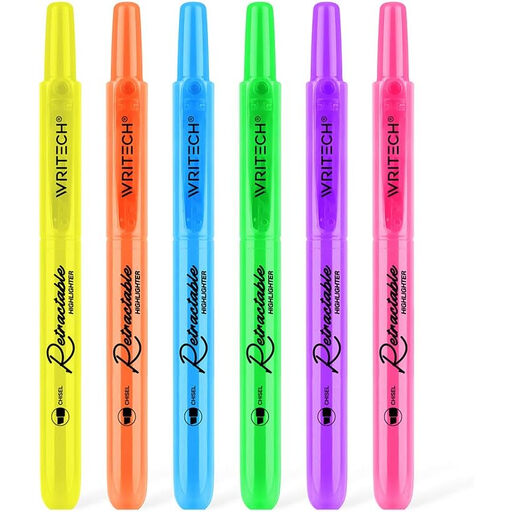
Why this choice suits this profile: Its six fluorescent colours and press-action mechanism make it a simple option for getting started in class, during revision or for everyday organisation. The retractable design also means you won’t lose the caps.
The stated chisel tip of 1 to 4 mm allows you to vary your strokes, while the mechanism protects the tip during storage. The listing also mentions an ink designed to limit transfer on most papers.
Six fluorescent shades, one-handed use and storage without a separate cap.
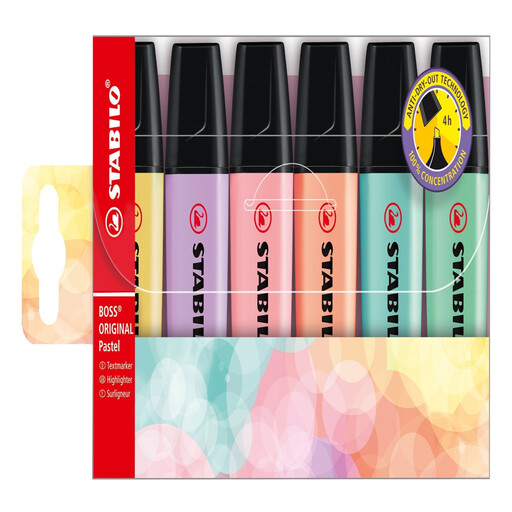
Why this choice suits this profile: This pack of six pastel shades is aimed at those who want tidy notes, calendars and a bullet journal, with a case made from recycled materials.
With its two stated widths, 2 and 5 mm, it saves you from needing multiple tools. The anti-dry-out technology reportedly allows you to use it without the cap for up to four hours.
Six pastel shades, chisel tip and water-based ink described as transparent.
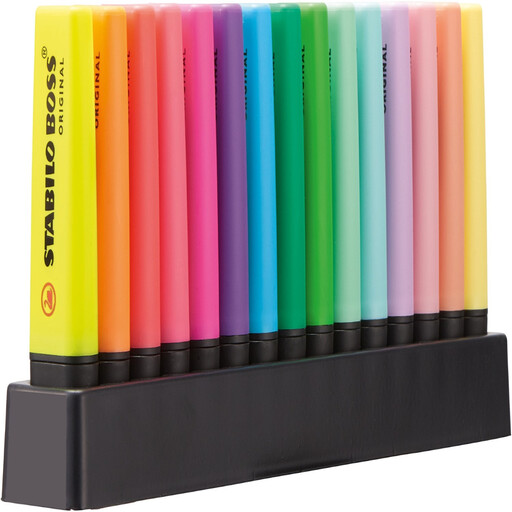
Why this choice suits this profile: Teachers, professionals and stationery enthusiasts get nine fluorescent shades and six pastel shades to set up a more detailed visual classification system.
The composition of the set is clearly stated. The listings mention a 2 to 5 mm tip, a claimed marking length of up to 375 metres and the ability to refill the fluorescent models with STABILO BOSS refills.
Fifteen pieces, desk stand made from recycled materials and a wide choice of colours for visual coding.
We’ve put together a comprehensive, real-time updated list of products that fully meet these strict selection criteria and European safety regulations.
Replace the cap after every use, even if the manufacturer claims anti-dry-out protection. Store standard models horizontally, in a dry place away from strong heat. With a retractable model, remember to retract the tip before putting it away.
Also avoid leaving a highlighter open on fabric or a porous surface. Even water-based ink can leave a stain.
A pack of four to six colours is usually enough to distinguish definitions, examples, dates and concepts to review. A chisel tip of 2 to 5 mm lets you switch from underlining to marking an entire line. On thin pages, test the ink before you start annotating a textbook.
Pastel shades offer a softer contrast than fluorescent colours. They work well for notes, planners and bullet journals when the aim is to keep a page readable and not too busy. For priority information, combine them with one or two fluorescent shades.
The lifespan depends on how often you use it, storage conditions and how well you replace the cap. Some brands claim resistance to drying out for several hours without the cap, but this promise doesn’t replace carefully closing the highlighter after each use.
The stated marking length, when available, is another useful indicator for comparing sets.