
Livraison le jour même ou le lendemain

Qualité garantie

Débloquez vos offres de bienvenue: Livraison GRATUITE | Jusqu'à -80 % | 30 jours d'essai gratuits à JoyPlus
Téléchargez l'application
With the proliferation of our electronic devices, finding the right charger has become a real headache. Caught between marketing promises and opaque technical jargon, we quickly end up with a drawer full of useless cables and slow, incompatible, or unreliable power bricks. This guide breaks down the essentials for choosing the high-tech accessories and chargers that truly fit your needs, and for avoiding the most common pitfalls.
The market is flooded with options, but they are not all created equal—far from it. Here are three classic mistakes that can cost you dearly, in both time and money.
You don't need to be an engineer to make the right choice. You just need to master a few key points.
Power, measured in watts (W), is the crucial factor: it determines the charging speed. A recent smartphone requires between 20 and 45W for effective fast charging. A laptop, on the other hand, may demand 65W or more.
Take stock of your daily needs. Do you need to charge your computer, smartphone, and headphones at the same time?
Sometimes, a standard charger just isn't enough. More specific solutions exist to meet particular needs:
The quest for the "perfect" one-size-fits-all product is often futile. It's better to find the accessory that precisely matches your usage profile. Here are a few suggestions and recommended products for 2026.
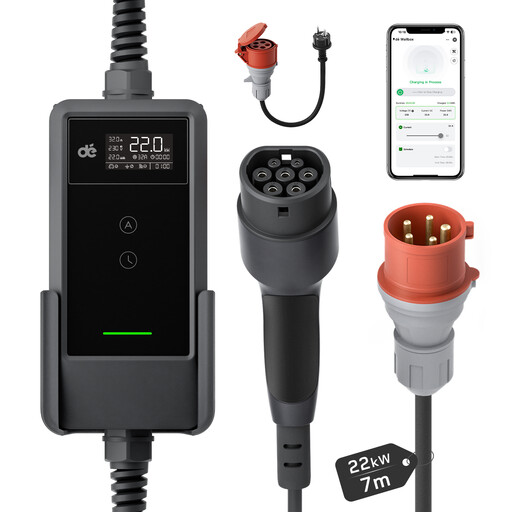
Why it's a great choice: Perfect for the EV or plug-in hybrid owner looking for a powerful and portable charging solution, equally at home as a fixed station or as a backup charger on the road.
This model avoids the trap of opaque power ratings. It delivers a real and adjustable capacity of 22 kW in three-phase (from 6A to 32A), controllable via an app to ensure fast and optimised charging.
Smart control via the app (monitoring, scheduling). Extensive compatibility with all vehicles equipped with a Type 2 plug.
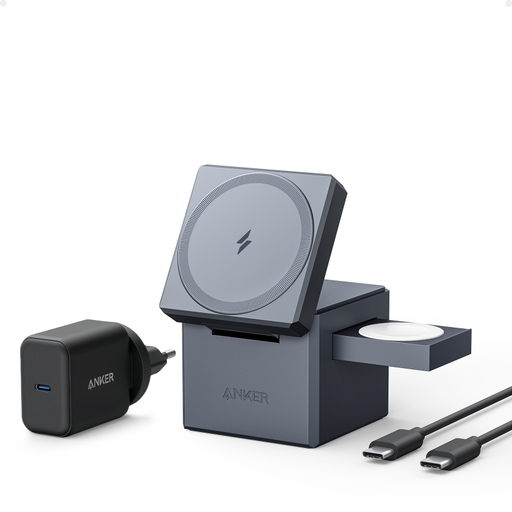
Why it's a great choice: Designed for iPhone, Apple Watch, and AirPods users. It centralises charging for this entire ecosystem in an ultra-compact format, perfect for the office, nightstand, or travel bag.
It avoids the "universal" compatibility trap by being specifically optimised for Apple. The 15W MagSafe certification ensures perfect magnetic alignment and optimal charging speed, something impossible with a generic charger.
Ultra-compact and foldable 3-in-1 design. Adjustable viewing angle for iPhone in StandBy mode.
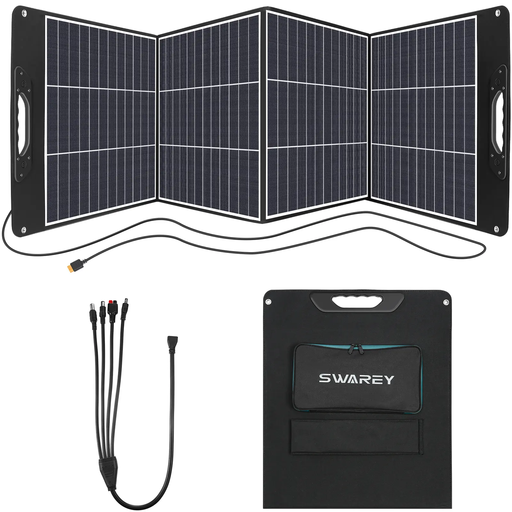
Why it's a great choice: The perfect companion for campers, van-lifers, and anyone needing a reliable power source far from any outlet. It can directly charge your devices or a portable power station.
It avoids the trap of inflated performance claims. Thanks to its high-efficiency monocrystalline cells, it achieves a verifiable conversion efficiency of up to 23%. Its rich connectivity options (USB-C, QC3.0, XT60) and included adapters ensure true versatility.
High 200W output in a foldable format with a manageable weight (5.5 kg). Integrated kickstands to orient the panel towards the sun.
Discover our full selection of products that meet our selection criteria and European safety standards.
A standard USB-C charger simply provides a fixed, low power output (often 5 or 10W). In contrast, a USB-C PD (Power Delivery) charger is "smart": it communicates with your device to negotiate the fastest possible charging speed, safely. The result: charging time is cut in half, or even more.
For a long time, that was the case. But wireless charger technologies have made huge strides. Qi-certified models of 15W or more now rival many standard wired chargers. While a wired fast USB-C charger remains the champion of pure speed, wireless charging offers unbeatable convenience for daily use: just set it down and it charges.
Don't just trust the connector! For guaranteed fast charging, two pieces of information are crucial: