
Livraison le jour même ou le lendemain

Qualité garantie

Débloquez vos offres de bienvenue: Livraison GRATUITE | Jusqu'à -80 % | 30 jours d'essai gratuits à JoyPlus
Téléchargez l'application
Long hair that is still damp at the roots, frizz after every blow-dry, tired arms or a hair dryer that becomes deafening after a few minutes: choosing a high-speed ionic hair dryer is about more than simply looking at its power rating. Product specifications are packed with figures — 110,000 rpm, “200 million ions”, “express drying” — but these figures do not necessarily tell you what to expect from everyday use at home.
Here are the key points to examine to avoid disappointment and find a hair dryer suited to your hair type, routine and budget.
A motor advertised at 110,000 rpm may seem certain to outperform a model limited to 20,000 rpm. However, motor speed alone does not determine airflow, pressure, noise levels or temperature stability. The shape of the outlet, the brushless motor design and airflow management also play a major role.
If you have thick or very long hair, check for concentrated airflow, a concentrator nozzle and settings that are genuinely distinct. A very powerful hair dryer that is difficult to control could make blow-drying more complicated rather than quicker.
Negative ions are generally promoted for reducing static electricity and helping to smooth stray strands. This is a technical feature, not a universal promise about the appearance or health of your hair. Results also depend on humidity, temperature, the brush you use and your hair type.
A negative-ion hair dryer may be worth considering if your hair tends to puff up or become frizzy. However, you should also prioritise a cool-air setting, adjustable temperature and a sensible distance from your hair while styling.
A compact appliance is not necessarily lightweight, while a high-speed motor can produce noticeable noise. In everyday use, the weight of the body, the handle balance and the cable length matter just as much as drying speed.
The rear filter should also be easy to access. Hair and dust can block the air intake, reduce performance and trigger the thermal safety system. A removable or rotary filter makes cleaning much easier.
Measured in watts, electrical power mainly indicates the appliance’s consumption and general capabilities. On its own, it cannot be used to calculate drying speed. For home use, a 1,400 to 1,800 W model can be perfectly suitable, depending on its airflow and the accessories supplied.
Thermal control is essential for limiting exposure to excessive heat. Some appliances in this selection advertise automatic temperature monitoring: the CONFU F10 claims sensor-based monitoring with an NTC sensor taking up to 50 readings per second, while the Laifen Neo refers to adjustment 100 times per second. These figures relate to the technologies advertised by the manufacturers; they do not constitute a medical or universal guarantee regarding hair health.
If you are looking for a versatile appliance, do not simply count the accessories: check how useful they really are. A 5-in-1 hot-air brush or an 8-in-1 appliance can free up space in the bathroom, but it will usually take a little time to get used to.
For daily use, a lightweight hair dryer weighing around 400 g will be more comfortable, particularly when drying long hair. If you are sensitive to noise, you may want to look for a quiet hair dryer, bearing in mind that the noise level varies according to the selected mode and the distance from your hair.
In the UK, check for the relevant safety information, applicable markings and clear instructions. Never use the appliance near a bath, a sink filled with water or with wet hands. Allow the attachments to cool before putting them away, and unplug the hair dryer after every use.
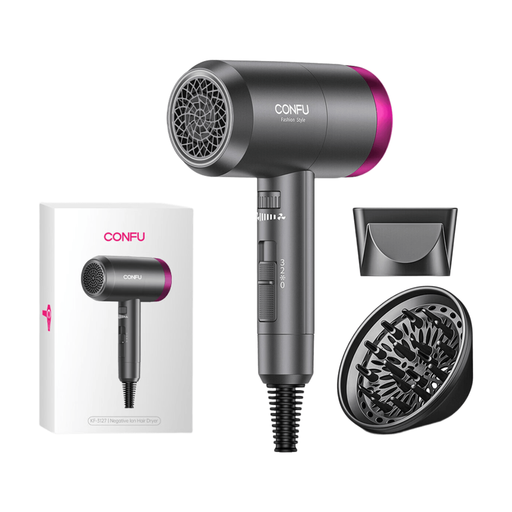
Why this choice suits this profile : With its 1,800 W power, sliding speed control and concentrator nozzle, it makes it easy to get started with home blow-drying without having to buy several appliances.
Its temperature sensor and automatic shut-off in the event of overheating help reduce the risks associated with an appliance that is difficult to monitor.
Advertised negative ions, a bioceramic grille, and removable rear and outlet sections for easier maintenance.
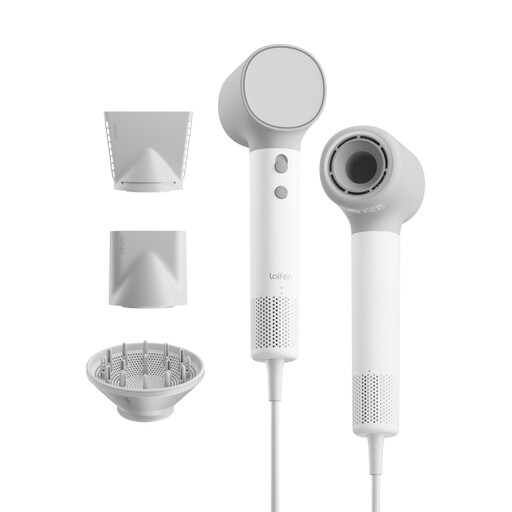
Why this choice suits this profile : Users looking for a compact, fast appliance can benefit from a motor advertised at 110,000 rpm, an airflow of 22 m/s and a weight of 390 g.
Its three attachments mean you do not need to buy a diffuser, concentrator nozzle and smoothing nozzle separately.
Advertised weight of 390 g, adaptive thermal control, diffuser and reduced-noise operation according to the product specifications.
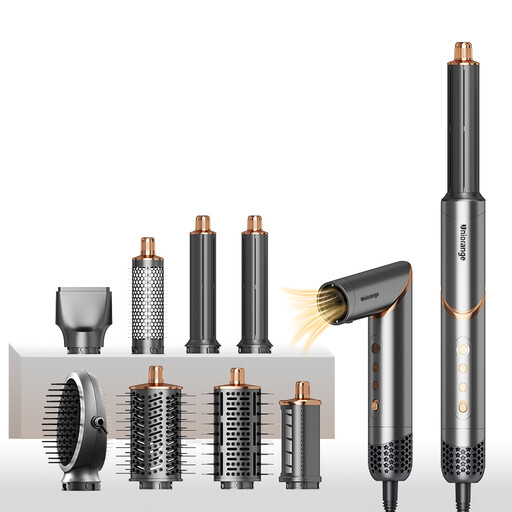
Why this choice suits this profile : This appliance is designed for anyone who alternates between drying, straightening, adding volume and curling, thanks to its eight accessories and automatic curling attachments.
Its three speeds and four temperature settings let you tailor each session instead of applying the same heat to every style.
Motor advertised at 110,000 rpm, cool-air function, smoothing brushes, oval brush and curling attachments.
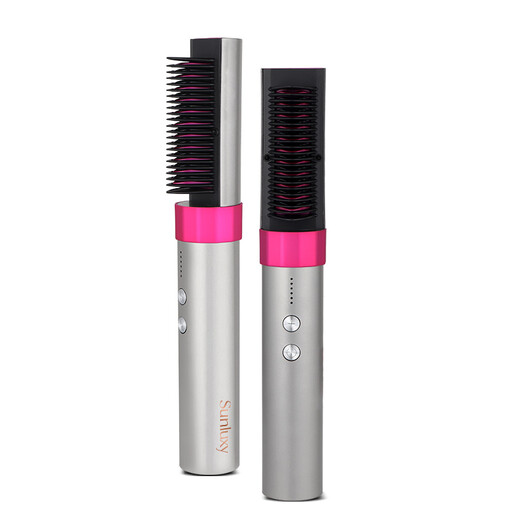
Why this choice suits this profile : This cordless ionic smoothing brush is ideal for quick touch-ups at home or while travelling, without necessarily replacing your main hair dryer.
Its six temperature settings, from 130 °C to 200 °C, mean you do not have to rely on a single setting. The anti-scald teeth create a physical barrier between the hot surface and your scalp.
Advertised 4,000 mAh lithium battery, PTC heating in approximately one minute and a practical design for touch-ups.
We have brought together a complete, real-time selection of products that meet these demanding criteria as well as European safety requirements.
It can generate fast airflow, but its suitability also depends on the airflow rate, concentrator nozzle and temperature settings. When drying thick hair, work in sections and start with moderate heat. A fast motor cannot replace good drying technique.
Squeeze excess water from your hair with a towel without rubbing it, use a concentrator nozzle in the direction of the hair fibres, then finish with a blast of cool air. Negative ions may help reduce static electricity, but on their own they cannot guarantee identical results for every hair type.
This depends on how often you use it, how well you maintain the filter and the condition of the cable. Clean the air intake regularly, avoid covering the grilles and stop using the appliance if the cable is damaged. If the overheating protection is triggered, unplug the appliance and allow it to cool down. Never bypass this safety feature.