
Livraison le jour même ou le lendemain

Qualité garantie

Débloquez vos offres de bienvenue: Livraison GRATUITE | Jusqu'à -80 % | 30 jours d'essai gratuits à JoyPlus
Téléchargez l'application
A high-speed ionic hair dryer can significantly shorten drying time, but the figures highlighted on the packaging are not enough to make the right choice. Motor speed, actual temperature control, weight, noise level, filter maintenance and attachments often have a greater day-to-day impact than promises of “express drying”.
Curly, frizzy, dry, coloured or permed hair requires carefully controlled heat and a suitable airflow. Here are the criteria to examine before placing an order, along with a selection of devices for different styling needs.
The 110,000 rpm hair dryer specification generally refers to the manufacturer’s stated maximum motor speed. On its own, it does not indicate the airflow volume, how concentrated the stream is or how long it will take to dry thick hair.
Also check the number of temperature and speed settings, as well as whether a concentrator nozzle is included. A very fast device that is difficult to adjust may direct excessive heat onto the lengths or lack the precision needed for a professional blow-dry.
Ionic technology is often presented as a miracle solution for frizz. In reality, the result also depends on hair porosity, the distance between the device and your head, ambient humidity and the type of brush used.
Some models advertise a combination of negative and positive ions. The Zhibai S1, for example, lists 200 million negative ions and 50 million positive ions in its product specifications. This is a product-specific feature, not a medical guarantee or a universal promise of results for the hair fibre.
A powerful device can quickly become uncomfortable to use if its handle strains the wrist. Conversely, a lightweight model with a difficult-to-remove filter may lose efficiency as hair and dust build up around the air intake.
For regular use, look for a lightweight, quiet hair dryer with a removable filter and easily accessible controls. The stated noise level is still only an indication, however: perceived volume varies depending on the room and the distance from the device.
Electrical power does not directly determine drying speed. An 1800 W hair dryer may generate substantial heat, but the design of the motor, air duct and nozzle also affects how air circulates.
A hair dryer equipped with intelligent temperature control can monitor or adjust heat to prevent excessive temperatures. It is important, however, to distinguish between basic temperature monitoring and fully automatic regulation.
The Zhibai S1 states that it maintains a constant temperature of 57°C and monitors the air near the outlet. The CONFU 3127, meanwhile, mentions intelligent temperature detection and automatic shut-off if the motor overheats. These features provide added comfort and safety: they do not replace responsible use.
A positive- and negative-ion hair dryer may appeal to people prone to static electricity, particularly in winter or in low-humidity interiors. For curly or colour-treated hair, temperature, speed and operating distance remain equally important.
To protect the hair fibre, avoid directing hot air at the same area for too long. Divide the hair into several sections, begin at a moderate temperature, then gradually bring the brush and nozzle closer if necessary.
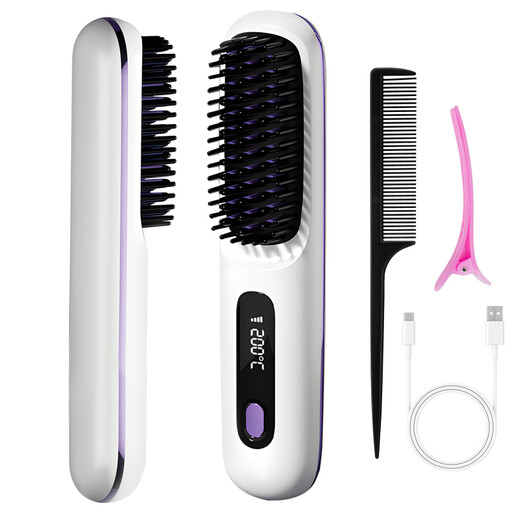
Why this model suits the profile: Its compact format makes it a practical companion to a hair dryer, whether for touch-ups at home or on the go.
The three temperature settings and LCD display make adjustments easier to understand than controls without precise indicators. The rechargeable battery means you do not need to stay near a power socket for touch-ups.
Rechargeable battery, LCD display and three temperature levels. The product listing presents it as suitable for all hair types.
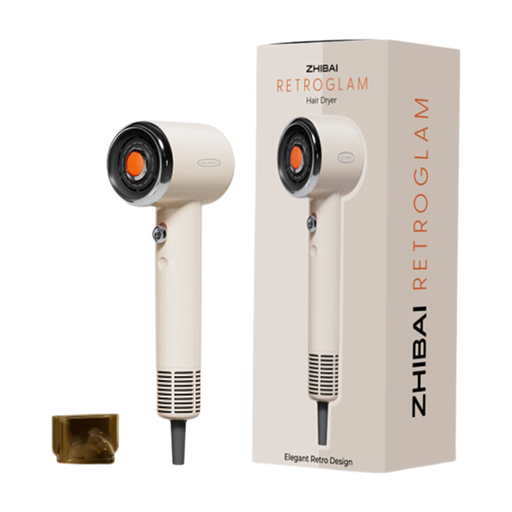
Why this model suits the profile: Weighing 378 g and offering numerous settings, it can work well for regular home use as well as travel.
The removable, rotatable intake filter helps reduce the risks associated with neglected maintenance. Two speeds and four temperature settings make it easier to avoid relying on maximum heat every time.
Motor rated at 110,000 rpm, stated noise level of 56 dB, dual ionic technology and intelligent temperature monitoring at 57°C.
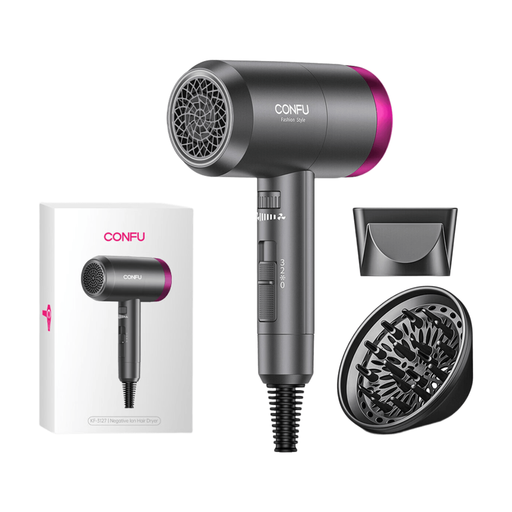
Why this model suits the profile: Its stated power is aimed at people who dry thick or long hair, or style their hair regularly, whether at home or in a professional setting.
Temperature detection and automatic shut-off if the motor overheats provide an additional level of safety. The removable rear cover and air outlet make cleaning easier.
Rated power of 1800 W, sliding airflow control, negative-ion function and included concentrator nozzle.
Before confirming your order, take the time to check the following:
We have brought together an updated selection of devices and accessories so you can compare drying, styling and finishing features according to your needs.
Not necessarily. Motor speed is a technical indicator, but airflow volume, outlet design, power, and the length and density of the hair also play a role. It is better to compare all of these parameters rather than rely on a single figure.
Start at a low or medium temperature and keep the device moving. For the final stages, use cool or warm air. Chemically treated hair does not always respond in the same way, depending on its condition: temperature-control functions allow for more precise adjustment, but they do not replace careful use.
Consumption depends primarily on the device’s power rating and how long it is used. An 1800 W model used for 10 minutes theoretically consumes around 0.3 kWh, without accounting for variations caused by real-world operation or the selected settings. To limit consumption, gently towel-dry your hair, choose an appropriate speed and avoid extending the drying time unnecessarily.