
Livraison le jour même ou le lendemain

Qualité garantie

Débloquez vos offres de bienvenue: Livraison GRATUITE | Jusqu'à -80 % | 30 jours d'essai gratuits à JoyPlus
Téléchargez l'application
A high-speed ionic hair dryer can reduce the time you spend in the bathroom. However, the figures displayed on the packaging are not enough to make an informed choice. Between motors advertised at 110,000 tr/min, anti-frizz claims and a wealth of accessories, some features are genuinely useful, while others should be interpreted with caution.
Whether your hair is long, thick, curly or prone to static, here are the criteria to consider before buying, along with a selection of models suited to different uses in France.
A 2,300 W appliance is not necessarily faster than a 1,600 or 1,900 W model. Power mainly indicates the maximum consumption of the motor and heating system. Airflow, motor speed, nozzle shape and temperature regulation are just as important.
For everyday use, look at the available information on airflow or air speed, the type of motor and the settings provided, rather than relying solely on the wattage.
The claim 110,000 tr/min hair dryer is certainly eye-catching, but it is not enough on its own to compare two models. Manufacturers may use different motors and measure performance using methods that are not always comparable. A high-speed appliance must also remain easy to handle, avoid excessive heat and maintain a consistent airflow.
Check for a thermal sensor, overheating protection and a cleanable filter. In everyday use, these features are often more important than an impressive figure on the specification sheet.
A hair dryer with diffuser can help distribute air across curly hair. However, the diffuser’s shape, the depth of its prongs and the speed setting must be suitable. An airflow that is too powerful may disrupt curl definition and encourage frizz.
For this type of hair, it is better to choose a moderate speed, an adjustable temperature and a cool-shot button to set the style.
A brushless motor has fewer parts subject to wear and can contribute to quieter operation. However, its lifespan depends on the appliance’s design, filter maintenance and frequency of use.
A lightweight, quiet hair dryer is particularly useful when you style your hair for a long time or early in the morning. Product listings sometimes state a noise level in decibels, but measurement conditions vary between manufacturers. Treat this figure as a guide, rather than a promise of absolute silence.
A hair dryer with temperature control should offer several heat levels and, ideally, regularly monitor the air temperature. The cool setting is useful for finishing the drying process or shaping certain sections of hair.
Avoid holding the hot nozzle in the same place. Keep a reasonable distance from your scalp and keep the appliance moving. Temperature regulation supports more even use, but it does not replace good styling technique.
Negative ions are generally presented as a way to reduce static electricity. Results may vary depending on the hair’s porosity, texture and condition. Ionic technology should therefore be regarded as an added benefit, rather than the deciding factor when choosing a good hair dryer.
For a versatile appliance, look for at least a concentrator nozzle for blow-drying and a diffuser for curly hair. Magnetic or detachable attachments make changing accessories more convenient, but check that they stay securely in place and that storage is provided.
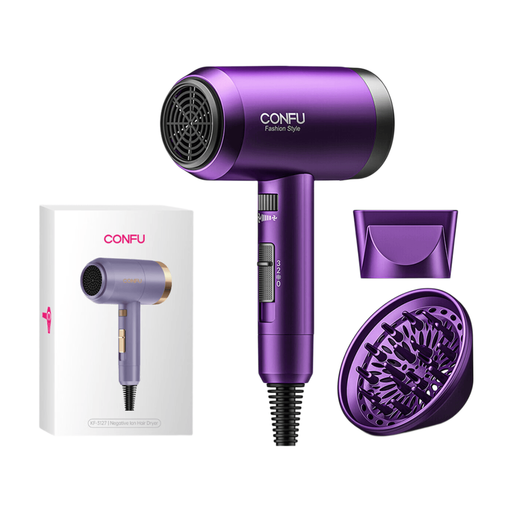
Why this choice suits this user profile : Its continuously adjustable speed control lets beginners get started without complication, then gradually adjust the airflow to suit their hair texture.
The product information mentions temperature control, overheating protection and a removable filter: three points to check before buying.
Advertised power of 1,800 W, ionic technology, a bioceramic grille and two styling nozzles.
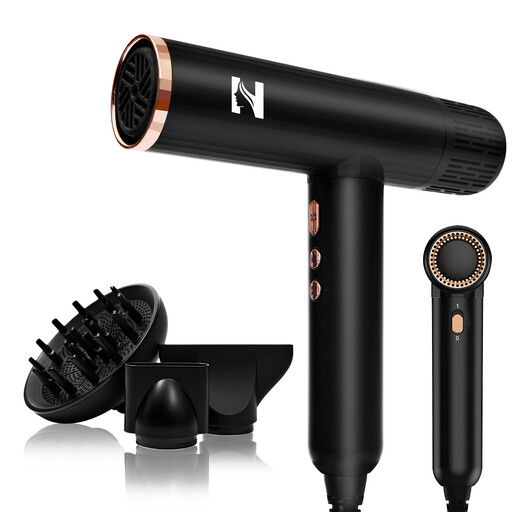
Why this choice suits this user profile : It combines a motor advertised at 110,000 tr/min, several temperature settings and three attachments for switching between drying and styling at home.
Separate temperature and speed controls mean you are not reliant on a single setting that may be too hot or too powerful.
1,900 W, advertised airflow of 23 m/s, four temperature settings, three speeds, diffuser and a stated weight of 0.57 kg.
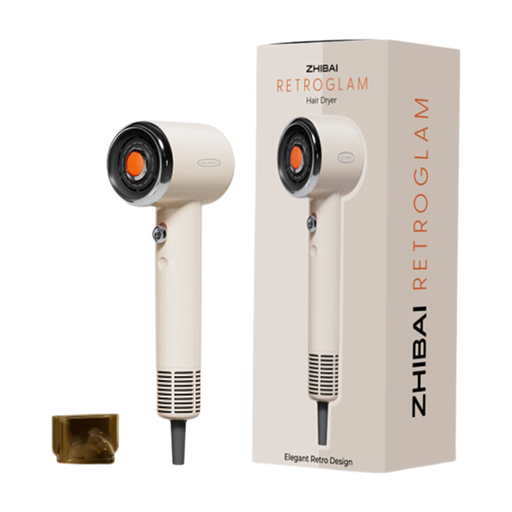
Why this choice suits this user profile : Weighing 378 g, with a stated noise level of 56 dB and thermal monitoring, it is well suited to frequent sessions and to users who pay close attention to the appliance’s weight.
The stated constant temperature of 57 °C and detachable filter help address the risks associated with excessive heat or neglected maintenance.
Motor advertised at 110,000 tr/min, four temperature modes, two speeds and a detachable air inlet.
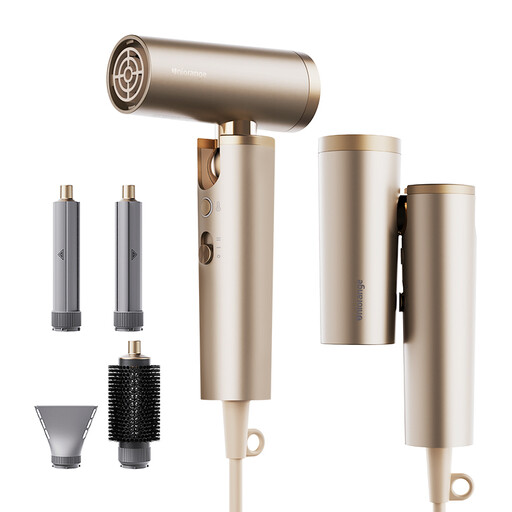
Why this choice suits this user profile : Its foldable design and stated compatibility with 100–240 V make it easy to transport, provided you have the correct plug adaptor.
The removable filter and stated air-reversal function help limit dust build-up, a common issue with an appliance that is frequently transported.
Motor advertised at 110,000 tr/min, foldable design and four styling accessories included according to the product information.
To maintain consistent airflow and minimise the risk of overheating, a few simple steps are all that is needed:
Even a professional or very powerful hair dryer should never be used near a washbasin, bath or shower. Unplug it after use and keep it out of children’s reach. Before buying, also check the voltage, plug type, whether instructions in French are provided when required, and the information about the manufacturer or responsible person established in the European Union.
Ionic technology is primarily associated with reducing static electricity. Drying speed mainly depends on airflow, heating power, hair length and the amount of water still present. A high-speed appliance can indeed reduce usage time, but advertised performance should be compared carefully.
A low to medium temperature is generally easier to control. Use a diffuser, select a moderate speed and keep the appliance moving to avoid concentrating heat on one area. The cool setting can be used to finish styling.
The cost depends on the wattage, usage time and electricity tariff set out in your contract. As a guide, a 1,900 W appliance used for ten minutes consumes approximately 0.317 kWh. Multiply this figure by the price charged per kWh to obtain a personalised estimate. Faster drying may reduce operating time, but choosing a setting suited to your hair type is just as important.