
Livraison le jour même ou le lendemain

Qualité garantie

Débloquez vos offres de bienvenue: Livraison GRATUITE | Jusqu'à -80 % | 30 jours d'essai gratuits à JoyPlus
Téléchargez l'application
Save time when drying your hair, reduce frizz and enjoy an appliance that is easy to use every day: the promises of high-speed hair dryers are certainly appealing. However, the figures highlighted on product pages do not always tell you how comfortable an appliance is to use or how versatile it really is.
Before choosing an ionic hair dryer, a plasma technology model or an appliance described as professional, it is worth checking a few essential points.
A motor advertised at 110,000 rpm may sound impressive. However, this figure alone does not indicate the airflow rate. The shape of the air duct, electrical power, brushless motor design and the presence of a concentrator nozzle also affect drying speed.
A 1600 W appliance can deliver powerful airflow while remaining easier to control than a much more energy-hungry model. When comparing two products, look at all the specifications: motor speed, power, air speed where stated and the number of settings.
Negative ions and plasma technology are generally presented as solutions that can reduce static and help tame hair. In practice, the result also depends on porosity, length, moisture level and the temperature selected.
Claims such as “1 billion ions” or “anti-frizz” are features stated by the manufacturer, not a guarantee that applies to everyone. A sensible temperature, correctly directed airflow and a well-maintained filter remain just as important.
A clogged filter reduces airflow and may make the motor work harder. Check whether it is removable, washable or equipped with a self-cleaning function. The cable, plug, presence of instructions in French and the contact details of the responsible party established in the European Union also deserve your attention.
In France, use the appliance with a socket compatible with the 230 V mains supply, away from water and very damp areas. A dual-voltage model, such as the H16, can be useful when travelling, but a plug adaptor may still be essential depending on the country you visit.
To dry your hair quickly, choose an appliance offering several speed and temperature levels. Fine or fragile hair will generally benefit from a gentle setting, while thick hair can make good use of stronger airflow.
The cool-shot button helps set your style and cool the hair after using a brush or concentrator nozzle. Brushless motors are often appreciated for their compact size and high-speed operation. Their lifespan nevertheless depends on the overall build quality and how well the filter is maintained.
An ionic hair dryer is primarily designed to reduce static. A plasma hair dryer may combine several types of ions, depending on the technology chosen by the manufacturer. These functions can be useful if your hair tends to puff up, but they do not replace heat protection or a suitable haircare routine.
For everyday use, focus above all on precise temperature control, the presence of a concentrator nozzle and how comfortable the appliance is to hold. An LCD display makes the settings easier to read, but it is not essential for effective drying.
A compact folding hair dryer fits easily into a small cupboard, gym bag or suitcase. When choosing a travel hair dryer, check its weight, cable length, compatibility with different voltages and the practical value of the accessories supplied.
If you want to dry, straighten, add volume and create curls with a single appliance, an 8-in-1 hot air brush can help you avoid filling the bathroom with multiple devices. However, it requires a little more practice than a conventional hair dryer, and its heated attachments must be handled carefully.
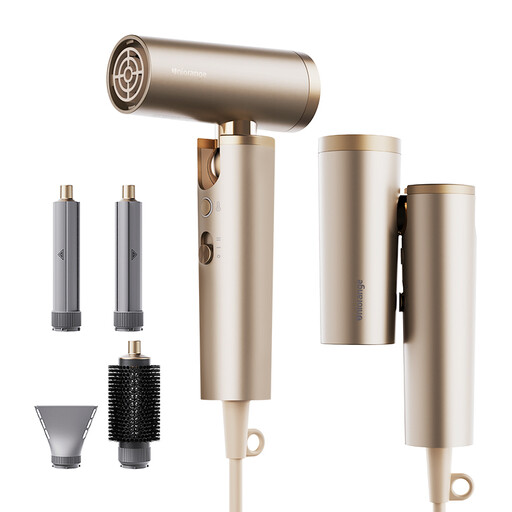
Why this choice suits this profile : Its folding design is ideal for anyone looking for a first appliance that is easy to store, both at home and when travelling. Its 100-240 V dual-voltage capability also makes it easier to take abroad.
The removable filter and advertised self-cleaning function make maintenance easier, something often overlooked with smaller appliances. The four attachments also mean you do not need to buy several accessories straight away.
Motor advertised at 110 000 rpm, folding design, dual voltage and attachments for drying, straightening or creating curls.
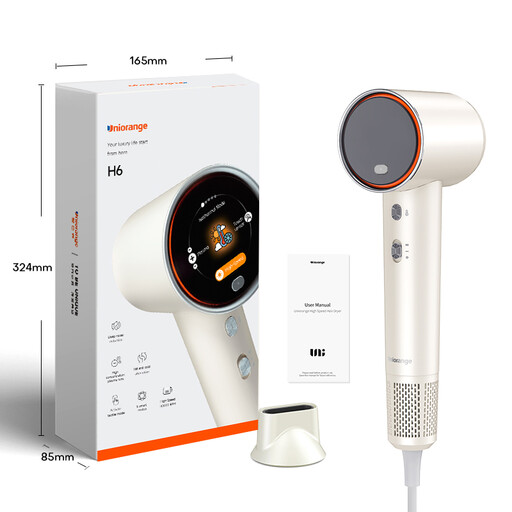
Why this choice suits this profile : Its colour LCD screen and five modes are ideal for users who want to see the settings and quickly adapt their styling routine.
The visible settings reduce the risk of choosing an unsuitable temperature. The sensor built into the handle is advertised as being able to start the appliance when you pick it up and stop it when you put it down.
Motor advertised at 110 000 rpm, 1600 W power, LCD screen, five modes and precision concentrator nozzle.
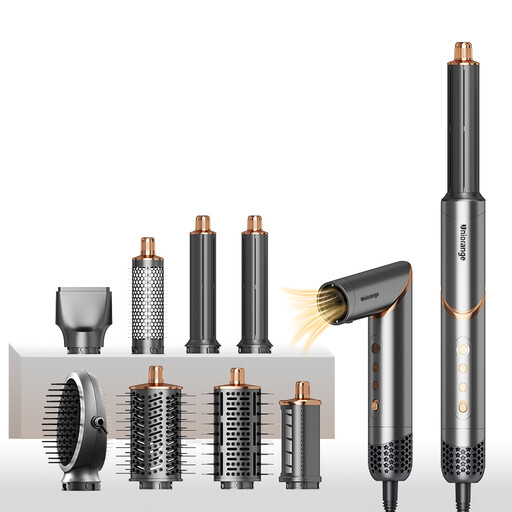
Why this choice suits this profile : This model is designed for people who switch between drying, straightening, adding volume and creating curls without wanting to fill the bathroom with multiple appliances.
The attachments cover several uses and the washable filter makes maintenance easier. However, the heated attachments require you to follow the recommended distances and safety instructions.
Advertised power of 1400 W, 110 000 rpm motor, four temperature settings, three speeds, cool air and attachments for eight uses.
We have selected a complete, real-time updated list of products that meet these strict criteria, as well as European safety requirements.
It all depends on its wattage and how long it is used. A 1600 W model uses 1.6 kWh if it runs for an hour, but daily drying generally takes much less time. A faster appliance may therefore reduce usage time, although it does not necessarily guarantee lower electricity bills.
Start by gently towel-drying your hair, then choose a moderate temperature and direct the airflow from the roots towards the ends. The concentrator nozzle helps channel the air more precisely. The ionic function may reduce static depending on your hair type, but its effectiveness varies from person to person.
There is no single lifespan that applies to every model. Clean the filter regularly, make sure the air inlets and outlets are not blocked, avoid knocks and unplug the appliance after use. An unusual smell, overheating, a new noise or a damaged cable should prompt you to stop using the appliance immediately and consult the instructions or after-sales service.