
Livraison le jour même ou le lendemain

Qualité garantie

Débloquez vos offres de bienvenue: Livraison GRATUITE | Jusqu'à -80 % | 30 jours d'essai gratuits à JoyPlus
Téléchargez l'application
Whether you're a creator, an engineer, or a small business owner, your time is valuable. Waiting hours, or even days, for a prototype or functional part to finally emerge from the machine is a major bottleneck for innovation and productivity. In this context, a high-speed 3D printer is no longer a luxury, but a true strategic asset for shortening development cycles. The problem?is that the market is flooded with complex spec sheets and sometimes misleading marketing promises.
This guide's mission is to decode the essential criteria for choosing a machine that is powerful, reliable, and capable of working with advanced materials. As Joybuy experts, we offer objective advice to help you find the model perfectly suited to your professional needs.
Before diving into our selection, let's review the features that separate a true professional 3D printer from a consumer-grade model.
To combine speed and precision in 3D printing, the mechanical structure is paramount. CoreXY systems stand out for their ingenious design?: the print head is driven by two synchronised belts on the X and Y axes. This design significantly lightens the moving parts, reducing their inertia. The result?: blazing-fast accelerations and travel speeds, while limiting the resulting vibrations and print defects (the infamous ghosting or ringing effect). This is a non-negotiable technical criterion for anyone seeking raw performance without sacrificing surface quality.
Printing only with PLA is a real bottleneck for professional applications. To create parts that must withstand heat, impact, or wear, switching to engineering-grade filaments is essential. A carbon fibre-compatible 3D printer, or one that handles nylon, ABS, or PC, must have certain features?:
A long and complex print shouldn't require constant supervision. This is where smart features become a guarantee of reliability and efficiency?:
We have selected models for you that check all the boxes?: speed, reliability, and compatibility with advanced materials.
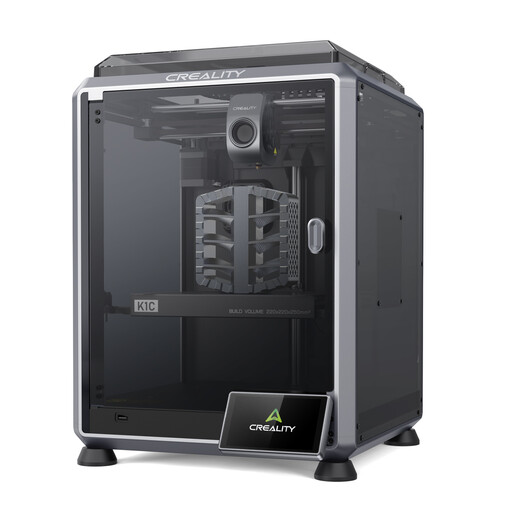
Why it stands out?: The Creality K1C is built for speed and versatility. With a maximum advertised speed of 600?mm/s and a nozzle capable of reaching 300?°C, it's ready for carbon fibre-filled filaments right out of the box. Its enclosed chamber and AI camera make it a reliable production tool.
Advantages?:
Who it's for?: Engineers, designers, and SMBs looking for a "plug-and-play" machine to quickly produce functional parts and prototypes with engineering-grade materials.
See details for the Creality K1C 2025

Why it stands out?: The K2 Combo pushes the envelope beyond mere speed by integrating a multi-material system (CFS). This solution allows for printing complex models with up to 16 different colours or materials without manual intervention. Its 260x260x260?mm print volume is generous for most projects.
Advantages?:
Who it's for?: Creators and businesses that produce presentation models, complex parts with soluble supports, or functional objects combining multiple materials in a single run.
Discover the Creality K2 Combo
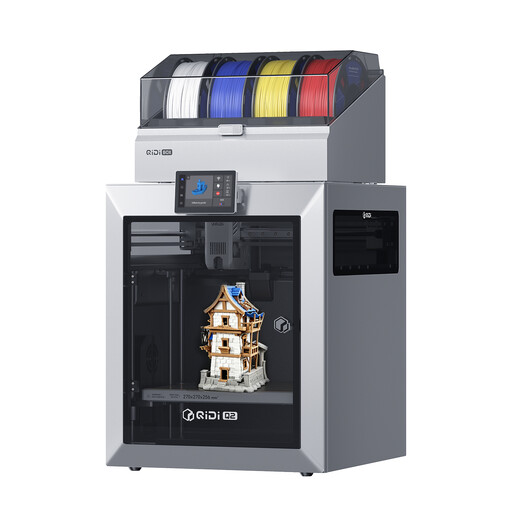
Why it stands out?: The Q2 Combo focuses entirely on reliability, especially for engineering-grade materials. Its key advantage?: an actively heated chamber at 65?°C. This guarantees a perfectly controlled printing environment for tricky materials like ABS or nylon, which drastically reduces the risk of warping. Its air filtration system (HEPA + activated carbon) makes it safer for use in an enclosed space or office.
Advantages?:
Who it's for?: Professionals and workshops that handle demanding technical materials daily, and for whom dimensional accuracy and repeatability are non-negotiable.
Explore the QIDIxJOYBUY Q2 Combo
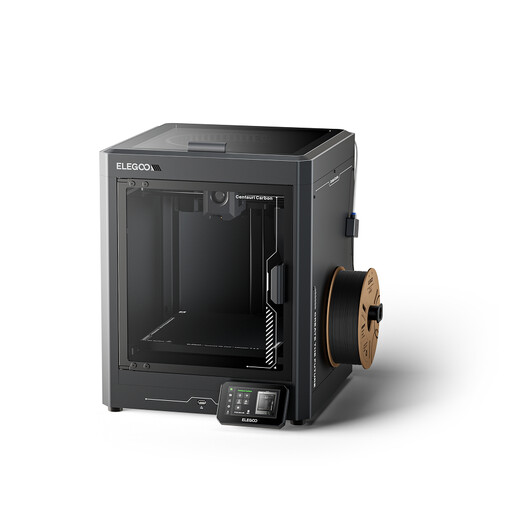
Why it stands out?: This model is built around a unibody die-cast aluminium frame, a design that ensures rock-solid stability, even when running at 500?mm/s with accelerations of 20,000?mm/s?. Automatic vibration compensation and pressure advance contribute to smooth, flawless surfaces.
Advantages?:
Who it's for?: Advanced users and demanding makers looking for an exceptionally robust CoreXY machine, capable of maintaining impeccable print quality at very high speeds, even on large models.
View the specs for the Joybuy x Elegoo Centauri Carbon
If these models don't perfectly meet your expectations or if you want to explore other technologies, our full catalogue is packed with solutions.
? Browse our complete 3D Printing category to discover more models
The latest generation models boast peak speeds of 500 to 600?mm/s. Be aware, however?: this maximum speed is a peak value, rarely maintained throughout an entire print. The effective speed will always depend on the part's geometry, the material, and your quality settings. Even at more modest cruising speeds, these machines drastically reduce print times compared to previous generations.
Absolutely. For high-speed printing, the CoreXY architecture offers decisive advantages. By keeping the heavy motors stationary and moving the print head only with a lightweight belt system, it minimises the inertia of the moving parts. This allows for sharper accelerations and quicker changes in direction without generating unwanted vibrations. The result?: much better surface quality at high speeds.