
Livraison le jour même ou le lendemain

Qualité garantie

Débloquez vos offres de bienvenue: Livraison GRATUITE | Jusqu'à -80 % | 30 jours d'essai gratuits à JoyPlus
Téléchargez l'application
The resin 3D printing market is evolving at breakneck speed. Resolutions of 9K, 14K, and even 16K are no longer science fiction, but common specifications that promise an unprecedented level of detail. But for enthusiasts, designers, and professionals, this technological arms race raises new questions: how do these specs actually perform in the real world? Does a higher resolution always mean better quality?
This guide is here to help you cut through the noise. We'll decode the spec sheets to help you find the high-resolution resin 3D printer that's right for you, whether it's for miniature 3D printing, rapid resin prototyping, or more advanced professional applications.
Before comparing models, let's review the criteria that define a high-performance machine today. Beyond the race for pixels, workflow efficiency has become a key focus.
An LCD screen's resolution, expressed in "K" (thousands of pixels), is often the number one marketing claim. A 14K or 16K 3D printer has a higher pixel count, which, on a given surface area, theoretically allows for finer details. However, the true measure of precision is the XY resolution in microns (?m). This is what defines the size of the smallest detail the printer can physically reproduce.
For miniature 3D printing or jewellery, a very low XY resolution (e.g., 16-25 ?m) is essential for achieving microscopic textures and details. For larger functional prototypes, a slightly higher resolution will be more than sufficient.
A fast resin 3D printer is about more than just its vertical travel speed (mm/h). The latest models incorporate smart features that reduce manual intervention and the risk of failure:
These features really shine in a professional 3D printer setup or for makers who run back-to-back prints.
Here is our selection of models that stand out from the crowd, for different needs and budgets.
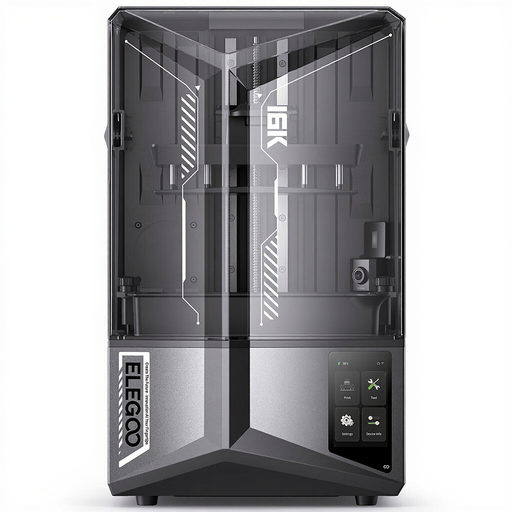
What sets it apart?: The Saturn 4 Ultra plays in the ultra-high-definition league with its 16K screen. Its key selling point: an intelligent resin vat heater, which ensures a constant temperature of 30°C for rock-solid reliability, regardless of ambient conditions.
Pros?:
Who is it for?? Miniature creators, jewellers, and prosumers seeking a surgical level of detail and maximum reliability for their most complex prints.
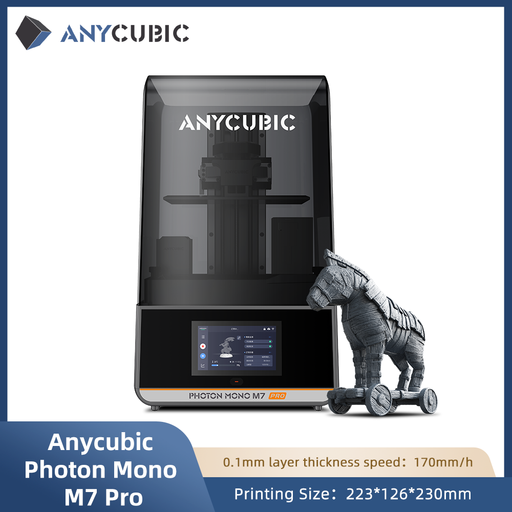
What sets it apart?: This model is all about productivity and automation. With a top speed of 170?mm/h (with fast resin) and features like automatic resin filling and removal, the Photon Mono M7 Pro is built for heavy use. Its adaptive temperature control system makes it a true workhorse for professionals.
Pros?:
Who is it for?? Professionals, dental 3D printing labs, and engineers who need a reliable and fast machine for rapid resin prototyping or small-batch production.
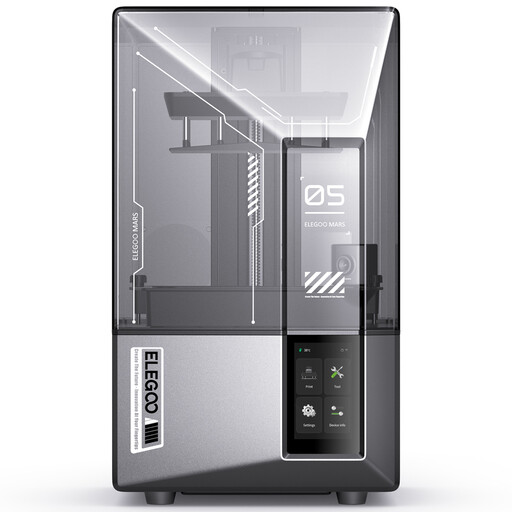
What sets it apart?: The Mars 5 Ultra brings fast and smart printing technologies to the mainstream. Although its resolution is 9K, its precision is still formidable for most applications (spatial resolution of 18??m). It includes advanced features like auto-levelling and an AI camera, often reserved for more expensive models.
Pros?:
Who is it for?? Experienced hobbyists and prosumers looking to upgrade their setup with a fast, smart machine, without necessarily chasing the absolute highest resolution on the market. It's an excellent compromise for high-quality miniature 3D printing.
If these models don't check all your boxes or if you want to explore other equipment to optimise your creative space, take a look at our smart office category. You'll find a wider selection of tools and accessories for all your projects.
It all comes down to pixel density. For the same screen size, a 16K printer has smaller pixels than a 14K model, resulting in a slightly better XY resolution. In practice, this difference will be most noticeable on very small models with extremely fine details, like micro-textures on miniatures or jewellery elements. For larger or less detailed objects, the difference may be imperceptible to the naked eye.
Absolutely. It's a game-changer for reliability and consistency. Photopolymer resin is sensitive to temperature changes. An environment that's too cold can make it more viscous, increasing the risk of layer separation or a complete print failure. A heated vat keeps the resin within its ideal operating range, ensuring successful prints far more often, especially during long sessions or in unheated workshops.
There's no one-size-fits-all answer, as the choice depends on the specific model and your needs. Historically, Elegoo and Anycubic are the two giants driving the market forward. Elegoo is often praised for its polished user experience and rapid integration of cutting-edge technologies into its prosumer lineup. Anycubic, on the other hand, has a strong reputation in the professional segment with robust, production-oriented machines focused on reliability, as seen in the Photon series. Ultimately, the comparison should be made on a case-by-case basis, by examining the specifications (speed, volume, automation) that are a priority for your work.