What should you look for first?
When choosing a savoury biscuit to enjoy with your coffee, start with your priority: protein content, a savoury format or a nutritional comparison between products for the same occasion.
| What to consider |
What to check |
Who is it for? |
| Clearly stated protein content |
The ‘high in protein’ claim on the exact product, and the grams of protein per 100 g and per portion. |
You want a savoury snack where protein content genuinely guides your purchase. Around 42% of consumers put this need first. |
| Savoury snack format |
The type of biscuit or cracker, as well as the pack weight and the portion you plan to eat. |
You’re mainly looking for something savoury to enjoy with your coffee that’s easy to take with you or share. This is the top priority for around 33% of consumers. |
| Nutritional profile |
The nutritional information per 100 g, particularly fibre and salt; the Nutri-Score if it’s displayed. |
You’d rather compare several products for the same occasion than look at their protein content alone. Around 25% of consumers prioritise this overall comparison. |
According to the DGCCRF, a nutrition declaration is required for prepacked foods, subject to the applicable exemptions. The Ministry of the Economy states that displaying the Nutri-Score is optional, so if it’s not shown, you should still check the nutritional information.
Brands to compare
These brands show the different types of products available. Always check the exact product, particularly if you’re looking for a savoury biscuit rather than a sweet biscuit to have with your coffee.
Mincidélice
The brand’s range of high-protein savoury snacks includes tomato and oregano savoury biscuits and plain crackers.
- Mincidélice states that its tomato and oregano biscuits contain 36 g of protein per 100 g, and its plain crackers contain 40.9 g per 100 g.
- Compare these figures with the portion you plan to eat, and check the ingredients and allergens on the exact pack. They don’t prove an effect on sports recovery.
Carrefour Sensation
The range’s Hyperprotein orange biscuits are sweet fruit biscuits, so they’re different from savoury crackers.
- Carrefour’s product listing includes milk proteins, wheat and powdered egg whites among the ingredients.
- This product isn’t a substitute for a savoury biscuit; check the allergen information before choosing it.
Chiche
The brand offers pulse-based savoury snacks, including broad bean crisps and roasted seeds.
- Chiche states that 70% of its products have a Nutri-Score of A or B.
- This claim applies to its range and may not apply to the recipe you choose. It also doesn’t confirm that this product is ‘high in protein’.
Belin
The Crackers Réception assortment is an example of a classic savoury biscuit to share.
- Carrefour’s product listing describes it as an assortment of savoury crackers.
- The listing doesn’t provide enough information to work out its Nutri-Score, and you shouldn’t assume the assortment carries a protein claim. Check the allergens.
Vico
The brand offers savoury snacks for aperitifs, including Aperifruits Classique.
- Vico describes this product as made in France, with no preservatives, colourings or palm oil.
- These details don’t tell you whether the product is labelled ‘high in protein’ or what its Nutri-Score is. Check its nutritional information.
A cracker option on Joybuy
For a savoury coffee break, this chickpea cracker comes in a 30 g pack. If protein content is your deciding factor, check the information on the pack before choosing it for that reason.
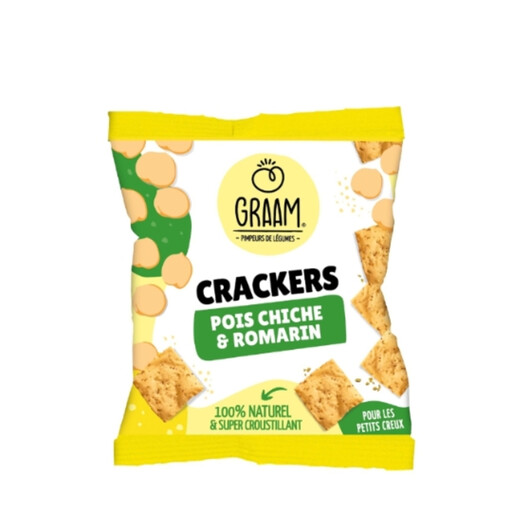 Image unavailable
Gram chickpea cracker, 30 g
A savoury cracker in a 30 g pack for your coffee break. If you’re choosing it for its protein content, check the nutritional values, any relevant claim and the allergens on the exact pack.
View on Joybuy
Frequently asked questions
Is the Nutri-Score compulsory on savoury biscuits in France?
No. The Ministry of the Economy states that the Nutri-Score is optional. Prepacked foods are subject to separate rules on nutrition declarations. If the logo isn’t shown, check the values per 100 g to compare products for the same occasion.
What does ‘high in protein’ mean on a pack?
In the European Union, the regulation on nutrition claims reserves this wording for foods where at least 20% of the energy value comes from protein. The presence of cheese, seeds or pulses alone isn’t enough to show that a biscuit meets this requirement.
Is a high-protein biscuit enough to help with recovery after exercise?
You can’t draw conclusions about recovery from a biscuit’s product information alone. Its protein content is one piece of nutritional information to consider alongside the portion you eat and your overall diet. For advice tailored to your needs, seek suitable guidance.
Which allergens should you check before choosing a biscuit to have with your coffee?
Read the ingredients list and any ‘may contain’ warnings for the exact recipe. For example, Carrefour’s listing for its Hyperprotein orange biscuits names milk proteins, wheat and powdered egg whites. Don’t assume the same ingredients are used in another flavour or in a savoury cracker.


