
Livraison le jour même ou le lendemain

Qualité garantie

Débloquez vos offres de bienvenue: Livraison GRATUITE | Jusqu'à -80 % | 30 jours d'essai gratuits à JoyPlus
Téléchargez l'application
Whether it's revitalising a moss-covered patio, deep-cleaning your car after a long trip, or refreshing your garden furniture for the summer, a high-pressure washer is a powerful ally for major cleaning tasks. However, faced with an overwhelming number of options and often cryptic technical sheets, making a purchase can quickly become a headache. As a result, many people end up with an unsuitable device—either too weak for their needs or too bulky and complex for occasional use.
To ensure you don't make the wrong choice, let's review the most common pitfalls that lead to a regrettable purchase:
To make an informed choice, let's focus on the few technical specifications that truly define the performance and suitability of a high-pressure washer for your needs.
These two values are inseparable.
The secret, therefore, is to find the right pressure/flow rate combination. A 140-bar, 450 L/h unit will often be more effective for cleaning a large surface than a model boasting 160 bars but with only a 350 L/h flow rate.
The motor's power, expressed in Watts (W) for an electric high-pressure washer, directly influences the pressure and flow rate the machine can generate. For regular tasks, a 1800 W to 2200 W motor offers a good compromise.
The pump material is another key indicator of the device's durability. Pumps made of aluminium or brass are known for their robustness and resistance to corrosion, ensuring a longer lifespan than pumps made of composite materials and allowing for longer cleaning sessions.
The choice between a corded electric model and a battery-powered one depends entirely on your environment and habits.
To help you see more clearly, here's how these criteria translate in practice with a few models tailored to specific needs.
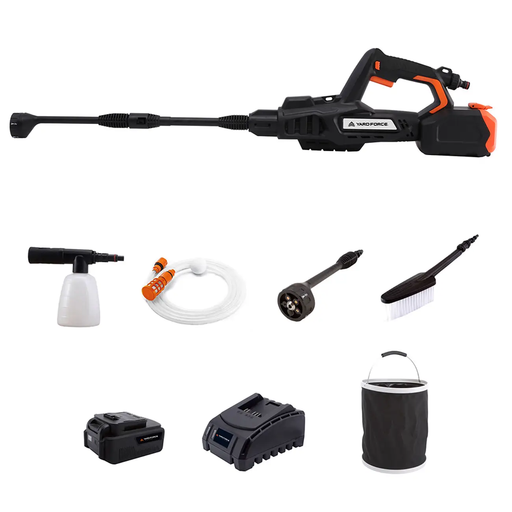
Why it stands out: Perfect for those seeking a 100% portable solution. Its cordless, self-priming design allows you to clean a mountain bike, balcony furniture, or rinse your car by drawing water directly from a bucket, far from any power outlet or tap.
This model avoids the "disappointing cordless" pitfall by embracing its purpose: it's designed for light, spot-cleaning tasks. Its power is calibrated for mobility, not to compete with corded models on major jobs.
Maximum mobility thanks to its battery and self-priming function. 5-in-1 multi-function nozzle to adapt to different surfaces without changing accessories.
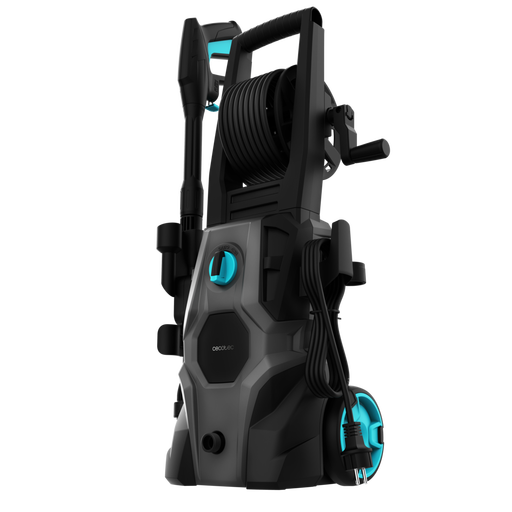
Why it stands out: This is the perfect Swiss Army knife for home maintenance. Its excellent power-to-flow rate balance (150 bars, 450 L/h) and comprehensive accessory kit make it ready to go right out of the box for cleaning a car, a patio, or a driveway, with no extra purchases needed.
It avoids the "overlooked accessories" pitfall by shipping with a complete package: wheel brush, patio cleaner, foam cannon... Everything is included for immediate versatility.
Aluminium pump for better reliability and a comfortable 14-metre operating radius (hose + cable). Excellent performance-to-equipment ratio.
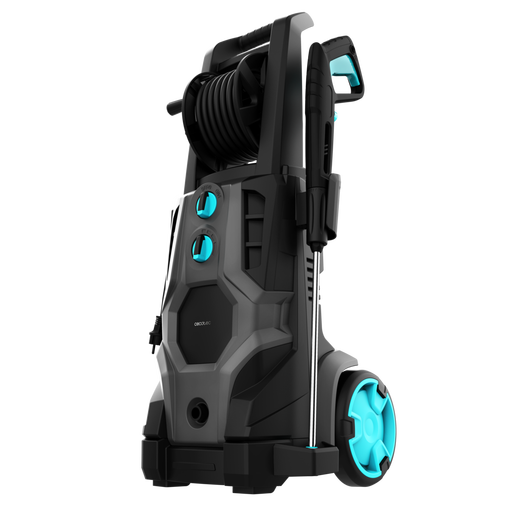
Why it stands out: Aimed at those tackling stubborn dirt on large surfaces (facades, large stone patios, driveways). Its 3200 W power and impressive pressure/flow rate combination (225 bars, 540 L/h) are built for intensive use and flawless results.
It avoids the "ineffective pressure" pitfall. Here, the very high pressure is backed by a substantial water flow rate. The result: dislodged dirt is immediately washed away, ensuring an effective clean in a single pass.
Induction (brushless) motor for superior durability and performance. Serious firepower for the most demanding jobs.
Explore our full selection of products that meet our selection criteria and current safety standards.
Yes, absolutely. Improper use can cause damage. For a car, always maintain a safe distance (at least 20-30 cm) and never use the 0° pencil jet or the turbo nozzle on the bodywork. Opt for a fan-spray nozzle (25° or 40°). For a wooden deck, reduce the pressure if possible and test on an inconspicuous area first. Always work in the direction of the wood grain.
Maintenance is simple but essential. Before winter, the most critical step is to completely drain the unit (pump, hose, gun) to prevent any remaining water from freezing and damaging the pump. Also, remember to regularly clean the water inlet filter to prevent it from getting clogged. Finally, store the unit and its accessories in a dry, frost-free place.