
Livraison le jour même ou le lendemain

Qualité garantie

Débloquez vos offres de bienvenue: Livraison GRATUITE | Jusqu'à -80 % | 30 jours d'essai gratuits à JoyPlus
Téléchargez l'application
A shower head might seem easy to replace. Yet the differences between models quickly become significant when you have to deal with hard water, inconsistent pressure or a strong chlorine smell. A high-pressure filtered shower head needs to handle several uses: rinsing hair, taking a daily shower, cleaning the shower cubicle and, sometimes, filling a bath quickly.
Before you place an order, three common pitfalls keep cropping up.
If you're looking for a shower head for hard water, focus on the composition of the filter rather than just its marketing name. Some models combine several filtering materials, such as KDF, calcium sulphite, activated carbon, vitamin C or mineral beads.
The Cobbe model with 20-layer filtration details these components clearly on its product page. This information helps you understand the filter's design, without turning the manufacturer's claims into medical promises. An anti-chlorine shower filter can help reduce the smell of the water or change how it feels on your skin, but its real effectiveness depends on your water quality, flow rate and how often you replace it.
This type of filter does not replace a whole-house water treatment system. If your water is particularly hard, it's still best to check its hardness with your water supplier or the relevant authority.
Having a universal G1/2 connection is a real practical advantage. This size is very common on shower fittings, but you should still check the condition of your existing hose and wall bracket.
A shower head with hose may come supplied with the product or require you to reuse your current hose. So before ordering, check:
When replacing a compatible shower head, a screw-on installation usually doesn't need a plumber. If dismantling proves difficult, however, turn off the water supply and avoid forcing the connections.
A 6-jet shower head lets you adapt rinsing, massage sensation or targeted cleaning. The available modes may include a rain jet, massage, powerful jet, mist or various flow combinations. Just bear in mind that the more functions there are, the more carefully the selector mechanism will need to be handled.
To keep water consumption down, look for a design described as water-saving, but remember that the amount you use also depends on how long you shower and your mains pressure. A large spray face can cover a bigger area, but that doesn't automatically mean it will use less water.
Finally, clean the silicone nozzles regularly and follow the manufacturer's recommendations for replacing the cartridge. On some models, the cartridge needs changing every three to four months, or as soon as the flow drops. This interval varies depending on the volume of water used and its quality.
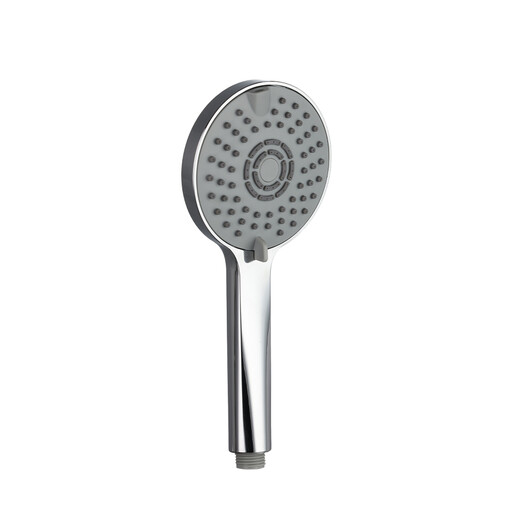
Why this choice suits this profile: This hand shower offers four modes plus a cleaning jet for everyday needs, in both a shower and a bath. It's ideal for a first versatile installation without too many settings to manage.
The number of functions is easy to understand, which reduces the risk of paying for modes you'll rarely use.
Four jets, a targeted rinsing function and use stated for body, hair and bathroom cleaning.
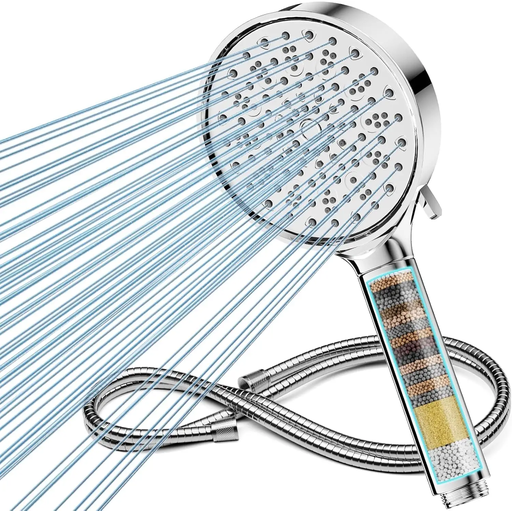
Why this choice suits this profile: This model combines a stated 20-layer filtration, six modes, a 124 × 124 mm spray face and a hose. It's aimed at those who want several criteria met in a single package.
The product page details the filtration system components, the G1/2 connection and regular cartridge replacement — three pieces of information often missing from overly vague offers.
Detailed multi-layer filtration, six jets, stated water-saving technology and hose included.
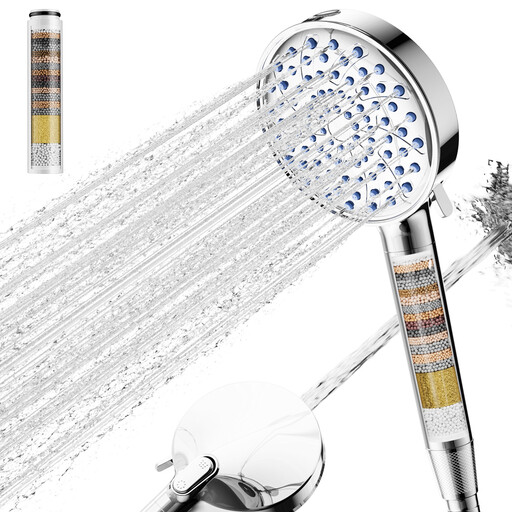
Why this choice suits this profile: Its six main modes plus an extra mode let you switch between daily showering, hair washing, rinsing pets and bathroom cleaning.
The variety of settings covers several real-life situations, while the pre-installed filter saves an extra step during assembly.
Detailed 20-layer filter, G1/2 connection, multiple modes and the ability to replace the cartridge when flow decreases.
We've put together a comprehensive, real-time updated selection of products that meet these demanding criteria, while complying with European safety regulations.
Yes, provided the connection is compatible, particularly the G1/2 size used by several models. Unscrew the old shower head, clean the thread, fit a suitable washer, then screw on the new hand shower without forcing. Once the water is back on, check that no leaks appear.
It all depends on your water hardness, the volume used and the number of people showering. Some product pages recommend replacing the cartridge every three to four months, or as soon as the flow drops. A saturated cartridge can reduce the practical benefit of the device, even if the shower head itself remains perfectly functional.
A model described as a water-saving shower head can limit flow thanks to its internal design or a supplied restrictor. That doesn't guarantee the same saving in every home. To better manage your consumption, compare the stated flow rate when available, and also think about reducing the length of your showers.