
Livraison le jour même ou le lendemain

Qualité garantie

Débloquez vos offres de bienvenue: Livraison GRATUITE | Jusqu'à -80 % | 30 jours d'essai gratuits à JoyPlus
Téléchargez l'application
Low water pressure, limescale marks on your fittings, or that tight feeling on your skin after a shower can make you want to replace your shower head in a hurry. But behind the label high-pressure filtered shower head lie very different products. Some focus on the number of nozzles, others on a multi-layer filter, or on the promise of reducing water consumption.
To find a model that suits a British bathroom, it’s best to focus on concrete details: compatibility, maintenance, and features you can actually verify.
A shower head can optimise water distribution through finer nozzles or a particular internal design. However, it cannot endlessly increase the pressure supplied by your plumbing. In a flat on an upper floor, or a home with old pipes or a pressure reducer, the result may still be limited.
Before placing an order, check your available flow rate and the condition of your hose. Nozzles partially blocked by limescale can also make the shower head feel underpowered.
A shower head with a 20-layer filter may contain different filter media, such as activated carbon, calcium sulphite, or mineral beads. This number describes the filter’s construction, but it doesn’t prove complete removal of chlorine, metals, or bacteria.
Performance depends on your water quality, flow rate, how long you use it, and when you replace the cartridge. An anti-chlorine shower filter is not a substitute for a water test or a certified water purification device.
A cartridge that needs replacing every three or four months can significantly increase the running cost. How often depends on your water hardness and how many people use the shower. Also check that the connection is compatible with your hose.
The G1/2 thread is very common, but it’s still wise to check the fitting you already have. A leak at the seal can cancel out any water savings that are claimed.
A water-efficient shower head should deliver a pleasant spray while maintaining a reasonable flow rate. Manufacturers don’t always provide a figure in litres per minute, which makes comparisons tricky. When this information is missing, be wary of general promises about savings.
Soft silicone nozzles are handy for removing limescale deposits. They make maintaining an anti-limescale shower head easier, but they don’t prevent scale from forming in your pipes or cartridge.
In an area with hard water, look for:
A shower head for hard water can improve your showering comfort, but it won’t remove limescale from your entire household plumbing. The filtration should also not be presented as a medical treatment for your skin or hair.
A 6-mode shower head gives you more options to switch from a rain spray to a massage, a concentrated jet, or a targeted rinse. However, each mode adds a selection mechanism that can wear out over time. For straightforward daily use, a model with three or four modes may be perfectly adequate.
In a bathtub, a shower head with a hose makes it easier to rinse your hair, children, or the bath panel. A stop button or diverter can also be handy, as long as you check how it feels in your hand and its effect on the flow rate.
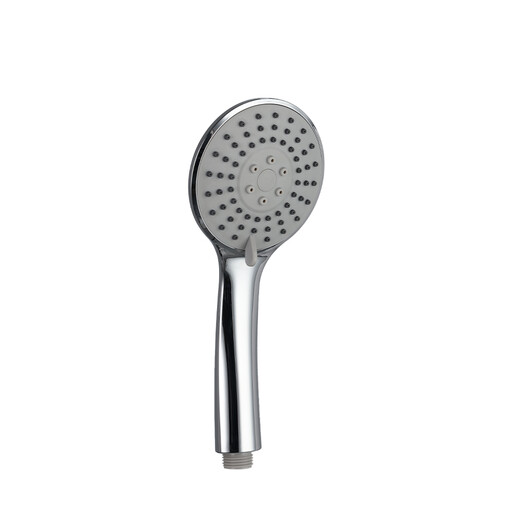
Why this choice suits this profile: Its compact size and three spray modes are ideal for a first installation in a shower or bathtub.
It stops you paying for features you won’t use and includes a switch to reduce fiddling in the shower.
Three spray modes, a compact design, and suitability for both shower and bathtub.
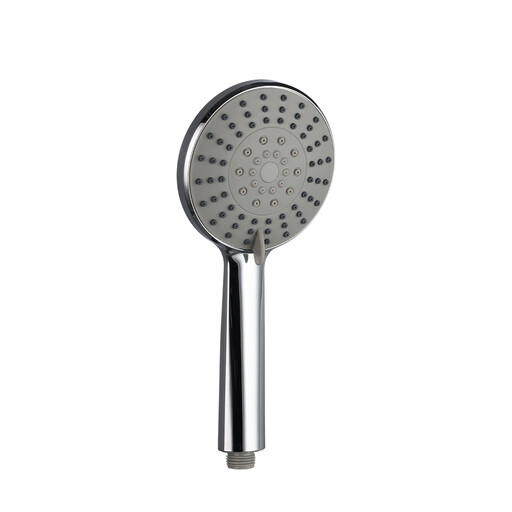
Why this choice suits this profile: Its five spray patterns and diverter are designed for those who want to tailor their shower to different routines.
The different sprays are clearly labelled, so you can compare them without being swayed by a mere promise of boosted pressure.
Five spray patterns and a diverter for shower or bathtub.
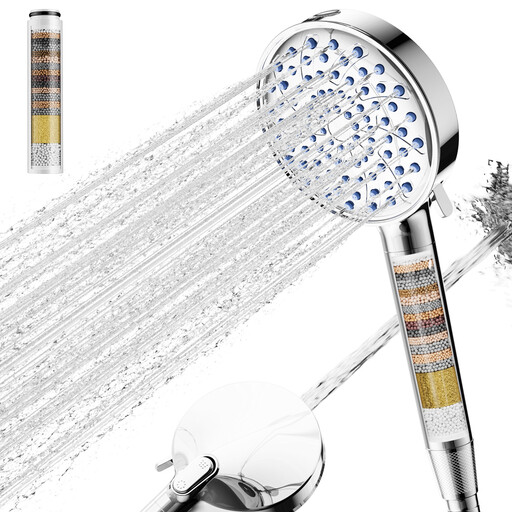
Why this choice suits this profile: Its built-in filtration, hose, and many spray modes can suit a family or a busy bathroom.
The cartridge comes pre-installed, and replacement is recommended when the flow drops or after the stated usage period.
20-layer filter, six modes plus an additional spray, hose, and G1/2 connection.
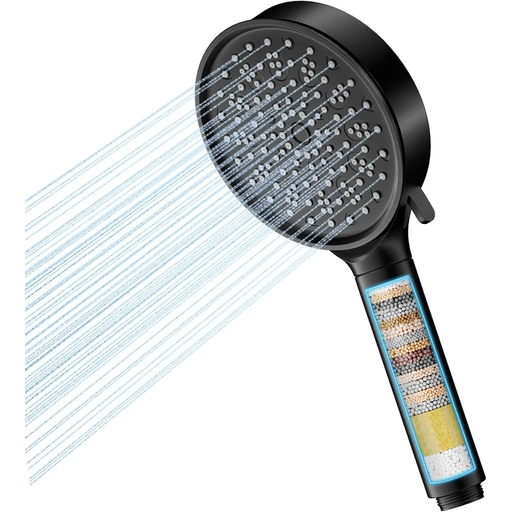
Why this choice suits this profile: Its black finish and large 124 × 124 mm panel fit naturally into a contemporary-looking bathroom.
The size, modes, filter, and connection can all be checked separately, so you don’t rely solely on the product’s appearance.
Black finish, 20-stage filtration, six spray modes, and stated G1/2 connection.
We’ve put together a full list, updated in real time, of products that meet these strict selection criteria and European safety requirements.
A drop in flow, an unusual smell, or a visible change in the water can mean it’s time to replace the filter. Don’t use abrasive products on a chrome finish or on a black shower head – you could dull the surface.
It can reduce some deposits inside the shower head and improve the spray pattern, depending on the cartridge used and your conditions. It is not a substitute for a water softener fitted to your mains supply. Regular nozzle cleaning is still essential.
The lifespan depends on the volume of water used, its hardness, and how many people live in your home. Some models recommend replacement every three or four months, or as soon as the pressure drops. In any case, always follow the instructions provided.
Your consumption depends on the actual flow rate, how long your showers are, and your household’s habits. A model marketed as water-efficient can help reduce the volume used, but compare the available flow data rather than relying on a general promise.