
Livraison le jour même ou le lendemain

Qualité garantie

Débloquez vos offres de bienvenue: Livraison GRATUITE | Jusqu'à -80 % | 30 jours d'essai gratuits à JoyPlus
Téléchargez l'application
Moss has taken over your patio, mud has dried onto your car's bodywork, and your garden furniture is looking dull. Faced with this scene, the high-pressure cleaner stands out as the ultimate weapon. Yet, choosing the right model can quickly become a headache. Between marketing promises and confusing spec sheets, it's easy to end up with a disappointing device, or one that's unusable after just one season.
Before you decide, watch out for these two common mistakes:
This guide breaks down the features that truly matter for an effective clean and a machine that lasts.
To choose an electric high-pressure cleaner that's genuinely suited to your needs, it's essential to understand the role of each component. Here are the three points you should never overlook.
These two values are inseparable when evaluating a cleaner's true performance.
To put it simply: pressure dislodges the dirt, and the flow rate washes it away. The balance between the two is what makes a cleaner effective.
The pump is the centrepiece of your cleaner. Its material directly impacts its longevity and resistance to wear and tear.
For a homeowner who plans to use their device several times a month, investing in a model with an aluminium pump is the best bet to ensure its long-term reliability.
A good cleaner is also a device that is pleasant and practical to use. The overall ergonomics and the included accessories therefore play an essential role.
For those looking for a do-it-all machine, capable of deep-cleaning the patio as well as pampering the car, the best choice is a model that offers the right balance of power, durability, and accessories.
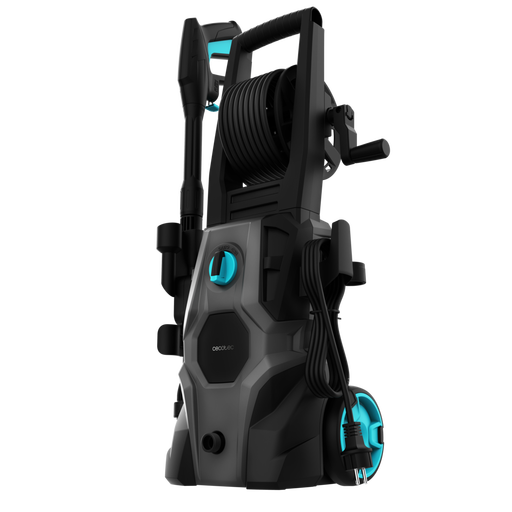
Why it stands out: It checks all the boxes for a homeowner who wants a single device to maintain everything, from the house to the vehicle. Its power is perfectly calibrated for both common and more demanding tasks, without being excessive.
This model includes a HardPump aluminium pump, a guarantee of reliability and durability compared to composite pumps. Its comprehensive accessory kit (floor brush, special rim brush, 3DTurboFlip nozzle) also helps you avoid costly additional purchases.
Its main asset: an excellent performance-to-feature ratio. The balance between its 150 bar of pressure and its comfortable 450 L/h flow rate ensures fast and effective cleaning. Finally, its total operating radius of 14 metres offers unmatched freedom of use.
Whether your needs are lighter or, conversely, more intensive, discover our complete selection of products that all meet our strict criteria for performance and reliability.
1. What pressure is needed to clean a heavily soiled patio? For a heavily soiled wood, composite, or tiled patio, aim for a pressure of 140 to 160 bar. The ideal solution is to use a surface cleaner accessory (sometimes called a "T-Racer"), which combines the mechanical action of a rotating brush with the power of the jet, all while protecting the surface from marks and containing splashes.
2. Aluminium vs. brass pump: what's the real difference? An aluminium pump is perfect for regular domestic use (several times a month), offering an excellent balance of durability and price. A brass pump, which is even more robust, is reserved for semi-professional or intensive use (several times a week). For the vast majority of homeowners, aluminium is therefore the most relevant choice.
3. Can any detergent be used in a high-pressure cleaner? Absolutely not! It is crucial to never use non-specific detergents. Standard household products (dish soap, etc.) can produce excessive foam and, more importantly, irreparably damage the pump and seals of the device. Only use detergents specially formulated for high-pressure cleaners, strictly following the manufacturer's dosage instructions.