For a secondary school lunchbox, choose plain oats if you want to decide which ingredients to add, provided you can prepare them in advance and transport them in a way that suits the recipe. When looking for a product labelled ‘high in fibre’, compare the figures per 100 g: EU regulations allow this claim from 6 g of fibre per 100 g or 3 g per 100 kcal. Muesli is a different recipe, so check its sugar and allergen content; if there’s an allergy, also check the school’s guidance.
Who is this choice for?
Parents comparing fibre content
You want to check the nutritional information per 100 g to distinguish a product’s actual fibre content from the claim ‘high in fibre’. France’s Directorate-General for Competition, Consumer Affairs and Fraud Control (DGCCRF) says that using this common basis makes comparisons easier.
Families preparing lunchboxes in advance
You’re looking for something you can cook or use in a cold recipe, depending on how much time you have and the texture your secondary school pupil prefers. Adding chilled ingredients also affects how the recipe needs to be transported.
Families managing an allergy or medical diet
You’ll need to check the allergens in the exact product you buy and follow the arrangements agreed with the school. The French Ministry of National Education says that an individual care plan, or PAI, can be put in place for a food allergy.
What should you check?
For a lunchbox, start with the product’s ingredients, then choose a preparation method and way of transporting it that suit the recipe.
| What to check | Check this | Who is this for? |
|---|
| Fibre content |
Compare fibre per 100 g. For the ‘high in fibre’ claim, EU regulations set a threshold of 6 g per 100 g or 3 g per 100 kcal. |
If I’m comparing several porridges, I want to know their fibre content on the same basis before choosing; around 36% of consumers make this their priority. |
| Allergens and gluten |
Check the ingredients, allergens and ‘may contain’ statements on the exact pack you’re buying; if needed, look for ‘gluten-free’ labelling and check the school’s guidance. |
When a food exclusion affects what can go in the lunchbox, I need to be able to choose a product that meets the individual requirements; this is a priority for around 29% of consumers. |
| Preparation and transport |
Check how to prepare the product and, if you add chilled ingredients, how to keep the recipe cold until lunchtime. |
Preparing lunch before leaving home calls for a recipe you can make in time and transport safely; around 21% of consumers put this planning first. |
| Taste and ingredients |
For muesli or a blend, compare the sugar content per 100 g, along with any added ingredients and allergens. |
If the pupil prefers a mix of ingredients to plain oats, I look for a texture and ingredients they’ll enjoy; taste and variety come first for around 14% of consumers. |
Mistakes to avoid
-
Relying on the ‘high in fibre’ claim alone
Two products can both meet the threshold for this claim without having the same fibre content. Figures per serving also make it harder to compare different pack sizes.
Compare fibre per 100 g in the nutritional information, then consider the serving you plan to prepare.
-
Assuming all oat products are suitable for a gluten-free diet
Auchan’s listing for 800 g Quaker oats says they may contain wheat and barley. A variety specifically labelled ‘gluten-free’ still needs to be checked for its other ingredients and allergens.
Read the label on the product you buy and, if there’s a PAI in place, follow the arrangements agreed with the school.
-
Treating muesli like plain oats
Jordans Special Muesli combines several ingredients, including tree nuts; its product information lists 19 g of sugars per 100 g. This may affect your choice if a food exclusion applies.
Compare its ingredients, sugar and allergens with those of plain oats.
-
Forgetting to keep chilled ingredients cold
A recipe containing yoghurt or another food that needs to be kept cold must be stored appropriately during the journey and until lunchtime.
Prepare it in a cool place and use an insulated bag for transport: France’s Agency for Food, Environmental and Occupational Health & Safety (ANSES) recommends using one to help maintain the cold chain.
The container and the way you keep the food cold are both part of planning this lunchbox.
Brands and ranges to consider
Quaker
Oats that make a handy base for a porridge you can customise.
- Auchan’s listing for 800 g Quaker oats says they contain 100% wholegrain oats and 9 g of fibre per 100 g.
- This product may contain wheat and barley, so it shouldn’t be treated as gluten-free.
Carrefour Bio
Organic wholegrain oat flakes in a 500 g pack, which Carrefour describes as ‘high in fibre’.
- Carrefour’s product information lists organic wholegrain oat flakes as the ingredients.
- It warns that the product may contain traces of other cereals containing gluten; check the nutritional information on the pack to compare fibre content.
Terres et Céréales
Plain organic wholegrain oats, with a separate variety labelled ‘gluten-free’.
- Auchan lists 10 g of fibre per 100 g for its 1 kg organic wholegrain variety; the 500 g gluten-free variety also contains 10 g per 100 g.
- The ‘gluten-free’ claim applies only to the variety that carries it, so check the exact product before buying.
Jordans
An option if you prefer a muesli blend to plain oats.
- Jordans France lists 8.5 g of fibre per 100 g for its Special Muesli.
- This recipe contains wheat and tree nuts, among other ingredients; its product information also lists 19 g of sugars per 100 g.
Bio Village / Marque Repère
Two ranges in which E.Leclerc offers oat products, including Bio Village and Grainea.
- E.Leclerc offers 500 g packs of Bio Village organic wholegrain oat flakes and 500 g packs of Grainea oat flakes.
- To choose based on fibre content or a food exclusion, compare the nutritional information and allergens for the exact product.
Joybuy products for making porridge
For a secondary school lunchbox, these options include a porridge blend, oat flakes and oat groats to cook. Check the ingredients and preparation instructions for each one to make sure they suit your recipe.
 Image unavailable
Quaker Oatmeal with linseeds and cocoa, 245 g
This blend of oats, linseed and cocoa lets you choose a ready-made mix instead of plain oats. If you prepare it the night before with chilled yoghurt, keep the lunchbox cold until lunchtime and check the allergens on the pack.
View on Joybuy
 Image unavailable
BJORG organic oat flakes, 500 g
These flakes are a good choice if you want to decide for yourself what to add to your porridge. The pack contains 500 g of organic oat flakes; check its preparation instructions and allergen information before planning your lunchbox.
View on Joybuy
 Image unavailable
Quaker Oats, 500 g
These oats can be used as a base for porridge, with whatever additions you choose. If you’re taking it to school, check the preparation time and allergen information on the 500 g pack.
View on Joybuy
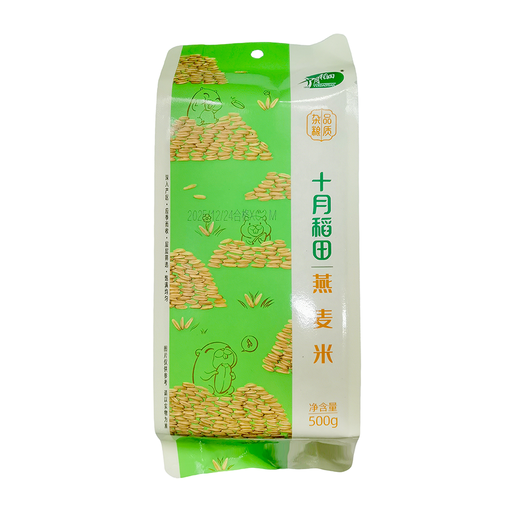 Image unavailable
Oat groats, 500 g
Unlike oat flakes, these oat groats are best suited to a recipe you can cook in advance before putting together the lunchbox. Check the instructions and allergen information on the 500 g pack.
View on Joybuy
Frequently asked questions
What does ‘high in fibre’ mean for porridge sold in France?
Under EU regulations on nutrition claims, a solid food must contain at least 6 g of fibre per 100 g or at least 3 g per 100 kcal to carry this claim. To compare several products, check their nutritional information on the same per-100 g basis.
Are oat flakes automatically suitable for a pupil avoiding gluten?
No. Auchan’s listing for 800 g Quaker oats warns that they may contain wheat and barley, while Carrefour says its organic oat flakes may contain traces of other cereals containing gluten. If gluten needs to be excluded, check that the product you buy has the appropriate labelling and review its other allergen information.
What should you ask the school if your child has a food allergy?
Confirm with the school how the lunchbox can be brought in and eaten. The French Ministry of National Education says that a PAI can be put in place to organise adjustments for a food allergy; follow the agreed arrangements if one is in place.
Can you make cold porridge the night before for a lunchbox?
Yes, if the recipe is suitable for cold preparation and you store it correctly. If it contains yoghurt, chilled milk or another ingredient that needs to be kept cold, keep the food chilled until lunchtime; ANSES recommends using an insulated bag to transport chilled food.


