If you want to compare fibre content
Fibre values per 100 g let you compare oat bases without relying on a claim on the packaging. The Auchan product pages for the Auchan and Quaker oats reviewed list 10 g and 9 g of fibre per 100 g respectively.


To make your own porridge, choose a base with fibre values listed per 100 g and check the ingredients list. The plain wholegrain oats reviewed on the Auchan and Quaker product pages contain 10 g and 9 g of fibre per 100 g respectively. The claim ‘high in fibre’ doesn’t tell you what will be in your bowl once it’s prepared, and it isn’t a promise of weight loss. Portion size, toppings, sugars and allergens also matter when choosing.
Fibre values per 100 g let you compare oat bases without relying on a claim on the packaging. The Auchan product pages for the Auchan and Quaker oats reviewed list 10 g and 9 g of fibre per 100 g respectively.
Choosing the oats, the amount you use and the toppings lets you focus on the meal you’re making, rather than seeing ‘high in fibre’ as a promise about weight. Manger Bouger includes plant foods that are high in fibre in its recommendations for your overall diet.
A product with oats as its only ingredient isn’t necessarily labelled gluten-free. Some of the products reviewed warn that other cereals may be present in traces; the product page for Quaker 800 g specifically mentions wheat and barley.
Start by checking the values per 100 g and the ingredients, then consider the portion you’ll prepare and any allergen-related requirements.
| Criterion | What to check | Who is it for? |
|---|---|---|
| Comparable fibre content | Check the fibre content per 100 g, then the amount in your portion. Under the EU regulation on nutrition claims, ‘high in fibre’ requires at least 6 g per 100 g or 3 g per 100 kcal. | If fibre content guides my purchase, I want to compare two bases using the same quantity. This is the main consideration for around 36% of consumers. |
| What goes into your bowl | Compare the ingredients and sugars per 100 g, and consider separately any ingredients you add when preparing your porridge. | When I make porridge, I prefer to choose the amount of oats and the toppings myself. Around 29% of consumers make control over the recipe a priority. |
| Gluten and allergens | Check the allergens and any warnings about traces. If you need to avoid gluten strictly, look for a verifiable ‘gluten-free’ declaration. | A list containing only oats doesn’t, by itself, meet my need to avoid gluten or certain allergens. This compatibility comes before other criteria for around 21% of consumers. |
| Preparation | Check the suggested portion, amount of liquid and preparation time. Grains that need cooking aren’t prepared in the same way as rolled oats. | If I have limited time to prepare breakfast, I want to know what’s involved before making a product part of my daily routine. Ease of preparation is the priority for around 14% of consumers. |
This claim relates to the product’s composition, not an individual result. Manger Bouger’s recommendations are about your overall eating habits.
Use fibre content as a way to compare products, then check the ingredients, portion size and toppings you plan to add to your bowl.
Two suggested portions may have different weights. Values per 100 g give you a common basis for comparison before you consider the amount you’ll actually prepare.
Compare the nutrition information per 100 g, particularly fibre and sugars, then work out how it applies to your portion.
Oats may be the only ingredient in a product, but it may still carry a warning about traces of other cereals. The Auchan product page for Quaker 800 g, for example, says that wheat and barley may be present.
If you need to avoid gluten strictly, check the ‘gluten-free’ declaration and allergen information for the product you choose.
Milk, a plant-based drink, honey, fruit or seeds will all change the nutritional composition of the porridge you serve.
When comparing two ways to make your bowl, consider how much of the base you use and which ingredients you add.
Carrefour’s Carrefour Bio High-Fibre Organic Oat Flakes 500 g product is made with organic wholegrain oats, rolled into fine flakes.
The plain wholegrain oat flakes reviewed are available in different pack sizes, including a 500 g organic version.
Quaker’s 800 g wholegrain oat flakes, listed by Auchan, can be used to make hot porridge.
This selection includes oat flakes to top as you like, an oat mix with flaxseed and cocoa, and oat groats to cook. Compare their ingredients and preparation methods based on the bowl you want to make.
 Image unavailable
Use these flakes as a porridge base if you want to choose your own toppings. The product description lists 100% white oats, 9 g of fibre and 1.1 g of sugars per 100 g, and states that it contains gluten from oats. Check the pack for the portion size and preparation instructions that suit you.
 Image unavailable
This oat base is a good choice if you prefer to decide what goes into your porridge. The product page for this 500 g pack lists 100% organic wholegrain oats, 11 g of fibre and 1.7 g of sugars per 100 g, and states that it contains gluten from oats. Check the pack for the portion size and preparation instructions.
 Image unavailable
This blend of oats, flaxseed and cocoa has a different composition from a plain oat-flake base. The product page lists 16.3 g of fibre per 100 g and gives instructions for portions starting at 50 g, including microwave preparation or leaving it to stand. It also states that it contains gluten from oats. If sugars are important to you, check the value on the pack and factor in any ingredients you add.
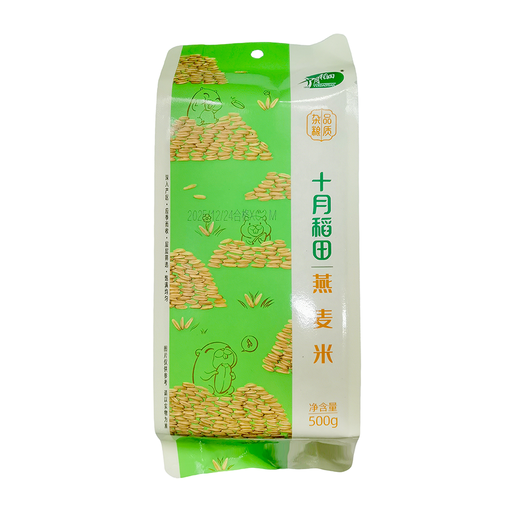 Image unavailable
These oat groats are an option for making porridge if you have time for a longer cooking process than you’d need for rolled oats. The product page recommends rinsing them, then cooking for 30 to 40 minutes. It lists 12.5 g of fibre per 100 g, which you can check against the nutrition label. It also states that they contain gluten from oats.
In the European Union, the regulation on nutrition claims requires a product to contain at least 6 g of fibre per 100 g or 3 g per 100 kcal to use the claim ‘high in fibre’ or equivalent wording. To compare two products, check their fibre content per 100 g.
Fibre content alone doesn’t mean that eating a porridge will lead to weight loss. Manger Bouger’s recommendations cover your overall diet. When choosing a product, also consider its ingredients, the portion you prepare and any toppings you add.
No. Some products warn that traces of other cereals containing gluten may be present, and the Auchan product page for Quaker 800 g mentions wheat and barley. If you need to avoid gluten strictly, check that the product you choose is labelled ‘gluten-free’. The French Association of Gluten Intolerants states that this corresponds to a threshold of 20 mg of gluten per kg.
First compare the ingredients and nutrition information per 100 g, particularly fibre and sugars, then check the portion you plan to prepare. Also read the highlighted allergen information, as recommended by the DGCCRF for prepacked foods sold in France.
Follow the instructions on the pack you choose. The Auchan products reviewed recommend resealing the bag and storing it in a cool, dry place away from heat and moisture.