Teams checking fibre content
For purchasing and catering teams, start with the exact product: check its fibre content per 100 g or the claim on its packaging, rather than relying on a general promise associated with oats.


For meals in care homes, first choose a product whose fibre content or ‘high fibre’ claim you can verify, then prepare it to the texture required by each resident. Plain oats let you adjust the recipe, while porridge made with other ingredients also needs its full composition checked. None of these products replaces an individual nutritional assessment or the care home’s protocol for preventing choking and aspiration.
For purchasing and catering teams, start with the exact product: check its fibre content per 100 g or the claim on its packaging, rather than relying on a general promise associated with oats.
If a resident is at risk of swallowing difficulties, preparation and serving must follow their individual assessment and the care home’s texture protocol. The French National Authority for Health (HAS) cites these measures as part of preventing choking and aspiration.
For someone aged 70 or over who has, for example, experienced unintentional weight loss, the choice of porridge should support their individual nutritional goals. The French National Authority for Health highlights the importance of assessing malnutrition in this age group.
For a meal in a care home, first check the texture the resident needs, then review the nutritional information and how the recipe fits into their meal.
| Criteria | What to check | Who is it for? |
|---|---|---|
| Texture and swallowing | The consistency specified by the care home’s protocol, after cooking and any blending. | If a meal needs to meet an individual texture requirement, serving oats as they are may not meet the resident’s needs. This is a priority for around 42% of consumers, who put a suitable texture for swallowing first. |
| Fibre and ingredients | Fibre per 100 g or the claim on the exact product, along with the listed ingredients and allergens. | When comparing porridge bases, I want to be able to check the fibre content rather than rely on the word ‘oats’ alone. Around 33% of consumers put checking fibre first. |
| How it fits into the meal | Individual dietary goals, the liquid used to prepare it and whether the resident enjoys the recipe. | When a meal is part of nutritional monitoring, the recipe actually served and eaten matters as much as the product it is made from. Around 25% of consumers prioritise how well it fits into the meal. |
The presence of oats alone does not establish a product’s fibre content. In the European Union, Regulation (EC) No 1924/2006 reserves the ‘high fibre’ claim for foods containing at least 6 g of fibre per 100 g or 3 g per 100 kcal.
Check the claim or fibre value on the product you buy. Don’t assume it applies to another recipe or pack size.
Porridge can change consistency depending on how it is prepared. For a resident at risk of choking or aspiration, the French National Authority for Health recommends assessing the risk and formally managing the texture of meals.
Follow the individual protocol for cooking, any texture modifications and serving.
High-fibre porridge is not, on its own, a solution to the risk of malnutrition. The French National Authority for Health points out that people aged 70 and over need to be assessed for malnutrition.
Ask the relevant professionals to confirm how the recipe and portion fit into the resident’s dietary goals.
Information varies from product to product. Quaker says Quaker Oats may contain barley and wheat; Carrefour Bio says its small oats may contain traces of other cereals containing gluten, nuts, soya, sesame and mustard.
Check the label on the product delivered and its technical data sheet before serving, especially if the resident needs to avoid certain foods.
Quaker Oats is a wholegrain oat product for making porridge, served hot or cold.
Bjorg offers organic wholegrain oats, including a 900 g product that can be eaten hot or cold.
Carrefour Bio offers ‘Organic High-Fibre Oats’ in a 500 g bag, made, according to its product information, from small wholegrain oat flakes.
This selection includes oats and oat-based porridge mixes. For meals in care homes, compare your chosen recipe with the nutritional information and the texture each resident needs.
 Image unavailable
For making porridge with instant oats. Before choosing this as a base for a care home meal, check its nutritional information and the consistency achieved using the care home’s recipe.
 Image unavailable
An oat base for a recipe where the team chooses the other ingredients. Joybuy’s product information for this item lists organic wholegrain oats and mentions oat gluten. Check the fibre content of the 500 g pack rather than using the figure Bjorg publishes for its 900 g pack.
 Image unavailable
For an oat-based recipe that can be adjusted to suit the planned meal. Check the label on this 500 g pack: don’t assume figures published by Quaker for other pack sizes apply without checking.
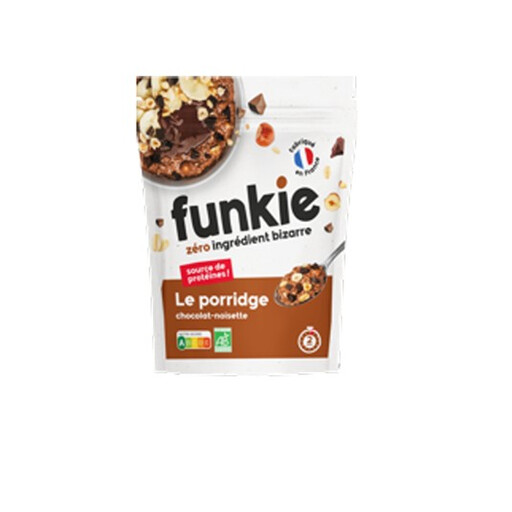 Image unavailable
When comparing a flavoured porridge mix with plain oats, check its full ingredient list, allergens and nutritional values. Chocolate and peanuts are named in the product title; the prepared texture must still follow the guidance for the resident.
 Image unavailable
Compare this oat, flaxseed and cocoa mix with plain oats by looking at its full composition, not just the presence of oats. Check the pack’s nutritional information and the consistency of the prepared porridge before including it in the meal service.
Under European Union Regulation (EC) No 1924/2006, this claim requires at least 6 g of fibre per 100 g or 3 g per 100 kcal. Check that it applies to the exact product you buy; a product simply described as ‘made with oats’ does not necessarily carry this claim.
No. The consistency must meet the needs assessed for each resident. To prevent choking and aspiration, the French National Authority for Health recommends assessing the risk and setting a formal texture protocol for meals. Choosing particular oats does not remove the need to follow this guidance.
No. The French National Authority for Health says that people aged 70 and over need to be assessed for malnutrition, which can include unintentional weight loss. The recipe and portion should support the individual goals set by the relevant professionals.
Read the information for the product and batch being served. Quaker says Quaker Oats may contain barley and wheat; Carrefour Bio says its small high-fibre oats may contain traces of other cereals containing gluten, nuts, soya, sesame and mustard.