Shoppers comparing fibre content
You want to choose based on the fibre content per 100 g, rather than relying solely on a claim on the pack.


To choose a high-fibre muesli for weekday mornings, start by comparing the fibre content per 100 g, then check total sugars and allergens. Under Regulation (EC) No 1924/2006, which applies in France, the claim ‘high in fibre’ requires at least 6 g of fibre per 100 g or 3 g per 100 kcal. So, on its own, the claim won’t help you distinguish between recipes that all meet this threshold. If you’d rather put your own bowl together, oats are another option, but they aren’t a ready-made muesli.
You want to choose based on the fibre content per 100 g, rather than relying solely on a claim on the pack.
If you want an easy weekday breakfast, you’re looking for a muesli whose total sugars you can compare, even if it’s labelled ‘no added sugars’.
Before choosing a recipe, check its cereals, ingredients and any potential traces of allergens. A high fibre content doesn’t tell you whether it’s suitable for your dietary needs.
For weekday breakfasts, start with what matters most to you, then compare the labels on a like-for-like basis per 100 g.
| Criteria | What to check | Who is it for? |
|---|---|---|
| Fibre | Compare the ‘dietary fibre’ figure per 100 g, rather than relying only on the ‘high in fibre’ claim. | If your priority is comparing recipes by their declared fibre content, you’ll need a figure you can compare like for like. Around 37% of consumers put this criterion first. |
| Sugars and ingredients | Check the ‘of which sugars’ figure per 100 g and the ingredients list, even if the pack says ‘no added sugars’. | When choosing a fruit muesli for the week, you may want to check its total sugars before comparing its fibre content. This is the main concern for around 27% of consumers. |
| Gluten and allergens | Look for a ‘gluten-free’ statement if needed, and check the ingredients and any traces listed on the pack for the product you’re considering. | If gluten or an allergen affects your purchase, suitability comes before the other features of the muesli. Around 18% of consumers make this their top criterion. |
| Weekday preparation | Choose between a ready-made muesli and oats you can serve with your own toppings; check the pack size too. | If you’re preparing several breakfasts quickly, you may prefer a ready-to-pour recipe or a base you can customise. This is a priority for around 18% of consumers. |
A recipe with no added sugars can still contain sugars naturally present in its ingredients. Auchan lists 16 g of sugars per 100 g for its Organic Fruit and Nut Muesli, while Jordans Organic Fruit and Nut Muesli contains 18.9 g.
Compare the ‘of which sugars’ figure per 100 g, then check the ingredients in each recipe.
Two mueslis carrying this claim can have different fibre contents. Bjorg lists 15 g per 100 g for its Fibre Muesli and 8.7 g per 100 g for its gluten-free Superfruits Muesli.
To compare their fibre content, use the ‘dietary fibre’ figure per 100 g.
Bjorg Fibre Muesli contains wheat bran, rye and barley, among other ingredients. Other recipes may contain nuts or warn that traces of allergens could be present.
If you have a dietary requirement, check the claims and ingredients list on the pack of the product you’re buying.
The range covered here includes a cereal muesli that contains gluten and a Superfruits recipe explicitly labelled gluten-free.
Two fruit and nut muesli recipes make it easy to compare fibre and sugars on the same basis.
The Organic Fruit and Nut recipe covered here is a muesli with no added sugars and nutritional values listed per 100 g.
The organic wholegrain oat flakes in this product are a base to build your own bowl, rather than a ready-made fruit muesli.
This selection includes a ready-made breakfast muesli and oat-based options you can use as a starting point for your bowl. Oats and porridge aren’t ready-made mueslis.
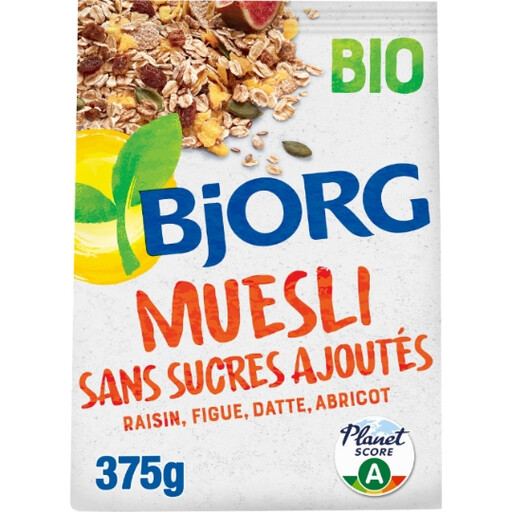 Image unavailable
A ready-made muesli recipe if you’d rather not mix your own oats and toppings. The Joybuy product information for this item lists 10 g of fibre per 100 g. If you have dietary requirements, check the cereals and allergens on the pack.
 Image unavailable
Worth considering if you’d rather choose your own breakfast ingredients than buy a ready-made muesli. Add your preferred toppings separately, and check the gluten information on the pack.
 Image unavailable
Another oat base you can customise for breakfast, rather than a ready-mixed fruit muesli. Choose your toppings separately; if gluten is a deciding factor, check the pack labelling.
 Image unavailable
For anyone who’d prefer an oat mix with linseed and cocoa rather than a ready-made muesli. If total sugars are important to you, compare the figure on the pack; check the gluten information too.
 Image unavailable
An instant oat base for a bowl you can put together yourself, rather than a ready-mixed muesli. If you’re comparing sugars or need to avoid an allergen, check the pack information before choosing this product.
Under Regulation (EC) No 1924/2006, which applies in France, this claim requires at least 6 g of fibre per 100 g or at least 3 g per 100 kcal. To compare different mueslis, check the fibre content listed per 100 g.
No. Ingredients such as dried fruit can contribute naturally occurring sugars. Auchan lists 16 g of sugars per 100 g for its Organic Fruit and Nut Muesli with no added sugars, while Jordans Organic Fruit and Nut Muesli, which carries the same claim, contains 18.9 g per 100 g.
No. Bjorg Fibre Muesli contains wheat bran, rye and barley, among other ingredients. If you need to avoid gluten, look for an explicit claim on the specific product and check for any other allergens too. Bjorg describes its Superfruits Muesli as gluten-free, but doesn’t claim that it’s free from all other allergens.
No. Santé publique France describes Nutri-Score as simplified information that complements the nutrition declaration. If fibre content is your priority, compare the ‘dietary fibre’ figure per 100 g directly.