Families prioritising fibre content
You compare the amount of fibre per 100 g before choosing a flavour. Of the recipes reviewed, Auchan lists 13.3 g of fibre per 100 g for Jordans dark chocolate and hazelnut protein granola.


For breakfasts in a large family, start by comparing fibre per 100 g. Under the European Union’s nutrition claims regulation, 6 g per 100 g is one of the thresholds for using the claim ‘high fibre’. Then compare recipes by their sugar content, ingredients your household enjoys, pack size and allergens. Fibre content alone isn’t enough to choose a pack for the whole family.
You compare the amount of fibre per 100 g before choosing a flavour. Of the recipes reviewed, Auchan lists 13.3 g of fibre per 100 g for Jordans dark chocolate and hazelnut protein granola.
You check the net weight to work out how much you’ll need for breakfast. The Grainea walnut granola listed by E.Leclerc comes in a 350 g pack and contains 8.9 g of fibre per 100 g.
If a family member needs to avoid certain ingredients, the exact recipe matters more than its fibre content. The information provided for the Bjorg and Jordans products reviewed flags allergens or possible traces, depending on the product. Check the pack you choose.
When comparing granolas, start with the values per 100 g, then check the recipe and pack size. The French Directorate-General for Competition, Consumer Affairs and Fraud Control notes that nutrition information given per 100 g makes it easier to compare prepacked foods.
| Criteria | What to check | Who is it for? |
|---|---|---|
| Fibre | Check the value per 100 g. Under European Union regulations, 6 g of fibre per 100 g is one of the thresholds for the ‘high fibre’ claim. | If fibre guides my choice, I compare recipes on the same basis before choosing a flavour. Around 37% of consumers put this need first. |
| Pack size | Check the net weight and estimate how many packs you’ll need for your household’s usual portions. | When several people eat this for breakfast, I want a pack size that suits my shopping routine. This is a priority for around 27% of consumers. |
| Sugars and recipe | Compare the sugars per 100 g and the ingredients in the flavours you’re considering. | I’m looking for a recipe the family will enjoy, while keeping an eye on its sugar content. Around 18% of consumers prioritise this balance. |
| Allergens | Read the ingredients and warnings on the pack you’re actually buying, even if you’ve bought it before. | If someone in the household needs to avoid an allergen, I must rule out unsuitable recipes before comparing anything else. This check comes first for around 18% of consumers. |
The presence of oats or seeds doesn’t tell you how much fibre the product contains.
Check the ‘fibre’ line per 100 g. For the ‘high fibre’ claim, European Union regulations require at least 6 g per 100 g or 3 g per 100 kcal.
The products reviewed include 350 g and 400 g packs. Appearance is no substitute for checking the net weight.
Compare the stated weight with the number of portions your household usually eats.
Two recipes can both meet the fibre threshold but have different sugar contents. Auchan and Houra each list 12 g of sugars per 100 g for the two Bjorg granolas reviewed.
Compare fibre and sugars on the same 100 g basis, then read the ingredients for each recipe.
Ingredients and warnings vary between recipes, so another flavour from the same brand isn’t a reliable guide.
Check the label on the pack you’re buying, especially for ingredients your household needs to avoid and any relevant ‘may contain’ warnings.
A 400 g dark chocolate and hazelnut protein recipe is among the granolas reviewed at Auchan.
The organic red berry and chocolate granolas reviewed are two different 350 g recipes.
The 350 g walnut granola, listed by E.Leclerc under its Marque Repère own label, has a different recipe to compare.
For breakfasts in a large family, these Joybuy products include two nut-based cereals and a peanut granola. Compare their pack sizes and ingredients before choosing.
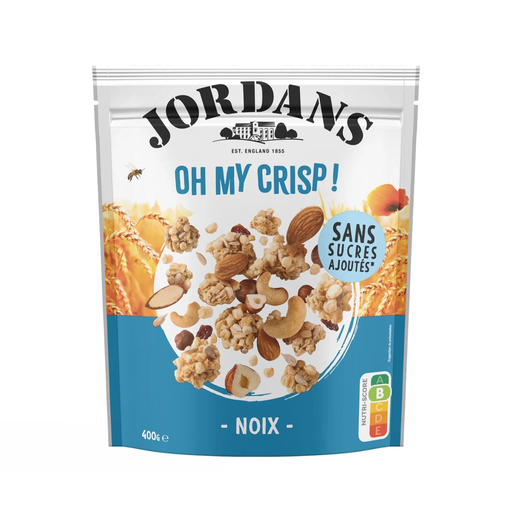 Image unavailable
If your household is looking for a nut-based cereal, you can compare this 400 g pack with your usual portions. The product information flags gluten and nuts, so check the label before sharing it with anyone who needs to avoid them.
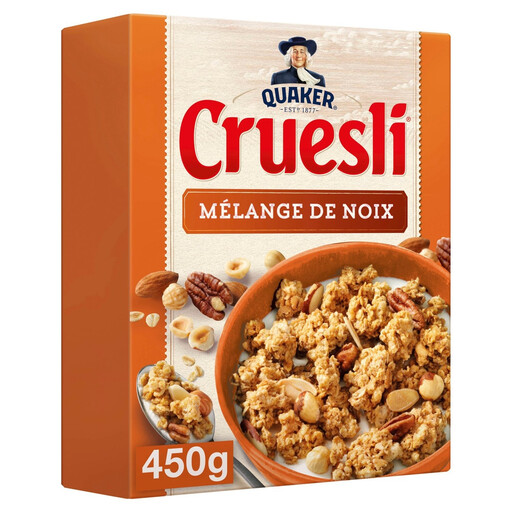 Image unavailable
If your household prefers crunchy cereal clusters with nuts, compare this 450 g pack with your usual consumption. The product information flags gluten and several types of nuts, and notes that it may also contain other nuts or peanuts. Check the pack.
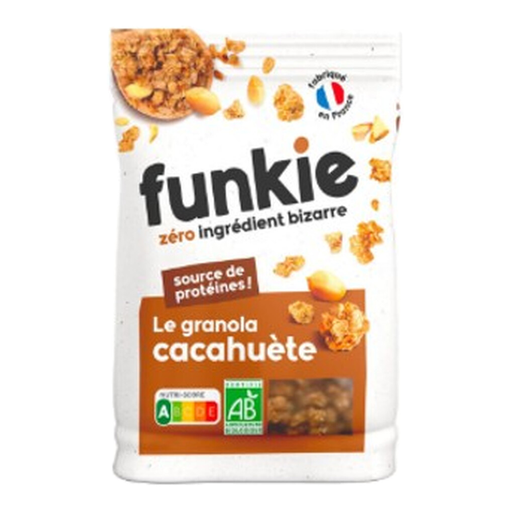 Image unavailable
If your family is looking for peanut granola, the 300 g pack makes it easy to compare the size with your household’s needs. The product information flags gluten and peanuts, and says to refrigerate after opening. Check these details on the pack you receive.
Under the European Union’s nutrition claims regulation, it must contain at least 6 g of fibre per 100 g or 3 g per 100 kcal. The per-100 g figure is useful when comparing recipes.
Check the fibre and sugars per 100 g, then look at the ingredients, allergens and net weight. The French Directorate-General for Competition, Consumer Affairs and Fraud Control says that nutrition values shown per 100 g make it easier to compare prepacked foods.
Not necessarily. Fibre content alone doesn’t tell you whether your household will enjoy the ingredients or whether the recipe contains allergens that need to be avoided. Compare the recipes on these points before choosing.
Read the ingredients and ‘may contain’ warnings on the exact recipe’s packaging, even if you’ve bought it before. Depending on the product, the items reviewed flag gluten, nuts, peanuts or other ingredients to be aware of.