People who prioritise fibre
You compare the amount of fibre in your portion and are happy to choose bran cereals or a less sweet-tasting recipe.


If fibre matters more to you than sweetness, compare bran cereals. If you’d rather control what you add, start with plain oats. Muesli can be a good choice if you want a crunchy texture, but check the sugars, fat, portion size and allergens too: fibre content doesn’t tell you about these other factors.
You compare the amount of fibre in your portion and are happy to choose bran cereals or a less sweet-tasting recipe.
You want to enjoy a touch of sweetness while checking the sugar and fibre values per 100 g, as well as for the amount you actually serve.
You’re after crunch, perhaps with nuts. The ingredients list, allergen information and nutrition values can help you choose between recipes.
For a sweet breakfast, start by deciding what matters most in your bowl: fibre content, keeping track of sugars, crunch or the freedom to choose your own toppings.
| What to consider | What to check | Who is it for? |
|---|---|---|
| Fibre content | Compare the fibre per 100 g and in the portion you plan to serve. Don’t assume that a high fibre content means low sugar. | If your main aim is to get fibre from a small portion, bran may catch your eye despite its distinctive taste. Around 36% of consumers put fibre content first. |
| Sugars | Check the sugars per 100 g, then factor in how much you serve and what else you add to your bowl. | You enjoy sweet-tasting cereals but want to make an informed choice about their sugar content. For around 29% of consumers, keeping track of sugars is the priority. |
| Crunch and ingredients | For crunchy muesli, check the fat and energy per 100 g, as well as the ingredients and allergen information. | You’d rather have a crunchy bowl with nuts than a plain base, provided the recipe suits you. Crunch and ingredients come first for around 21% of consumers. |
| A base you can customise | Check the ingredients in plain oats and add the toppings that give you the sweetness you’re after. | If you prefer to put your own bowl together, a plain base lets you choose what to add, but takes a little extra preparation. Around 14% of consumers prioritise the chance to customise their breakfast. |
These claims relate to different values. All-Bran Fibre Plus contains 27 g of fibre and 18 g of sugars per 100 g, according to information from Kellogg’s France and Carrefour.
Compare fibre and sugars per 100 g separately, then check any other nutrition information that matters to you.
Stated serving sizes vary between products: the manufacturers list 30 g for FITNESS Nature and 40 g for All-Bran Fibre Plus. So a comparison based only on these servings isn’t comparing the same amount of cereal.
Start with the values per 100 g, then work them out for the amount you usually serve.
Muesli with nuts may also contain cereals with gluten or carry a warning about possible traces. Ingredients vary according to the recipe.
Read the ingredients list and allergen information on the pack of the product you’re buying.
Kellogg’s All-Bran Fibre Plus is a wheat bran cereal to consider if fibre content is your top priority.
FITNESS Nature is a wholewheat flake cereal worth comparing if you want to consider both fibre and sugars.
Quaker offers oats you can top as you like, as well as Cruesli Mixed Nuts, a ready-to-serve crunchy recipe.
The retailer’s range includes Carrefour Original oats and muesli from other brands. Compare each recipe individually.
The Grainea range includes oat-based recipes and a nut granola. Compare them by looking at their ingredients and nutrition values.
These products give you a choice of plain oat bases to customise, a mixed-grain blend to prepare, crunchy nut Cruesli and a cocoa oat mix. For a sweet bowl, your choice also depends on what you add to plain recipes.
 Image unavailable
A plain base for porridge or a bowl topped with whatever you fancy. The product listing gives 11 g of fibre and 1.7 g of sugars per 100 g, with no added sugars. It notes that the product contains gluten from oats.
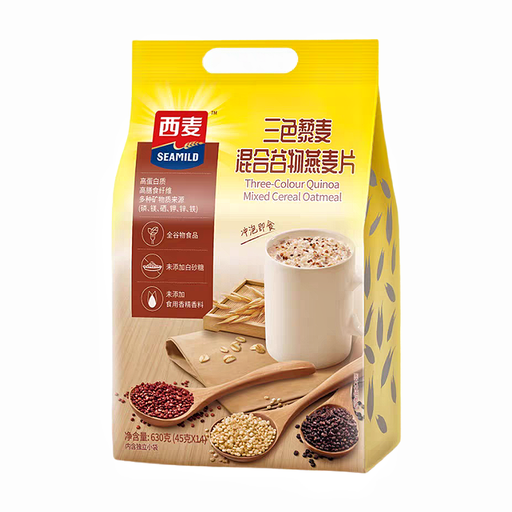 Image unavailable
A blend to prepare with hot water or milk, then top to suit your taste. The product listing gives 10.2 g of fibre and 6.5 g of sugars per 100 g. Ingredients include oats, tricolour quinoa, buckwheat, rye containing gluten and sesame.
 Image unavailable
Plain oats for porridge with your choice of toppings. The product listing gives 9 g of fibre and 1.1 g of sugars per 100 g, with no added sugars. It notes that the product contains gluten from oats.
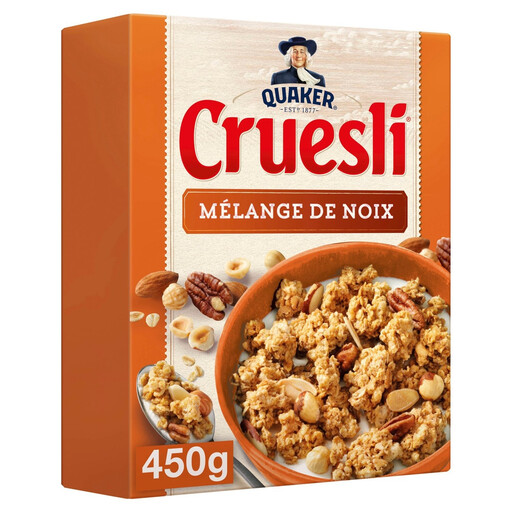 Image unavailable
A crunchy recipe with nuts for anyone who prefers a ready-to-serve bowl. The product listing gives, per 100 g, 10 g of fibre, 12 g of sugars, 462 kcal and 19 g of fat. It notes that the product contains gluten and several types of nuts, and may contain traces of other nuts or peanuts.
 Image unavailable
A cocoa-flavoured mix for hot porridge or overnight oats. The product listing gives 16.3 g of fibre per 100 g and notes that it contains gluten from oats. If sugar content matters to you, check the value on the label before buying.
Under the European regulation published by EUR-Lex, this claim requires at least 6 g of fibre per 100 g or 3 g per 100 kcal. On its own, it doesn’t tell you about the sugars, fat or allergens in the recipe.
Check the fibre and sugars per 100 g, then consider how much you’ll serve. Santé publique France points out that some breakfast cereals, particularly those aimed at children and teenagers, can be very high in sugar. The taste or look of the packaging is no substitute for the nutrition information.
Yes, because the values per 100 g don’t necessarily reflect the amount you serve. For All-Bran Fibre Plus, Kellogg’s France lists 11 g of fibre in a 40 g serving. Carrefour recommends gradually working up to the stated amount for this product. Check the pack for the accompanying guidance.
Check the ingredients and any warnings about possible traces for the specific product. Quaker’s information for Cruesli Mixed Nuts lists oats, wheat and several types of nuts, among other ingredients. Carrefour’s listing for Bjorg Organic Crunchy High-Fibre Muesli mentions rye, oats and hazelnuts, among other ingredients. The two recipes are not interchangeable.