People who prioritise fibre
You want to know how much fibre is in your bowl, rather than just relying on a claim on the front of the pack. Compare the figures per 100 g, then check how much fibre is in the portion you serve.


If fibre content is your top priority, compare the figures per 100 g: Kellogg’s France declares 27 g for All-Bran Fibre Plus, compared with 10.3 g for FITNESS Nature, according to Nestlé Céréales France. For a weekday breakfast, decide whether you want ready-to-serve cereal or a base you can prepare, then check the serving size, sugars and allergens for the product you choose.
You want to know how much fibre is in your bowl, rather than just relying on a claim on the front of the pack. Compare the figures per 100 g, then check how much fibre is in the portion you serve.
You’re looking for cereal that’s easy to serve before you head out. The stated serving size and preparation method can help you tell the difference between ready-to-eat cereal and oats that need preparing.
You compare sugar levels and ingredients, or need to check for certain allergens. Recipes containing wheat, oats, nuts or seeds each need to be checked individually on the label.
For weekday mornings, start with your main priority, then compare the nutritional values and format accordingly.
| What to look for | What to check | Who is it for? |
|---|---|---|
| Fibre content | Compare the fibre per 100 g and per serving. In the European Union, Regulation (EC) No 1924/2006 reserves the claim ‘high fibre’ for products containing at least 6 g of fibre per 100 g or 3 g per 100 kcal. | I want to know how much fibre is in the bowl I serve, even if my portion is different from the one stated on the pack; around 40% of consumers rank fibre content as their top priority. |
| Preparation | Check whether the cereal is ready to serve or the oats need preparing, and consider what ingredients you’d like to add. | On mornings when I need to leave in a hurry, an easy-to-prepare bowl matters more to me than being able to put together a recipe; speed would be the top priority for around 30% of consumers. |
| Ingredients | Check the sugars per 100 g, the ingredients list and the allergens for the exact product. | Before choosing a box for the week, I want to know what’s in it beyond its fibre claim; around 30% of consumers would prioritise checking sugars and ingredients. |
These two claims don’t refer to the same threshold. Carrefour’s product page for Fibra 5 Fruits Secs says ‘source of fibre’; this alone doesn’t establish that the product also meets the requirements for a ‘high fibre’ claim.
If the latter claim is guiding your purchase, check the stated fibre content and the conditions set out in Regulation (EC) No 1924/2006.
Kellogg’s France states a 40 g serving for All-Bran Fibre Plus, while Nestlé Céréales France states 30 g for FITNESS Nature. Comparing only the ‘per serving’ figures means you’re comparing different amounts of cereal.
Check the figures per 100 g first, then work out how much fibre is in the amount you usually pour.
Manger Bouger notes that consuming too much fibre can be accompanied by bloating or intestinal pain.
If you switch to cereal that’s significantly higher in fibre, increase your intake gradually and make sure you drink enough water, in line with Manger Bouger’s advice.
The products featured in this article don’t all contain the same ingredients. Depending on the product, the available information mentions wheat, barley, nuts or possible traces of these allergens.
Check the ingredients list and allergen information on the exact pack you’re buying; don’t assume they’re the same as those of another recipe from the same brand.
These examples show how recipes can differ; a feature found in one product doesn’t necessarily apply to the whole range.
All-Bran Fibre Plus is a wheat-bran cereal worth considering if your priority is a high stated fibre content.
FITNESS Nature is a ready-to-serve wholewheat flake cereal.
The wholegrain oats in the product featured by Carrefour can be used as a base for porridge or homemade muesli.
Spécial Muesli is for people looking for a mix of cereals, fruit, nuts and seeds.
Fibra 5 Fruits Secs, in a 500 g pack, is another recipe to compare based on its ingredients and nutritional declaration.
These products offer several ways to prepare weekday breakfasts, from cereal mixes and granola to oat-based preparations. For each one, compare the nutritional information for the variant you choose with your usual portion and dietary requirements.
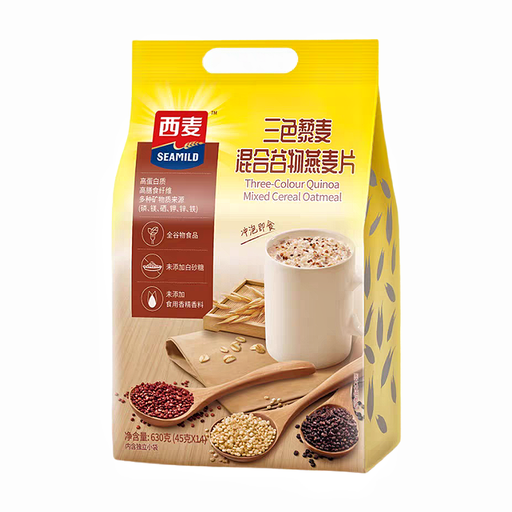 Image unavailable
A cereal mix to consider if you have a few minutes to prepare your bowl on a weekday morning. The stated pack size is 630 g; check the serving size, nutritional information and ingredients for this recipe on the packaging.
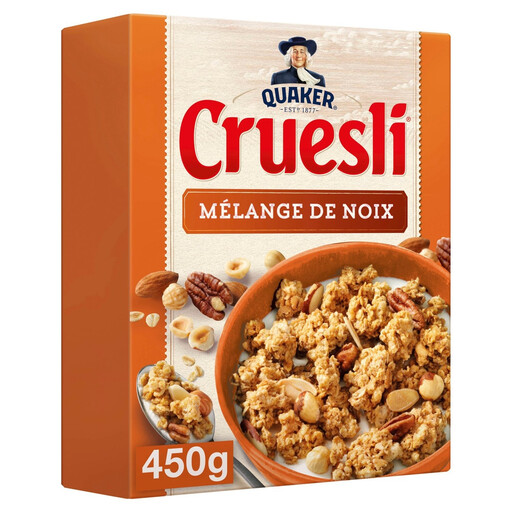 Image unavailable
Cereal clusters for a bowl with a crunchy texture and a recipe containing nuts. Before buying, compare the fibre and sugars per 100 g, and check the allergen information on this 450 g pack.
 Image unavailable
Oat flakes for making your own bowl instead of choosing a ready-made mix. The pack contains 500 g; check the preparation time to make sure it suits your mornings, along with the nutritional information and allergens for this product.
 Image unavailable
An oat preparation with flaxseed and cocoa to consider if you prefer a ready-made recipe. The pack contains 245 g; check the preparation instructions and the sugar content on the label before comparing it with other cereals.
 Image unavailable
An oat base for when you’d rather choose what to add to your breakfast yourself. For this 500 g pack, check the fibre and sugars per 100 g, then look at the preparation method before making it part of your weekday routine.
In the European Union, Regulation (EC) No 1924/2006 permits this claim for products containing at least 6 g of fibre per 100 g or 3 g per 100 kcal. When comparing two breakfast products, also check their fibre content per 100 g and the amount you plan to serve.
No. The presence of wholegrains doesn’t remove the need to check whether a product meets the threshold for this claim. A product described as a ‘source of fibre’ doesn’t necessarily meet the requirements for a ‘high fibre’ claim, so check the stated fibre content.
No. It doesn’t replace checking the fibre, sugars, ingredients and allergens in the recipe. The Directorate General for Enterprises states that displaying the Nutri-Score is voluntary; if it appears on a pack, use it as additional information.
Check the ingredients and allergen information for the exact product and pack size you’re considering. Among the products mentioned here, the available information lists wheat, barley, nuts or possible traces, depending on the recipe. The brand name alone doesn’t tell you what each variant contains.