When choosing cereals for weekday breakfasts, start by comparing the fibre per 100 g, then check the sugars, ingredients and allergens for the specific product. Wheat bran can be high in fibre; plain oats give you a base to customise, while ready-to-eat muesli is another option where you’ll want to check the recipe and serving size.
Who are these cereals for?
People who compare fibre content first
If you’re planning several breakfasts using the same pack, the fibre per 100 g makes it easier to compare different recipes and serving sizes. Manger Bouger highlights the importance of paying attention to fibre intake as part of your diet.
Households that prefer to make up their own bowl
Plain oats let you choose what to add yourself, rather than buying a ready-made mix. The product information for Carrefour Original wholegrain oat flakes lists just one ingredient: wholegrain oats.
People who need to check allergens
Wheat, barley, oats or nuts may be included in the products you’re considering. Check the ingredients, highlighted allergens and any ‘may contain’ warnings on the pack you choose.
What should you look for first?
When shopping for the week, start with the factor that will really determine your choice, then compare the other information on each product’s label.
| Criteria |
What to check |
Who it’s for |
| Fibre content |
Compare the fibre per 100 g, then consider the portion you’ll serve. Under the EU regulation on nutrition claims, the claim ‘high in fibre’ requires at least 6 g per 100 g or 3 g per 100 kcal. |
If I’m planning several bowls from the same pack, I want to compare a measurable amount rather than rely on the product name; around 36% of consumers would put fibre at the top of their list. |
| Recipe and sugars |
Check the sugars per 100 g and the ingredients list, especially to distinguish a plain base from a mix containing dried fruit or sugar. |
To add variety to breakfast without choosing a recipe on appearance alone, I also check what’s in the mix; around 29% of consumers would prioritise its ingredients and sugar content. |
| Allergens |
Check the highlighted ingredients and any ‘may contain’ warnings on the variant you’re buying, particularly for cereals containing gluten and nuts. |
If someone in my household needs to avoid an ingredient, the pack’s suitability comes before its fibre content; this would be the top priority for around 21% of consumers. |
| Use throughout the week |
Check the net weight and choose between oats you prepare yourself, ready-to-eat cereals and a mix you can customise, depending on your routine. |
If I’m preparing several breakfasts, I mainly want a format and preparation method that suit our routine; around 14% of consumers would prioritise this convenience. |
Common pitfalls to avoid
-
Confusing ‘source of fibre’ with ‘high in fibre’
These claims aren’t interchangeable. Carrefour’s product information for Fibra 5 Fruits Secs uses the claim ‘source of fibre’; EU regulations reserve ‘high in fibre’ for products that meet a specific threshold.
When comparing two boxes, check the fibre per 100 g and the exact claim, rather than relying on the recipe name alone.
-
Looking only at the fibre in muesli
Dried fruit and nuts also affect the nutritional profile, so there’s more to check. Jordans lists 8.5 g of fibre and 19 g of sugars per 100 g for its Spécial Muesli, which includes cashews, almonds and hazelnuts.
Check the sugars, ingredients and allergens for the product you’re planning to buy.
-
Comparing only the serving sizes shown
The stated serving sizes aren’t the same: Kellogg’s gives 40 g for All-Bran Fibre Plus, while Nestlé lists 30 g for FITNESS Nature. So a comparison based only on serving size doesn’t use the same amount of product.
Start with the nutritional values per 100 g, then relate them to the amount you usually pour into your bowl.
-
Taking a claim to mean the product treats a condition
Fibre content describes a nutritional property; it doesn’t replace an assessment tailored to a medical condition or allergy. Claims on packaging are subject to their own conditions of use.
Choose based on the ingredients and labelling. If you have a medical requirement or are following a therapeutic diet, seek appropriate professional advice.
Brands to consider by recipe
These examples show why it’s important to compare specific products: ingredients and nutritional values don’t automatically apply to every product from the same brand.
Kellogg’s
All-Bran Fibre Plus is a wheat bran cereal for which Kellogg’s France provides fibre information.
- The brand lists 27 g of fibre per 100 g and 11 g per 40 g serving.
- The recipe contains wheat, sugar and barley malt extract, so check the ingredients if you need to avoid certain cereals.
Nestlé Céréales
FITNESS Nature is an example of a ready-to-eat cereal with nutritional values worth comparing.
- Nestlé Céréales France lists 10.3 g of fibre and 8.8 g of sugars per 100 g for FITNESS Nature.
- These figures apply to FITNESS Nature, not every recipe from the brand.
Quaker
The Cruesli range is for people looking for a crunchy mix made with wholegrain cereals.
- Quaker France highlights wholegrain oats in this range.
- Check the fibre, sugars and allergens for your chosen flavour: a description of the range doesn’t replace the label for each recipe.
Jordans
Spécial Muesli combines cereals, dried fruit, nuts and seeds in a ready-to-eat recipe.
- Jordans France lists 8.5 g of fibre per 100 g for Spécial Muesli.
- The same product contains 19 g of sugars per 100 g, as well as cashews, almonds and hazelnuts.
Carrefour
The products mentioned range from plain oats to a cereal mix with dried fruit.
- Carrefour Original wholegrain oat flakes list 100% wholegrain oats in their ingredients.
- Carrefour Fibra 5 Fruits Secs is a different recipe, with whole wheat, sugar and nuts; its product information uses the claim ‘source of fibre’.
E.Leclerc / Marque Repère
The E.Leclerc range includes Grainea and Bio Village oat flakes, as well as mueslis and granolas.
- This variety lets you choose between a base of oats and a ready-made mix.
- Before choosing a product, check the nutritional information, ingredients and allergens for that specific item.
Cereals and oat-based options on Joybuy
This selection brings together oat-based options to customise, cereal mixes and a quinoa recipe for weekday breakfasts. Compare their labels depending on whether you prefer to make up your own breakfast or choose a ready-to-eat mix.
 Image unavailable
BJORG Organic Oat Flakes 500 g
Worth considering if you’d like to put together your own breakfasts using an oat-based option. The pack is listed as 500 g; check its label for fibre, sugars and any gluten information before choosing this product.
View on Joybuy
 Image unavailable
Quaker Oats 500 g
This oat-based option may suit you if you’d rather prepare or customise your bowl than choose a ready-made mix. To compare this 500 g pack with other oat-based options, check the values per 100 g and the allergen information on the pack.
View on Joybuy
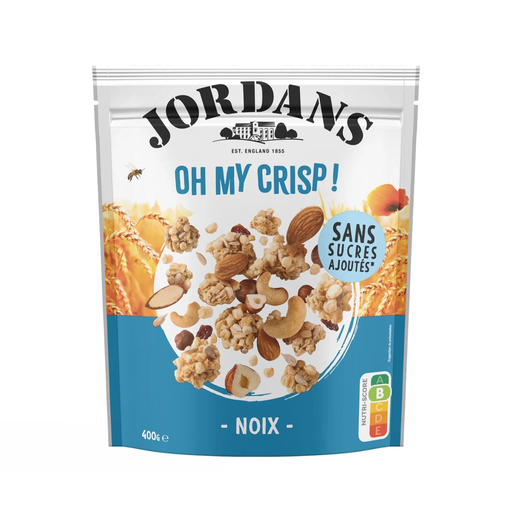 Image unavailable
Jordans Oh My Crisp Nuts 400 g
This nut-based mix is for people who prefer ready-made cereals. The pack is listed as 400 g; check the allergens and the fibre and sugars per 100 g for this variant, rather than applying the figures for Jordans Spécial Muesli.
View on Joybuy
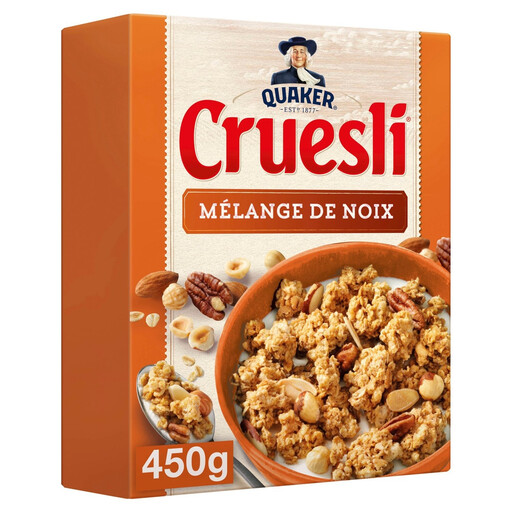 Image unavailable
Quaker Cruesli Mixed Nuts 450 g
Consider this if you’re looking for a crunchy nut mix rather than a plain base. This variant is listed as 450 g; check its own nutritional values and allergen information, as Cruesli recipes can vary.
View on Joybuy
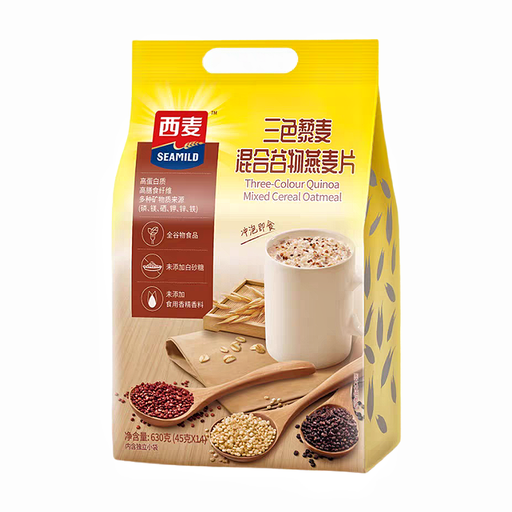 Image unavailable
Seamild Tri-Colour Quinoa Mixed Grain 630 g
This quinoa cereal mix is another option if you’d like to try different recipes throughout the week. The pack is listed as 630 g; check how to prepare it, its nutritional values and allergens on the packaging before adding it to your routine.
View on Joybuy
Frequently asked questions
What does ‘high in fibre’ mean on a cereal box?
In the European Union, regulations on nutrition claims allow this claim for products containing at least 6 g of fibre per 100 g or 3 g per 100 kcal. On its own, it doesn’t tell you about the sugars, salt, allergens or the amount you’ll eat.
Are wholegrain cereals always ‘high in fibre’?
No. The presence of wholegrain cereals isn’t enough to qualify for this regulated claim. Check the fibre per 100 g and the wording used on the specific product.
How can I check for gluten and nuts before buying?
Check the allergens highlighted in the ingredients list and any ‘may contain’ warnings on the pack you’ve chosen. EU labelling rules cover cereals containing gluten and nuts, among other allergens; a different flavour or pack size may have a different composition.
What should I check if I’m using the same pack throughout the week?
Compare the net weight with the portions you plan to serve, then choose a recipe you’ll be happy to prepare or customise several times. Follow the storage instructions on the packaging and reseal the pack after opening.


