Students who make a cuppa in the evening
You’re looking for a herbal drink after lectures and want to distinguish it from tea. Anses lists tea as a source of caffeine.


When stocking up on herbal teas for the first time, start by thinking about when you’ll drink them and which flavours you enjoy, rather than choosing based on a promised wellbeing benefit. For a late-night cuppa, check that the ingredients don’t include tea; for everyday variety, compare the herbs and the number of bags before buying several boxes. If a blend contains liquorice, read the warning before making it a regular drink.
You’re looking for a herbal drink after lectures and want to distinguish it from tea. Anses lists tea as a source of caffeine.
You’d like to start with a few boxes of tea bags that are easy to store and prepare, without buying lots of different blends straight away.
You enjoy blends of several herbs, especially after a meal, but want to spot ingredients that call for extra caution, such as liquorice.
For your first home, start with when you usually drink herbal tea, then check the ingredients, flavour and pack size before stocking up.
| What matters | What to check | Who it matters to |
|---|---|---|
| An evening cuppa | The product name and ingredients, including whether it contains tea. According to Anses, tea is a source of caffeine. | If I have a cuppa late, I want to avoid choosing tea by mistake; around 40% of consumers would put this first. |
| Your first stock-up | The number of tea bags and how much cupboard space the boxes will take up. | When I’ve just set up a kitchen, I’d rather start with a small stock that’s easy to use up. This would be the priority for around 30% of consumers. |
| Everyday flavour | The main herbs and the box size before trying a new blend. | If I’m going to drink herbal tea regularly, I first want to find a flavour I enjoy; around 20% of consumers would make this their top criterion. |
| Ingredients to watch out for | Whether it contains liquorice and any warnings on the label, particularly if you plan to drink it regularly. | If an ingredient or warning is relevant to me, I check the blend before thinking about its flavour. Around 10% of consumers would make this their priority. |
A name that suggests mint or bedtime doesn’t tell you whether the blend contains tea. Anses lists tea as a source of caffeine.
For a late-night cuppa, read the product name and ingredients rather than relying on the blend’s name.
The Tisea after-meal blend featured by E.Leclerc contains liquorice and carries a warning for people with high blood pressure. Anses highlights the risks associated with high, repeated consumption of liquorice.
Check the label before making it a regular drink. If a warning applies to you or you’re taking medication, ask a healthcare professional for advice.
You might not enjoy a very floral, refreshing or spicy blend, even if its name seems to match when you want to drink it.
Compare the main ingredients and try one box before stocking up on several of the same blend.
These marketing claims aren’t enough to prove a health benefit. The DGCCRF notes that nutrition and health claims are regulated.
Choose based on the ingredients, flavour and preparation instructions, and don’t use a herbal infusion in place of medical advice.
The range includes flavoured herbal infusions, including Bonne Nuit with camomile, limeflower and raspberry, which Twinings presents as an evening cuppa.
The range featured by E.Leclerc includes tea bags with verbena, mint and red berries, as well as after-meal blends.
This Marque Repère range includes a verbena and mint herbal infusion in a box of 20 tea bags.
The evening blend featured by Auchan combines lemon balm, camomile, orange leaf, verbena, limeflower and lavender.
Carrefour offers an organic camomile infusion in a box of 20 tea bags, each weighing 1.5 g.
These products offer a few different ways to start building your stock: an evening cuppa, everyday herbal flavours, a cold infusion and an after-meal blend. Choose according to each product’s intended use, especially if you’re looking for something to brew hot.
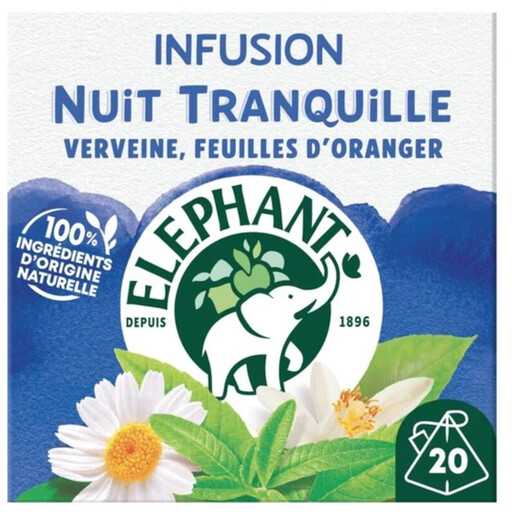 Image unavailable
Worth considering for an evening herbal cuppa. If you want to avoid tea, check the ingredients. The name Quiet Night doesn’t guarantee any effect on sleep.
 Image unavailable
A good option if you’d like to enjoy a verbena and mint blend as part of your daily routine. Choose it if you enjoy these herbs, rather than because it’s meant for a particular time of day.
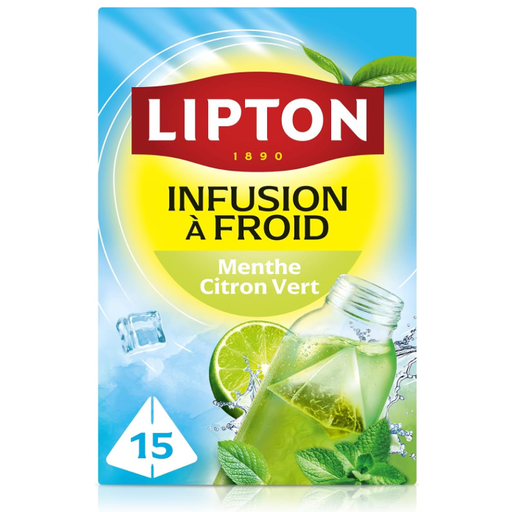 Image unavailable
For flavouring cold water in a bottle, rather than making a hot cuppa. Check the box for instructions on how much water to use and how long to infuse it.
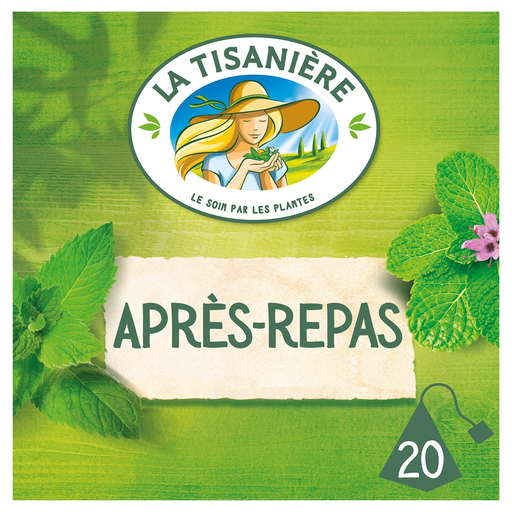 Image unavailable
A way to enjoy different flavours after a meal, without assuming the blend aids digestion. It contains liquorice: the label advises people with high blood pressure to avoid excessive consumption, and Anses highlights the risks of high, repeated consumption.
 Image unavailable
For discovering the flavour of camomile on its own, rather than in a blend of herbs. If you’re after a fruity or minty flavour, compare the ingredients of another blend first.
Read the product name and ingredients, then choose a herbal infusion that doesn’t list tea if that’s your priority. Anses lists tea as a source of caffeine and notes that caffeine can disrupt sleep.
Check the ingredients first: “after-meal” doesn’t refer to one specific recipe. The Tisea blend featured by E.Leclerc contains liquorice and carries a warning for people with high blood pressure; Anses highlights the risks of high, repeated consumption of liquorice. If a warning applies to you or you’re taking medication, ask a healthcare professional for advice.
No: wording on a product name or packaging doesn’t guarantee an effect. The DGCCRF notes that nutrition and health claims are regulated; when choosing a herbal infusion, check the ingredients and warnings too.
No, follow the instructions for the product you buy, especially if it’s designed for cold water. For its 1336 evening blend, Auchan recommends one tea bag in 150 ml of water at between 75 and 90 °C for 4 to 5 minutes, depending on taste; these instructions don’t apply to every herbal infusion.