What should you look for before buying?
First decide whether you’re looking for the Fairtrade/Max Havelaar label or whether another fair-trade standard suits you. Then compare the ingredients to find a flavour that’s right for after a meal. Don’t overlook caffeine or liquorice if either matters to you.
| Criterion |
What to check |
Who is this for? |
| Fair-trade credentials |
The logo and name of the standard on the box; the proportion of ingredients covered, if stated. |
I want to identify the fair-trade credentials of the herbal tea I’m buying, rather than rely on its packaging. Around 36% of consumers would make this their top priority. |
| Caffeine and ingredients |
The list of herbs and an explicit statement about caffeine, particularly if the recipe contains tea or mate. |
For my evening cuppa, I want to know whether the blend suits my caffeine preferences. This would be the priority for around 29% of consumers. |
| Winter flavours |
The ingredients that give the blend its flavour profile, such as ginger, cinnamon, apple or citrus fruit. |
After a meal, I’m mainly looking for fruity or spicy notes I enjoy. Around 21% of consumers would put flavour first. |
| Liquorice |
Look for “liquorice” or “liquorice root” in the full list of ingredients. |
I drink herbal teas regularly and prefer to rule out blends containing liquorice. This would be the top priority for around 14% of consumers. |
Pukka herbal teas available on Joybuy
These Pukka herbal teas are worth considering for a cuppa after a winter meal. They don’t all suit the same flavour preference, so compare their ingredients and check the standard on each box to make sure it’s the one you’re looking for.
 Image unavailable
Pukka Organic Gingers Herbal Tea 36 g
Worth considering if you’re after a spicy blend after a meal and are happy with the Fair for Life standard rather than the Fairtrade/Max Havelaar label.
Joybuy’s product listing states that 38% of the ingredients, by dry weight, are audited against the Fair for Life standard. It lists ginger, galangal, turmeric and liquorice, and recommends infusing for 5 to 15 minutes.
View on Joybuy
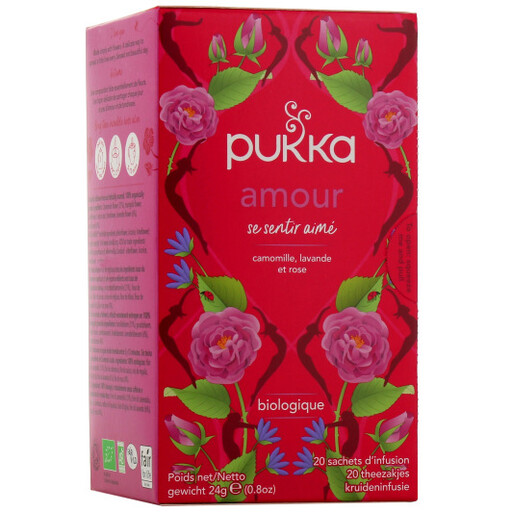 Image unavailable
Pukka Infusion Amour Bio 24 g
If you’d prefer a floral blend to a spicy herbal tea, this one may be worth considering for after a meal.
To check its fair-trade credentials, look at the standard and logo on this specific box. Check the ingredients too if you want to avoid liquorice.
View on Joybuy
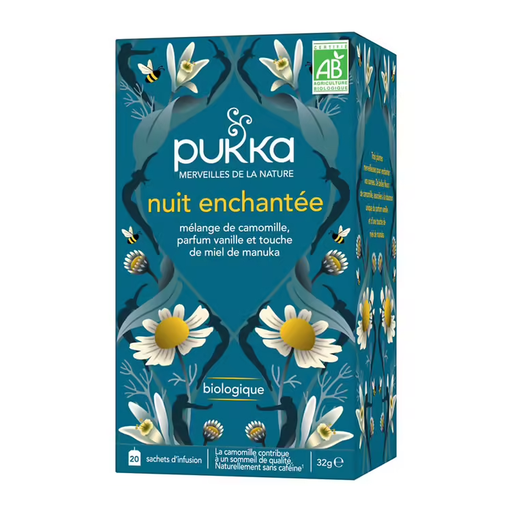 Image unavailable
Pukka Enchanted Night Organic Herbal Tea 32 g
If you’re looking for an evening herbal tea rather than a distinctly spicy blend, compare its ingredients with your preferences.
Before choosing it for the evening, check the packaging for caffeine, liquorice and the standard behind any fair-trade claim.
View on Joybuy
Frequently asked questions
Are Fairtrade/Max Havelaar and Fair for Life the same label?
No, they’re separate standards. Fairtrade/Max Havelaar France lists products carrying its label, while Pukka says its teas and herbal teas are certified Fair for Life. Check which one appears on the herbal tea you’re thinking of buying.
Are herbal teas always caffeine-free?
Don’t assume so just because the product is called an “infusion”. Clipper says most, but not all, of its herbal teas are caffeine-free. If this matters for your evening cuppa, check the recipe and the information on the product, particularly if it contains tea or mate.
Should you avoid all herbal teas containing liquorice?
The presence of liquorice doesn’t mean you must avoid an occasional cup altogether. ANSES warns against consuming products containing liquorice in large amounts and repeatedly. If you drink it regularly or have a personal health concern, check the ingredients and ask a healthcare professional for advice.
What should you look for on the label when comparing two herbal teas?
Start with the product name and ingredients list to compare the blends and spot ingredients such as liquorice. The French Directorate General for Competition Policy, Consumer Affairs and Fraud Control (DGCCRF) lists this information among the details shown on prepacked food labels. If fair trade is important to you, also check the logo and standard shown on the box you’re considering.


