What should you check before choosing?
When choosing a drink to enjoy with biscuits, start with what matters most to you: Fairtrade credentials for the specific product, no caffeine, or the type of drink you fancy. Then check the ingredients and, if you’re also looking for an organic option, check its organic status separately.
Fairtrade rooibos
Choose this if: you’d like a caffeine-free evening infusion with Fairtrade/Max Havelaar credentials on the product.
Bear in mind: The Alter Eco rooibos described by Auchan doesn’t contain the black tea found in chai. Its Fairtrade claim applies to this specific product, not the whole brand.
Fairtrade chai tea
Choose this if: you prefer a spiced tea with your biscuits and are happy for it to contain caffeine.
Bear in mind: The ETHIQUABLE chai described by Auchan contains 71 % black tea and 29 % spices, so it isn’t suitable if you’re looking for a caffeine-free drink.
| What to look for |
What to check |
Who this matters to |
| Fairtrade credentials |
Look for the Fairtrade/Max Havelaar logo or a clear statement of compliance on the specific product. For a blend, check which ingredients are covered. |
I want to check that the box I’m buying is Fairtrade, rather than infer it from a retailer’s general commitment; around 36 % of consumers would make this their priority. |
| Caffeine-free |
Read the product name and ingredients to distinguish rooibos or a herbal infusion from a blend containing tea. |
For my after-dinner cuppa, avoiding black tea is my top priority; around 29 % of consumers would put this first. |
| Flavour with biscuits |
Compare the main ingredients and, where shown on the box, the brewing instructions. |
With biscuits, I first decide between a herbal infusion and a spiced chai, depending on the flavour I’m after; almost 21 % of consumers would put this pairing first. |
| Organic status and ingredients |
Check organic status separately from Fairtrade credentials, then read the ingredients list, especially if it includes liquorice. |
I want to check the recipe and organic information before choosing a flavour; around 14 % of consumers would make this their first consideration. |
Chai teas to consider on Joybuy
These two Pukka products are individual-portion chai teas for a biscuit break. Before choosing, compare their ingredients and check what any Fairtrade claim on the box covers. The presence of black tea is particularly important if you want to avoid caffeine.
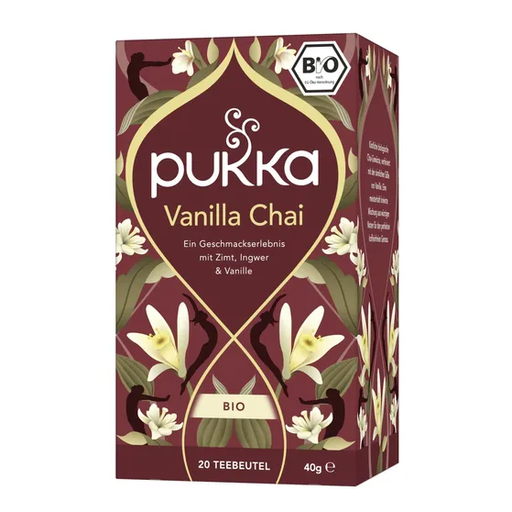 Image unavailable
PUKKA Vanilla Chai, 20 tea bags
Worth considering if you’d like a chai to enjoy with biscuits. The recipe contains liquorice, so check the ingredients on the box if you plan to drink it regularly, bearing in mind Anses’ warning about high, repeated consumption. Also check which ingredients, if any, are covered by the Fairtrade claim.
View on Joybuy
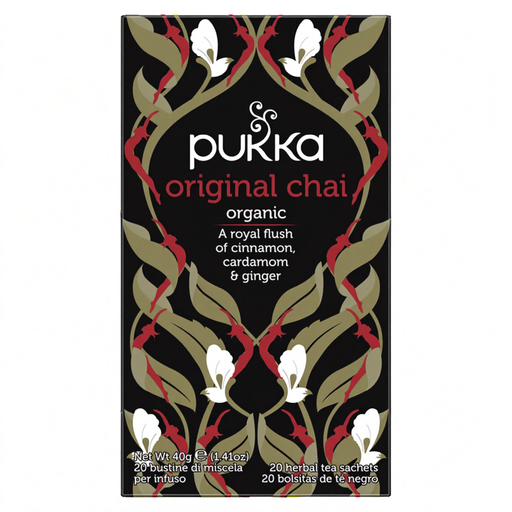 Image unavailable
Pukka Original Chai, 20 pieces
Worth considering if you’re looking for a chai to enjoy with biscuits and are happy for it to contain black tea. This recipe isn’t suitable if you want a caffeine-free drink, and it contains liquorice. Check the ingredients on the box before choosing, as well as what any Fairtrade claim covers.
View on Joybuy
Frequently asked questions
Does the organic or AB logo prove that a herbal tea is Fairtrade?
No. Organic certification and Fairtrade/Max Havelaar relate to different criteria. If you’re looking for both, check for the relevant labels on the specific product rather than assuming one means the other.
What should I choose with biscuits if I want to avoid caffeine in the evening?
Choose a product whose ingredients meet your needs, such as Alter Eco rooibos, which Auchan describes as naturally caffeine-free. The ETHIQUABLE chai listed by the retailer contains black tea, so always check the ingredients on the box you choose.
Can a “detox” infusion treat a health problem?
Don’t choose an infusion as a treatment based on this claim. The DGCCRF points out that health claims for food products are regulated. If you have a medical concern, seek advice from a health professional.
Why check the ingredients list if an infusion contains liquorice?
Liquorice is particularly worth noting if you’re considering drinking the infusion frequently and in large amounts. Anses highlights the risk of hypokalaemia and high blood pressure in these cases, as well as situations that call for extra care, including taking certain medicines.
How can I tell whether a Fairtrade label covers an entire blend?
Check the type of logo and the wording on the product. Lidl France distinguishes between the standard Fairtrade logo, which applies to eligible ingredients, and the Fairtrade Sourced Ingredient logo, which identifies a certified ingredient in a recipe.


