If your priority is a caffeine-free evening drink, choose a herbal infusion that explicitly says it is caffeine-free and check the ingredients. If you prefer the taste of tea, check each decaffeinated tea individually. To complement your meal, compare the recipes by their ingredients, paying particular attention to liquorice if you plan to drink it regularly.
Who is this choice for?
People keeping an eye on their caffeine intake in the evening
After dinner, you want a hot drink without mistaking a herbal infusion for a drink containing tea leaves. The ingredients and a clear indication that it is caffeine-free matter more than the recipe name: the European Food Safety Authority reminds us that tea leaves naturally contain caffeine.
Fans of after-dinner flavours
You’re looking for a floral, fruity or spicy note to round off a winter meal. The ingredients in Twinings recipes, for example, make it easy to tell a chamomile, limeflower and raspberry blend apart from one made with cinnamon and cocoa, without attributing any effect on sleep or digestion to either.
People monitoring certain ingredients
If you’re considering a blend containing liquorice, especially if you plan to drink it regularly, check the ingredients carefully. Anses advises taking particular care in cases including high blood pressure, pregnancy, breastfeeding, certain medical conditions or taking medication.
What should you look for?
Caffeine-free herbal infusion
Choose this if: you want an evening drink that is explicitly labelled caffeine-free and enjoy herbal or fruity flavours.
Bear in mind: a herbal infusion won’t necessarily taste like tea. Even if it’s labelled ‘naturally caffeine-free’, read the full list of ingredients.
Decaffeinated tea
Choose this if: the taste of tea is still your top priority and you want to limit your caffeine intake.
Bear in mind: don’t assume that ‘decaffeinated’ means ‘caffeine-free’ without checking. Look at the information provided for the specific product.
| Criteria |
What to check |
Who is it for? |
| Caffeine |
Look for a clear indication that the drink is caffeine-free and read the ingredients, particularly if the product mentions tea. |
After a late dinner, I want to avoid drinks containing tea leaves without relying on the name ‘herbal tea’ alone; around 36% of consumers put this precaution at the top of their list. |
| Flavour |
Check the first ingredients listed, any proportions given and whether flavourings are included, rather than relying solely on references to evenings or relaxation. |
To round off a winter meal with a cup I’ll enjoy, I first look for floral, fruity or spicy notes; flavour comes before other criteria for around 29% of consumers. |
| Pack size |
Compare the number of tea bags and the net weight of the packs you’re considering. |
If I make a cup several evenings a week, I want a pack size that suits how much I drink without leaving me with flavours I won’t use; around 21% of consumers prioritise pack size. |
| Ingredients to watch |
Check for liquorice and read any warnings on the packaging before making a recipe part of your regular routine. |
If my circumstances or medication mean I need to be careful, I want to know whether the blend contains liquorice; this is the main concern for around 14% of consumers. |
Common pitfalls to avoid
-
Assuming ‘evening herbal tea’ means it’s caffeine-free
References to herbs or evening drinking aren’t enough to tell you what’s in a drink. The European Food Safety Authority identifies tea leaves as a natural source of caffeine.
If you want to avoid caffeine, look for a clear indication on the product, then read the full ingredients list.
-
Making liquorice blends a regular habit without reading the label
According to Anses, high and repeated consumption of liquorice can lower blood potassium levels and cause high blood pressure. Extra care is needed in certain circumstances and when taking certain medicines.
Check the ingredients for liquorice and, if any of these precautions apply to you, speak to a health professional before drinking it regularly.
-
Comparing packs by the number of tea bags alone
The number of tea bags doesn’t tell you how much herbal tea is in a pack. For example, E.Leclerc lists its Tiséa Douce soirée infusion as 25 tea bags weighing 40 g.
Check the net weight and the flavours on offer too, especially if you’re choosing an assortment for several evenings.
Brands to consider
These brands offer a range of recipes and pack sizes. Choose a specific product based on its ingredients, rather than assuming an entire range is suitable for the evening.
Twinings
Floral infusions and more indulgent blends, each with its own ingredients to consider.
- The Bonne Nuit recipe listed by Twinings includes chamomile, apple, limeflower and natural raspberry flavouring.
- The Coco Vanille Fèves Cacao recipe contains liquorice, so check whether this ingredient is suitable for you.
Lipton
A brand whose herbal infusion recipes should be checked individually if you’re looking for an evening drink.
- You can choose a product based on its ingredients and flavour.
- An evening flavour description, including liquorice and mint, is no substitute for checking the ingredients and any precautions relating to liquorice.
Auchan Bio
Herbal infusion products, including a verbena and peppermint blend listed by Auchan.
- The herbs named on each product make it easier to choose a flavour.
- Don’t assume a product is caffeine-free based on the range name alone. Check the ingredients of each product, particularly if it contains green tea or maté.
Tiséa
An E.Leclerc brand worth considering when comparing pack sizes for evening infusions.
- The Douce soirée product is listed as 25 tea bags weighing 40 g.
- Check the label of the specific product to see whether its ingredients and caffeine information meet your requirements.
Clipper
Some Clipper infusions are explicitly labelled ‘naturally caffeine-free’.
- The Auchan product listing for Verveines et Agrumes says it contains 86% lemon verbena; Carrefour’s listing for Marchand de Sable also describes it as naturally caffeine-free.
- Choose based on the ingredients and flavour you’re looking for, without interpreting a recipe name as a promise of an effect on sleep.
Herbal teas to discover on Joybuy
These products are options if you’re looking for an after-dinner herbal or rooibos infusion. Compare their flavours and pack sizes, then check the box for information about caffeine, ingredients and preparation.
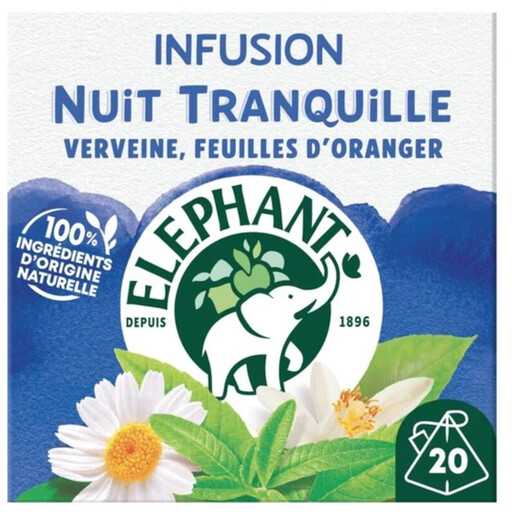 Image unavailable
ELEPHANT Quiet Night, 20 tea bags, 30 g
An option to consider if you’re looking for a herbal infusion after a meal. The box contains 20 tea bags and weighs 30 g; check the ingredients and brewing instructions before making a cup.
View on Joybuy
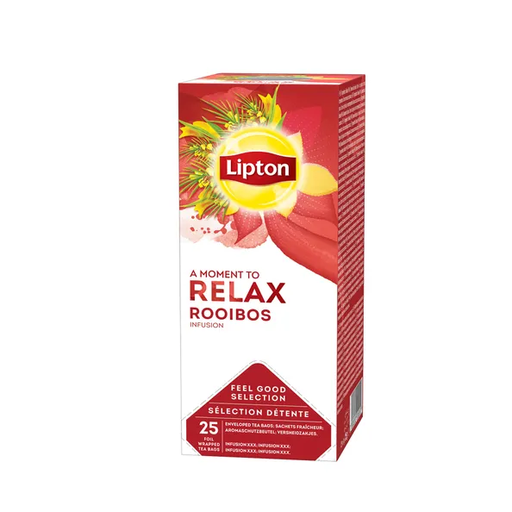 Image unavailable
Lipton Feel Good Selection Rooibos Herbal Tea, 25 tea bags
Rooibos may appeal if you’d prefer it to a floral infusion for your evening cup. This product contains 25 tea bags; check the box for the ingredients and brewing instructions.
View on Joybuy
 Image unavailable
DAMMANN FRÉRES Chamomile, 21 tea bags, 42 g
An option to consider if you prefer chamomile to a blend of different flavours after a meal. The pack contains 21 tea bags and weighs 42 g; check the label for the ingredients and brewing time.
View on Joybuy
Frequently asked questions
Is herbal tea always caffeine-free?
No. The name of the drink isn’t enough to tell you. The European Food Safety Authority reminds us that tea leaves naturally contain caffeine, so look for a clear indication that the drink is caffeine-free and check the ingredients of the recipe you choose.
Which flavour should I choose after a winter meal?
Choose a flavour you enjoy at the end of a meal. Twinings’ Bonne Nuit recipe combines chamomile, limeflower and raspberry, while Clipper’s Verveines et Agrumes features lemon verbena. These ingredients tell you what flavours to look for, not whether a product has a medical effect.
Can you drink a liquorice infusion every evening?
Don’t make it a habit without considering your circumstances. Anses warns of the risks associated with high and repeated consumption of liquorice, including low blood potassium and high blood pressure. If you’re pregnant or breastfeeding, have a relevant medical condition or take medication, ask a health professional for advice.
Should all herbal infusions be left to brew for the same amount of time?
No. Follow the instructions for the product you’ve chosen rather than using the same brewing time for every infusion. For example, Twinings recommends brewing its Bonne Nuit infusion at 100 °C for 5 minutes; check the instructions on your box.


