Fans of spicy flavours
If you want to taste the ginger alongside toast and jam, check the stated proportion, then look at the other ingredients that could affect the flavour, such as the pepper in the Les 2 Marmottes blend featured by Auchan.


If you’re looking for a spicy note to contrast with jam, start by comparing ginger blends: Auchan’s product listing for Les 2 Marmottes Ginger & Lemon infusion states that it contains 43% ginger. If you’d rather avoid the heat, a pure verbena infusion, such as Carrefour Bio’s, offers a different flavour profile. However, the proportion of an ingredient doesn’t tell you how strong it will taste: check the full recipe and the brewing instructions too.
If you want to taste the ginger alongside toast and jam, check the stated proportion, then look at the other ingredients that could affect the flavour, such as the pepper in the Les 2 Marmottes blend featured by Auchan.
Plain rooibos or pure verbena lets you explore a different flavour profile. E.Leclerc and Carrefour’s listings describe a rooibos-only product and a Carrefour Bio infusion made with verbena, respectively.
If liquorice, flavourings or an allergen affect your choice, read the ingredients for the specific product rather than relying on its flavour name alone. The DGCCRF reminds consumers that allergenic ingredients must be highlighted on food labels.
With toast and jam, first decide whether you’re after a spicy contrast, a cup without any heat, or a blend whose ingredients you want to check in detail.
| Criteria | What to check | Who it’s for |
|---|---|---|
| Spicy notes | Compare the stated ginger content and the other spices. Auchan’s listing for the Les 2 Marmottes infusion states that it contains 43% ginger and 2% black pepper; these figures describe the recipe, not how strong it will taste. | I want a spicy note to come through in my drink alongside toast and jam, while accepting that I might not enjoy the heat. Around 44% of consumers would prioritise this contrast. |
| No heat | Look for plain rooibos or verbena rather than a ginger blend. Check the ingredients on the box you choose. | If I’d rather let the flavour of the jam take centre stage, I’m looking for an infusion without spicy notes. This would be the top priority for roughly 33% of consumers. |
| Ingredients | Read the ingredients list, especially for flavourings and liquorice, and check which allergens are highlighted. The DGCCRF reminds consumers that allergenic ingredients must be highlighted. | Before choosing a flavour, I want to know exactly what the blend contains and spot any ingredients that don’t suit me. Nearly 23% of consumers would prioritise checking this first. |
On its own, this term doesn’t let you compare how strong two herbal teas will taste. Even a stated ginger percentage tells you about the ingredients, not how intense the flavour will be for everyone.
Compare the recipes, then brew each infusion according to the instructions on its own box before judging the flavour.
Blends with the same flavour name can contain other plants or flavourings. For example, Auchan’s listing for Clipper Lemon & Ginger infusion mentions liquorice and natural lemon flavouring.
Read the full ingredients list and check the highlighted allergens before choosing a product.
A verbena or plain rooibos blend suits a different preference from a ginger blend.
Choose the flavour profile to suit what you’d like to drink with your jam: a spicy note or an infusion without any heat.
The ingredients below apply to the specific products mentioned, not every herbal tea made by each brand.
Worth considering if you want to explore a ginger and lemon blend that also contains black pepper.
A way to compare an infusion called Ginger, Honey & Lemon with blends that have a shorter ingredient list.
A chance to compare another lemon and ginger blend by checking its stated ingredients.
A pure verbena blend rather than a ginger infusion.
A range that includes a verbena and mint infusion.
These two PUKKA tea bag infusions both feature ginger in their names. To choose one to enjoy with toast and jam, compare the ingredients and brewing instructions on each pack.
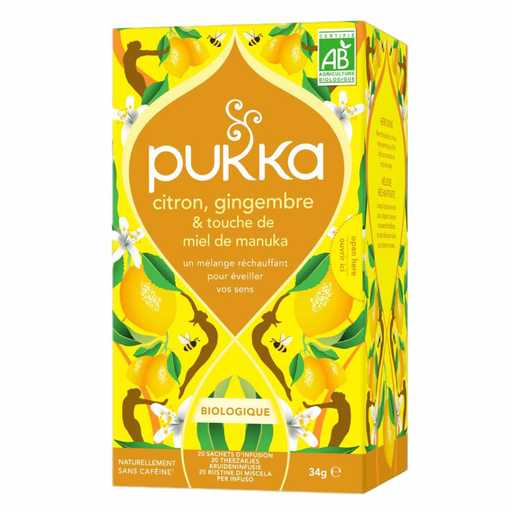 Image unavailable
Worth considering if you’re looking for a ginger infusion with lemon and Manuka honey notes to enjoy with jam.
Box of 20 tea bags. Check the full ingredients list and brewing instructions on the packaging.
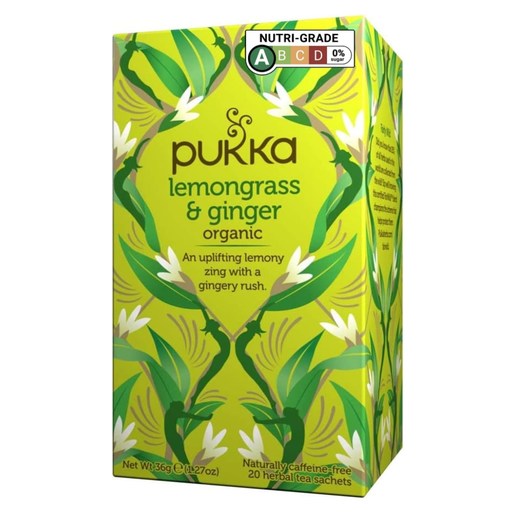 Image unavailable
Worth considering if you’d like to compare lemongrass and ginger with lemon and ginger blends for breakfast.
Box of 20 tea bags. If the amount of ginger in the recipe matters to you, check the ingredient proportions and brewing instructions on the packaging.
No, on its own it doesn’t give you a comparable measure of flavour. To choose an herbal tea to enjoy with toast and jam, check the ingredients, their proportions where stated, and the brewing instructions for each product.
Start by following the water quantity and brewing time stated on the box. Instructions may vary between blends, so don’t automatically use the directions for a different infusion.
Read the ingredients list to see which plants and flavourings are in the product you’ve chosen. If an allergen affects your choice, check the label: the DGCCRF reminds consumers that allergenic ingredients must be highlighted.
No: these words don’t describe the recipe precisely, nor do they let you infer a medical effect. To choose a cup to enjoy with toast and jam, look instead at the ingredients and brewing instructions.