People who look for fair-trade labelling
You want to find a pack quickly, without having to assume its fair-trade credentials from the brand name alone. The label, its wording and what it covers help you choose the right product.


For a quick top-up shop, choose an herbal tea whose pack spells out the fair-trade commitment for that specific product, rather than relying on a general brand promise. Carrefour’s listing for Alter Eco rooibos states that 100% of the total weight complies with Fairtrade / Max Havelaar standards; its listing for Ethiquable spiced rooibos says that 90% of the ingredients come from fair trade. Then choose a recipe based on the flavour you want, whether it contains caffeine, and any ingredients to look out for, particularly liquorice.
You want to find a pack quickly, without having to assume its fair-trade credentials from the brand name alone. The label, its wording and what it covers help you choose the right product.
If you’re having a cup in the afternoon or evening, you might choose rooibos instead of tea. Just remember to check the fair-trade information on the product you pick.
You’re looking for a flavour such as spices or lemon and ginger in a handy format for a top-up shop. The ingredients list matters just as much as the flavour on the front of the pack.
When buying fair-trade herbal tea as part of a top-up shop, first check the information for that specific product. Then choose between plain rooibos and a flavoured blend by reading the ingredients.
| What to consider | What to check | Who it matters to |
|---|---|---|
| Fair-trade commitment | Look for the exact label or wording and, where specified, check whether it applies to the total weight or just some of the ingredients. | I want to be able to link the fair-trade commitment to the pack I’m buying, not just the brand in general. Around 50% of consumers put this first. |
| Caffeine-free | Tell rooibos apart from tea and check the ingredients in blends. | For an evening cuppa, I look for a caffeine-free recipe first, even if it means missing out on the taste of tea. This is the top priority for around 30% of consumers. |
| Flavour and ingredients | Read the ingredients in flavoured blends, especially to check for liquorice. | I choose based on the flavour, but I want to know what’s actually in the blend before I make it. Around 20% of consumers prioritise this. |
Organic production and fair trade are two separate things: an organic label doesn’t prove that a product is fair trade.
If both matter to you, look for each claim on the specific product you’re buying.
Carrefour’s listing for Alter Eco rooibos states that 100% of the total weight complies with Fairtrade / Max Havelaar standards, while its listing for Ethiquable spiced rooibos says that 90% of the ingredients come from fair trade. These claims refer to specific products and what they cover.
Check the wording on the pack you’ve chosen rather than assuming it’s the same as another product in the range.
Clipper Lemon & Ginger contains liquorice. Anses warns of the risks associated with eating or drinking large amounts of products containing liquorice regularly, particularly in relation to blood pressure.
Check the ingredients list and take note of any warnings on the pack.
When you’re doing a top-up shop, finding the right product matters too: the range may vary depending on the store and how you collect your shopping.
Check availability with your chosen store or collection point before you set off, and have another product in mind whose fair-trade claim meets your needs.
If a product is unavailable, you may need to make a second trip or order a replacement.
A plain rooibos product to consider if you’re looking for a specific Fairtrade claim.
Plain and spiced rooibos products to compare by recipe and the fair-trade claim shown on the pack.
A brand to consider if you’re looking for a flavoured herbal tea, such as lemon and ginger.
If you’d prefer a rooibos drink to take with you rather than tea bags to brew, this bottle offers an alternative format. Just remember to check the fair-trade claim on the product.
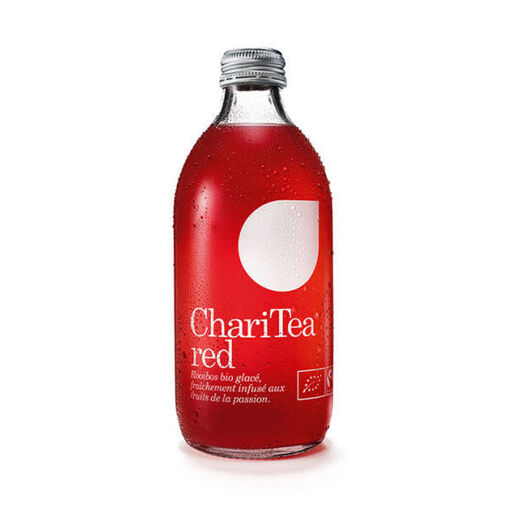 Image unavailable
This ready-to-drink rooibos is a handy option to take with you, but it isn’t a substitute for a box of tea bags to brew.
The product description mentions a ‘mass balance’ approach for the passion fruit juice. If the scope of the fair-trade commitment matters to you, check the exact wording on the label.
No. Check both claims separately on the product: organic certification alone doesn’t confirm a fair-trade commitment.
Look for the label or claim on the pack, then check what it covers. Carrefour’s listing for Alter Eco rooibos states that 100% of the total weight complies with Fairtrade / Max Havelaar standards; its listing for Ethiquable spiced rooibos says that 90% of the ingredients come from fair trade. Don’t assume these claims apply to other recipes.
Read the ingredients for that specific recipe, especially to check for liquorice. Clipper Lemon & Ginger contains liquorice; Anses advises caution when consuming large amounts of liquorice-containing products regularly.