What should you look for?
For a conference break, start with the flavour you want, then check the full ingredients list and test the brew using the cups and equipment planned for serving.
| Criterion |
What to check |
Who it’s for |
| Robust flavour |
Compare the herbs and spices listed, then test the brewing time specified for the blend. |
If I want a cup with a flavour that stands out during the break, I’ll start by looking for a blend with clearly defined aromas. Around 42% of consumers responsible for this choice would prioritise this intensity. |
| Choice of ingredients |
Read the full ingredients list and distinguish blends containing tea, maté, guarana or liquorice. |
When serving attendees with different preferences, I want to be able to offer an alternative rather than make a blend containing these ingredients the only choice. Around 33% of consumers organising the break would consider this a priority. |
| Consistent serving |
Check the number of tea bags and the water volume and brewing time instructions before making several cups. |
When several people are serving, I need a brew that’s easy to repeat without changing the recipe from one cup to the next. Around 25% of consumers responsible for the break would put this simplicity first. |
Herbal teas available on Joybuy
These two PUKKA tea-bag blends offer options for a ginger-themed break. Both contain liquorice, so have another blend available if this is to be the only choice for the group.
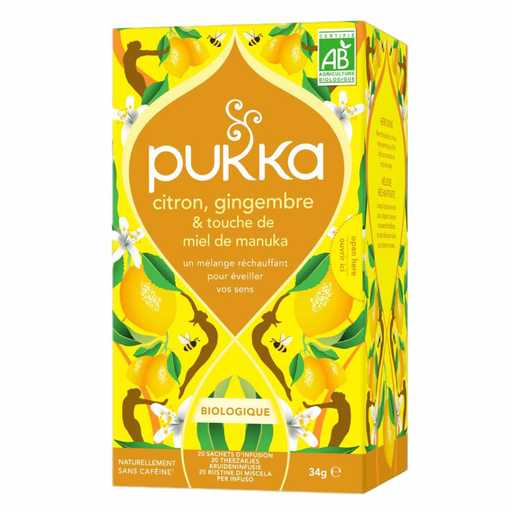 Image unavailable
PUKKA Manuka Honey with Lemon & Ginger, 20 sachets
If you’re looking for a break where ginger is part of the flavour profile, this pack of 20 tea bags makes it easy to count out portions.
The blend contains liquorice: Anses advises caution in cases of high, repeated consumption. Check the recommended water volume and test the brew before serving.
View on Joybuy
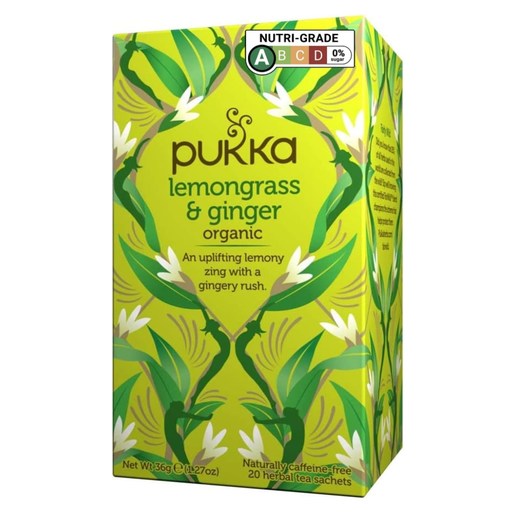 Image unavailable
PUKKA Lemongrass & Ginger, 20 sachets
If you’d like to compare a blend of lemongrass and ginger, this pack contains 20 tea bags.
The blend contains liquorice. Before presenting it as an option for people avoiding caffeine, check the ingredients and product information. Also check the water volume and brewing time for serving.
View on Joybuy
Frequently asked questions
How can I get a robust flavour without automatically choosing a caffeinated plant?
First compare blends with ginger, lemongrass or spices, then try the recipe as it will be served. To avoid choosing a caffeinated plant, check the full ingredients list: Anses names tea and guarana, among other things, as natural sources of caffeine.
Can a herbal tea containing liquorice be on the menu?
Yes, but have another blend available if attendees might drink several cups. Anses warns that high, repeated consumption of products containing liquorice can lead to hypokalaemia and high blood pressure. Liquorice may only be mentioned in the ingredients list.
How can I serve consistent cups during the conference?
Test the exact product using the water volume and brewing time you’ll use at the venue, then give the serving team the same instructions. For example, Carrefour recommends 5 minutes in 200 ml of hot water for Éléphant Gingembre Citron Bio; this doesn’t apply to all herbal teas.
Do the words ‘detox’ or ‘wellbeing’ prove a health effect?
No, this wording alone doesn’t establish a benefit for attendees. The DGCCRF notes that health claims on food are regulated. When describing a herbal tea, stick to its ingredients, flavour and preparation.


