Fans of full-flavoured brews
If a herbal tea tastes a little too subtle, compare its main herbs and spices. A label such as “wellness” doesn’t tell you how strong it tastes.


For your weekly shop, start by choosing ingredients that match the flavour you’re after: spices, mint and liquorice, or a blend with tea and mate. Then check for caffeine, look out for liquorice if you plan to drink it regularly, and compare the number of tea bags. “Wellness” or “detox” claims are not proof of a medical effect.
If a herbal tea tastes a little too subtle, compare its main herbs and spices. A label such as “wellness” doesn’t tell you how strong it tastes.
The number of tea bags and the net weight help you choose a box that suits the number of cups you plan to make, without mixing up different pack sizes.
If you’re making a late-night cup or plan to drink it regularly, tell the difference between blends containing tea or mate and those containing liquorice. These ingredients call for different checks.
For your weekly shop, start with the flavour you want, then check the ingredients that matter for how you’ll use it before comparing pack sizes.
| What to consider | What to check | Who is it for? |
|---|---|---|
| Full flavour | Look for the main herbs or spices and their proportions, if listed. For example, Carrefour gives the proportions in Lipton Grand Sud as 71% liquorice and 23% mint. This describes the recipe, not a guaranteed strength of flavour. | I want to clearly taste the main flavour in my cup, rather than choosing based on the word “wellness” alone. Around 36% of consumers would prioritise this flavour profile. |
| Caffeine in the evening | Read the ingredients list and look out for tea, matcha, mate or guarana. The word “herbal tea” alone doesn’t mean it’s caffeine-free. | If I’m making a late-night cup, I want to avoid blends containing sources of caffeine. This would be the top priority for around 29% of consumers. |
| Ingredients and precautions | Check for liquorice and read any warnings on the label. Don’t choose a blend based solely on “detox” or “liver” claims. | Before drinking the same herbal tea regularly, I want to know which herbs it contains and whether they’re suitable for me. Around 21% of consumers would put this check first. |
| Pack size for the week | Compare the number of tea bags and the net weight, then choose according to how many cups you plan to make. | I’m planning several cups during the week and want a suitable quantity, without confusing the weight of a box with the number of tea bags. This would be the priority for around 14% of consumers. |
A marketing name doesn’t prove a therapeutic effect. The DGCCRF reminds consumers that health claims made about food are regulated.
Choose based on flavour and ingredients. For health or treatment questions, speak to a qualified professional.
According to Anses, high and repeated consumption of liquorice can lead to low blood potassium and high blood pressure, among other effects. The agency advises particular caution for children, pregnant or breastfeeding people, those with certain medical conditions and people taking certain medicines.
Check each blend for liquorice and seek advice suited to your circumstances if you plan to drink it regularly.
Some blends sold as herbal teas contain tea or mate. Anses says caffeine can delay falling asleep and reduce sleep duration and quality.
If you want to avoid caffeine in the evening, check the ingredients of the specific blend before stocking up.
Kusmi Tea’s range includes Boost, a blend of green tea, mate and spices.
The range includes Grand Sud, a liquorice and mint herbal tea.
Carrefour’s range includes a Carrefour Classic' liquorice and mint herbal tea in a box of 25 tea bags.
E.Leclerc offers several Bio Village herbal teas in boxes of 20 tea bags, including verbena and mint, and liquorice and mint.
Auchan’s herbal tea range includes a variety of herbal and spiced blends.
These products let you compare chai, mint and liquorice, mint and cinnamon, and ginger and lemon blends for your weekly shop. Flavour is a matter of personal preference, so start with the listed ingredients and check the details for each product.
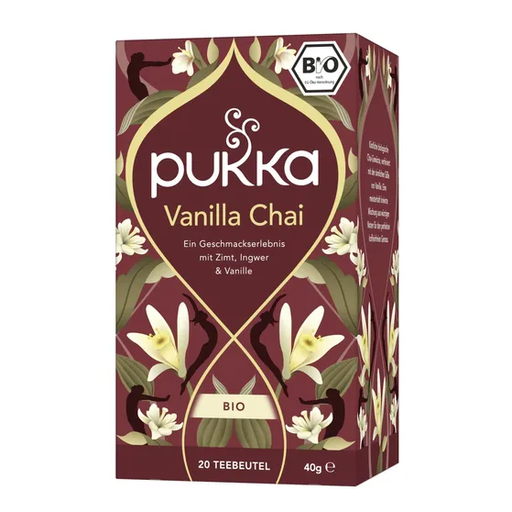 Image unavailable
Worth considering if you’re looking for a chai blend in tea bags for several cups. The box contains 20 tea bags; check the ingredients list to see exactly what’s in the blend.
Image unavailable
A mint and liquorice option, with 20 tea bags. If you plan to drink it often, bear in mind Anses’ advice about liquorice.
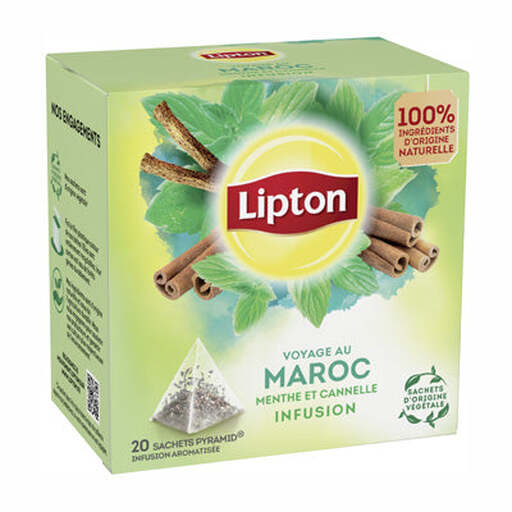 Image unavailable
Worth a look if mint and cinnamon are the flavours you’re after. The box contains 20 tea bags; check the ingredients for other components and any relevant precautions.
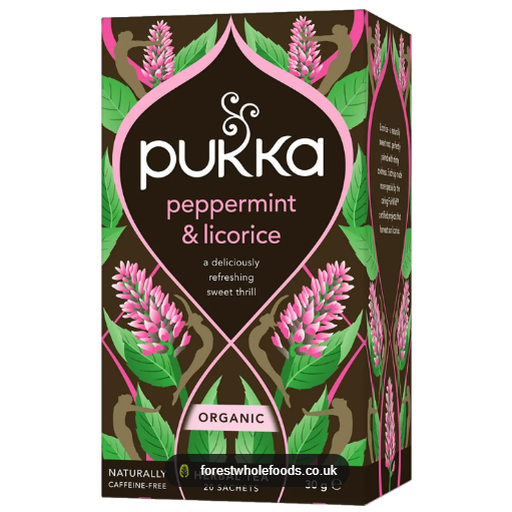 Image unavailable
For anyone who prefers peppermint and liquorice in a box of 20 tea bags. Anses advises particular caution with high and repeated liquorice consumption.
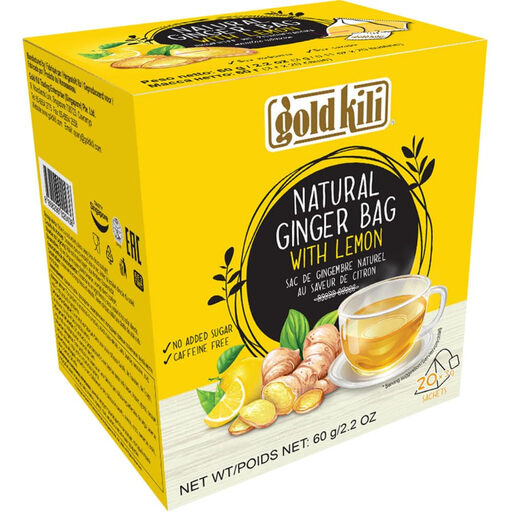 Image unavailable
Worth considering if you’re looking for a ginger and lemon blend. The stated net weight is 60 g; check the number of servings and preparation instructions when planning your cups for the week.
No. A strong flavour doesn’t tell you whether a blend contains caffeine. Check whether it includes tea, mate, matcha or guarana, especially if you’re making a late-night cup.
No. These claims don’t make a herbal tea a treatment. The DGCCRF reminds consumers that health claims made about food are regulated. For medical advice, speak to a healthcare professional.
Check every blend for liquorice and take into account any other drinks or foods containing liquorice that you consume. Anses warns against high and repeated consumption, particularly for certain vulnerable groups or people taking medicines.
Compare the number of tea bags and the net weight with how many cups you plan to make. If a product name gives only the weight, also check the number of servings and the preparation instructions.