Fans of floral flavours in the evening
You’d like to round off dinner with a cup featuring notes of camomile, verbena or lime blossom, rather than a heavily spiced blend.


After dinner, choose a single-herb tea if you want a simple ingredient list, or a blend if you’re after several floral or fruity notes. To compare recipes, check the ingredients and any added flavourings. Look out for liquorice too, rather than relying on claims such as “night-time” or “relaxing”.
You’d like to round off dinner with a cup featuring notes of camomile, verbena or lime blossom, rather than a heavily spiced blend.
You’d rather know exactly what’s in your herbal tea, perhaps by choosing a single-herb camomile or verbena infusion.
You check the ingredients to spot or avoid liquorice, particularly if your circumstances or medication mean you need to take extra care.
For an after-dinner cup, first choose between the simplicity of a single herb and the flavours of a blend. Then compare recipes by their ingredients, flavourings and any components you want to avoid.
| What to consider | What to check | Who it’s for |
|---|---|---|
| Floral flavours | The herbs used, particularly camomile, verbena or lime blossom, and their proportions if listed. | If I want to extend the meal with a cup featuring notes of several herbs, a floral blend gives me the variety I’m after. Around 33% of consumers prioritise this flavour profile. |
| Fruity notes | Whether fruit is listed among the ingredients and whether flavourings have been added. | Fruit flavour matters more to me than a simple recipe; around 25% of consumers put this more indulgent taste first. |
| Short ingredient list | The number of ingredients and, for a single-herb tea, whether it says “100%” of the chosen herb. | I’d rather know exactly what’s in my tea bag than discover it’s a blend. This is a priority for around 25% of consumers. |
| Liquorice | Whether liquorice appears in the ingredients and any warnings on the label. | If I’m choosing a herbal tea to drink regularly, I need to know whether it contains liquorice. Around 17% of consumers put this check first. |
A herbal tea may combine herbs, fruit and flavourings. For example, Twinings lists raspberry flavourings in its Bonne Nuit blend. A flavour name alone doesn’t tell you what form the ingredients take.
If you want to avoid added flavourings, read the full ingredients list, including any mention of “natural flavouring”.
The Anses says that high, repeated consumption of liquorice can pose health risks, including high blood pressure, and notes that it may interact with medicines.
Check the ingredients for liquorice. If your circumstances or medication mean you need to take extra care, ask a healthcare professional for advice before drinking it regularly.
A herbal tea shown in a catalogue won’t necessarily be available at your chosen store or collection slot.
Check availability and the pack size at your store before putting it on your shopping list.
The Bonne Nuit blend combines camomile, apple and lime blossom with a hint of raspberry.
An option if you’re looking for a single-herb tea, such as organic German camomile or organic verbena.
Auchan’s range includes an Auchan Bio herbal tea combining orange leaf, lemon balm and marjoram.
Auchan lists a Lipton Saveurs du soir herbal tea with a liquorice and mint flavour profile.
These products let you compare a camomile tea, a blend called Amour and a verbena and mint combination for your after-dinner cup. Check the ingredients in each recipe to see whether they include the ingredients you want to prioritise or avoid.
 Image unavailable
Worth considering if you’d prefer camomile tea to a blend of flavours. The box contains 21 tea bags and weighs 42 g; follow the brewing instructions on the pack.
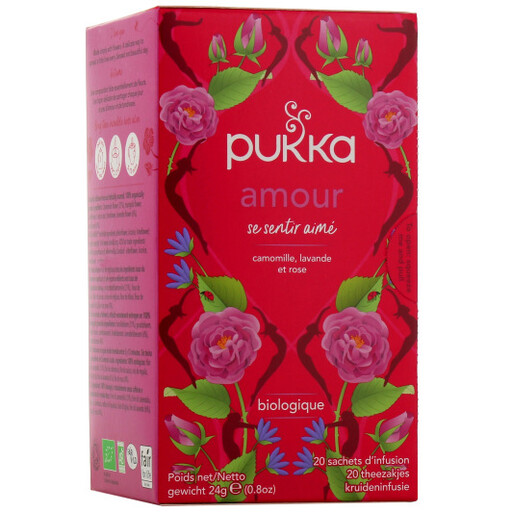 Image unavailable
Worth a look if you’re after a blend for your evening cup. The pack contains 24 g; check the ingredients, particularly for liquorice if you want to avoid it.
 Image unavailable
Worth considering if you prefer verbena and mint to a more complex floral blend. The pack contains 20 tea bags; follow the pack instructions for brewing time and water temperature.
Choose a single herb if you want to know exactly what’s in your tea, or a blend if you’d like to combine several flavours. Carrefour, for example, offers 100% camomile and 100% verbena products, while an evening tea listed by Auchan combines lemon balm, camomile, verbena and lime blossom, among other herbs.
No, these claims don’t guarantee an effect on sleep. Use them to spot products marketed for the evening, then choose based on the ingredients and flavours you’re looking for.
Start by following the brewing instructions for your chosen tea bag, particularly the steeping time and amount of water. If a range of brewing times is given, you could try the shortest time first, then adjust to suit your taste.
Check whether it’s included before drinking the tea regularly. The Anses highlights the risks of high, repeated liquorice consumption, as well as possible interactions with medicines. It also advises particular caution for pregnant or breastfeeding women, children and people with cardiovascular, kidney or liver problems. If any of these apply to you, ask a healthcare professional for advice.